
Service Areas in Allen, TX
Roofing service coverage should describe real municipalities and broader commercial areas, while every work order names the actual property. We serve Allen and nearby North Texas communities, coordinating access and travel without turning one campus or building into a generic location. The inspection, repair scope, and closeout remain attached to the roof zones reached.
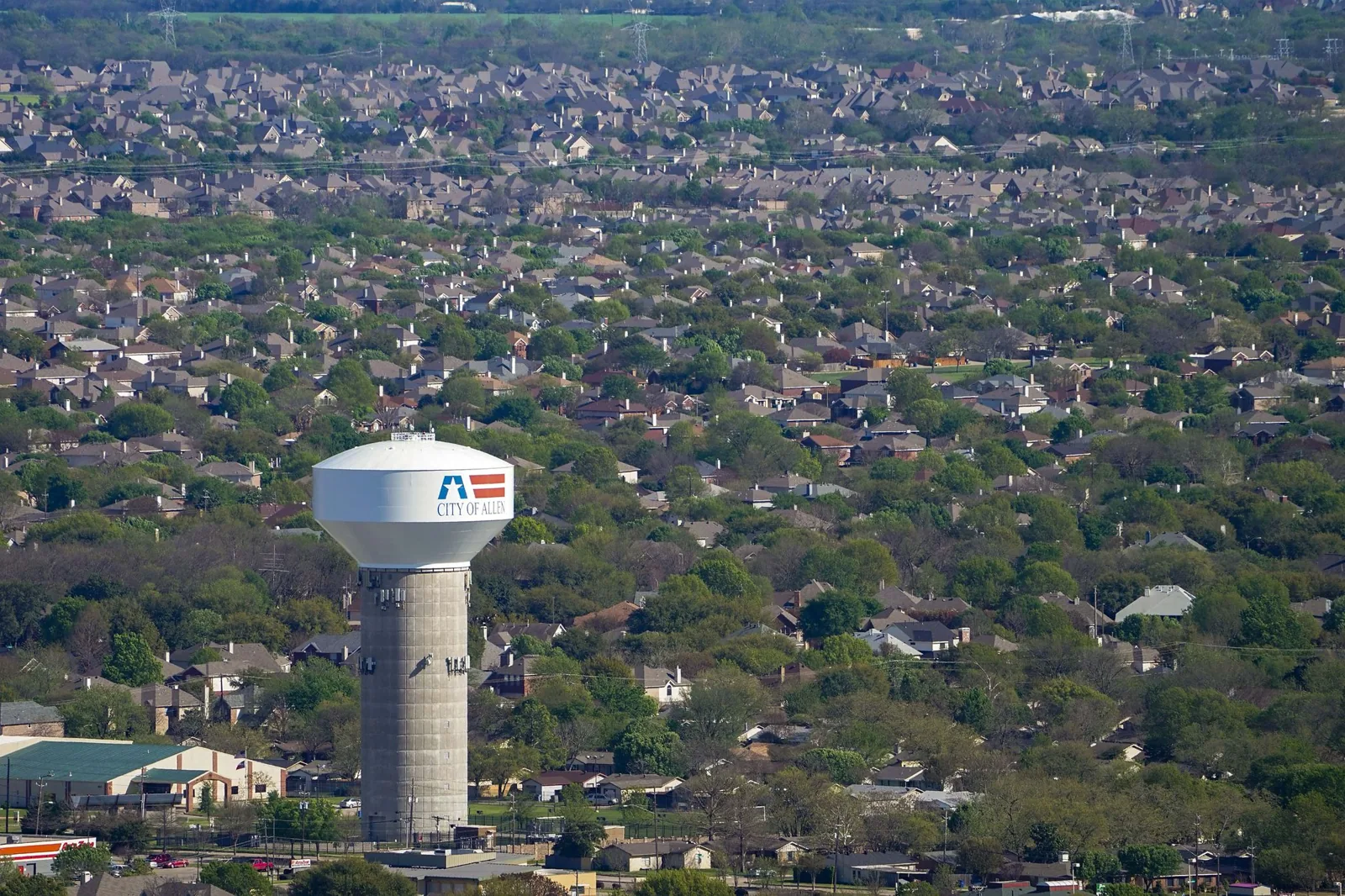
Start with Allen and its commercial districts
Allen service includes the city and broader areas such as Watters Creek, 121 Tech Park, the Central Business District, and the Stacy Road corridor. These recognized districts and corridors help orient scheduling. They do not identify an installed roof system or condition. The property contact confirms the actual building, access, tenant schedule, and roof records before dispatch.
Watters Creek spans office, retail, lodging, and conference uses, while the 121 Tech Park district brings industrial and technology activity near US 75 and SH 121. One Bethany at Watters Creek is a multi-building office campus; a service visit there still records each structure and roof zone separately.
Coordinate surrounding municipalities
The regional service area includes nearby communities such as McKinney, Plano, Frisco, and Fairview. Additional service locations include Celina and Wylie. Each city page represents municipal coverage, not a specific tenant, facility, or street address.
For a property manager coordinating multiple stops, routing may align inspections with access windows and urgency. The report still identifies the site reached, roof zones inspected, and findings supported by photos or testing. A report from one community is not evidence about a roof elsewhere. Each visit records the building, zones reached, and conditions observed, even when several stops share one trip.
Confirm the site before setting work
Before a visit, provide the current property name, address, site contact, access route, operating hours, roof plans, and reported issue. We confirm whether the work is an inspection, emergency response, repair, or capital assessment. If testing or added removal may be needed, identify who can approve it. A roof inspection documents the accessible assembly and any limits; a temporary response records what it protects and what remains for permanent correction.
Allen employers cluster in finance, insurance, information technology, professional services, telecommunications, and electronics. That business mix affects who coordinates a roof visit but does not prove a particular building's system. For any property, the work plan identifies staging, tenant protection, equipment access, daily closeout, and weather-tight stopping points. The city or corridor name helps with routing; the scope stays property-specific.
Prepare the property for a useful visit
A good service request includes the property name, current address, site contact, access window, roof plans if available, and a concise description of the concern. Share recent interior observations or equipment work that may affect the roof. We confirm whether the visit is for an inspection, active leak, repair, or capital assessment and identify who can authorize testing or added removal. That preparation helps the team arrive with the right access plan while keeping findings tied to the building inspected.
After the visit, the report should state the roof zones reached, visible conditions, photographs, limits, and recommended next step. A commercial roof inspection can establish the baseline, while preventive maintenance can track conditions over time. Every property keeps its own record even when nearby visits share a route.
Commercial Roofing Questions
Do service areas represent individual buildings?
No. City and district routes describe broad coverage; each visit is confirmed for a specific property.
Can multiple sites share a service visit?
They can be scheduled together when access allows, with separate maps, scopes, and closeouts.
How do regional weather reports affect a roof review?
They provide context for scheduling an inspection; findings about a building come from conditions documented at that property.
What details help schedule an inspection?
Provide the site contact, address, roof access, reported concern, plans, and operating limits.