Commercial Roof Inspection in Allen, TX
Budget decisions improve when the roof record shows conditions by section, not only a date and a general rating. Our commercial roof inspections in Allen document visible defects, moisture concerns, drainage, penetrations, and perimeter details, then connect findings to an actionable scope. A facility director can use that information to decide what needs repair now, what can be monitored, and what belongs in a capital plan. Allen includes corporate office space at Watters Creek and office, industrial, and technology properties near US 75 and SH 121. Different building uses call for different access and maintenance priorities. We inspect the roof that exists and identify its materials before recommending work. For a commercial property in Allen, the result is a condition record that supports the next operating and budget decision.
Inspect the full assembly
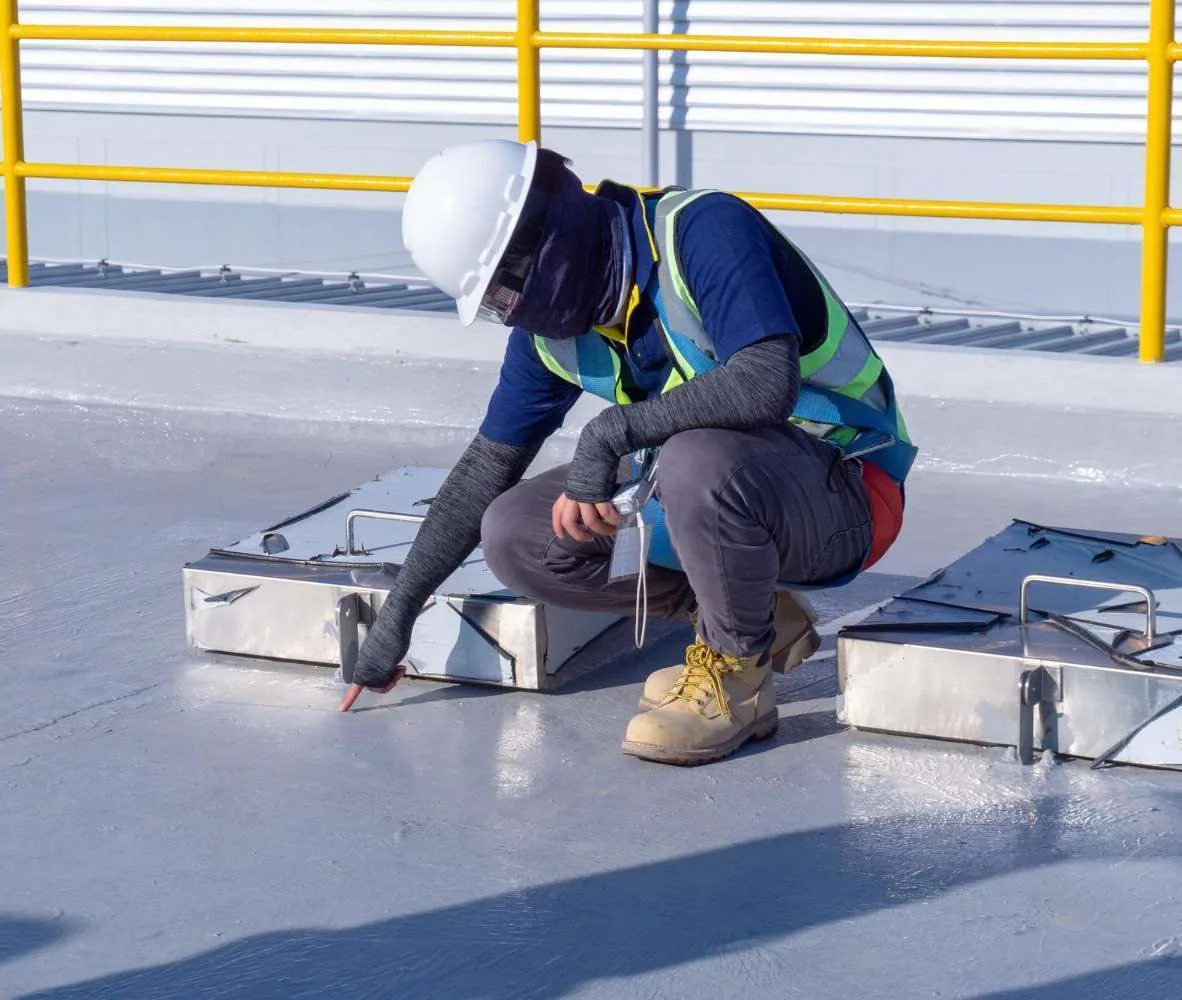
A useful inspection follows water and movement across the roof. We examine the membrane field, seams, flashings, walls, curbs, penetrations, drains, scuppers, edge metal, and rooftop equipment supports. We look for open laps, punctures, pulled fasteners, loose edges, cracked sealant, ponding, debris, and previous repairs that no longer hold. The observed defect is mapped to a roof area so maintenance staff can locate it later. If surfaces are obstructed or access is restricted, we state what could not be seen.
Surface condition does not always show what is below. A suspect area may need infrared scanning or selective core cuts to determine whether insulation is wet and how the assembly is built. We identify when those tests are useful rather than treating an exterior walk as proof of dry insulation. On multi-section Allen properties, including office campuses and mixed-use developments, we note roof transitions and equipment clusters that can change the repair plan. A moisture survey can provide additional mapping when the roof area or leak history warrants it.
Give findings a priority
Each finding should explain the condition, its location, the near-term action, and what risk remains if the work is deferred. An open seam near an active leak is different from a weathered surface with no visible water entry. A blocked drain is an immediate maintenance item; a deteriorated roof area with wet insulation may need a scoped repair or replacement review. We separate these categories so the facility director can build an order of work rather than receive an undifferentiated list.
Photos show the detail and surrounding area. Notes describe whether a condition appears active, whether moisture was confirmed, and what follow-up should verify. We avoid turning a single observation into an unsupported conclusion about the entire roof. If roof sections have different materials or installation histories, the report labels each area so one condition is not generalized to the whole building. This is useful across Allen employers in technology, finance, telecom, and professional services, where a facility portfolio may combine unlike structures. Findings can lead to targeted repairs, drainage maintenance, or monitoring at a later inspection.
Inspect after exposure
North Texas roofs experience long periods of summer heat and humidity along with spring thunderstorms. Regional severe weather can include hail, damaging winds, flooding, and tornadoes, but a regional report cannot determine the condition of an individual Allen property. After a storm, we examine exposed edges, seams, roof accessories, penetrations, flashings, and drains for visible impact. Hail can leave marks on soft metal accessories, but the membrane and attachment still require their own inspection.
Seasonal inspections can also reveal deterioration unrelated to a single storm. Sealants may shrink, fasteners can back out, drains collect debris, and foot traffic can leave punctures around equipment. We record storm observations separately from age and maintenance findings. If a leak is reported, we connect the interior symptom to likely roof pathways instead of assuming the nearest detail is the entry point. A storm-damage inspection or leak investigation can extend the work when those conditions are present.
Turn inspection into a work plan
The inspection report can support a repair, recover, replacement, or maintenance decision. We explain the evidence behind each recommendation and list conditions that should be rechecked. A recover requires a suitable existing assembly; replacement may be warranted when moisture or deck damage is widespread. If defects are localized, repairing those areas may preserve a serviceable roof. The report should make clear which evidence would change the recommendation, such as test results or concealed conditions observed after opening.
When inspection findings lead to a new assembly, we review the current city permit path before finalizing scope. The report can also establish a baseline for comparing roof sections across a portfolio, giving the asset manager a consistent view without forcing every property into the same scope. The condition record can be carried into capital planning. When work is approved, the prioritized findings become the repair scope and closeout checklist.
Work around facility schedules
Inspections need controlled access and accurate site information. We coordinate keys or escorts, roof hatches, ladders, security rules, equipment restrictions, and areas where work may interrupt operations. If roof sections cannot be reached during the first visit, we identify them and arrange a safe follow-up. The facility team can provide leak logs, recent repair records, and known problem areas to help focus the inspection, though those records do not replace direct observation.
Allen properties near Watters Creek may have visitor and tenant activity, while industrial or technology buildings can restrict roof access around operating equipment. We follow the site's access rules and communicate any limitation on the inspection. If the inspection uses a drone for areas that are difficult to reach, the imagery supplements a hands-on check of accessible details. A drone roof inspection can be appropriate for a broad roof field or an access-limited section, while hands-on review remains necessary for many membrane details. The report identifies the methods used and the condition they allowed us to observe.
Keep the record useful
A roof report should remain usable after the inspection date. We identify roof sections, mark findings, attach photos, describe recommended actions, and note issues left outside the scope. If moisture testing or repair work follows, its results can be linked to the same areas. This gives future maintenance staff a way to compare the condition over time and avoid reopening the same question from scratch.
Allen's building mix includes corporate offices, retail, technology operations, and industrial properties. A consistent inspection structure helps a portfolio team compare priorities while keeping each building's recommendations specific to its assembly and use. Findings can be grouped by immediate repair, planned work, and monitoring so that capital decisions remain tied to field evidence. For multi-property oversight, roof asset management can help organize the records and follow-up dates. A clear inspection baseline also makes leak response faster to scope if water appears between scheduled visits.
Commercial Roofing Questions
What does a commercial roof inspection include?
We review the membrane or panels, seams, flashings, edges, penetrations, drains, equipment supports, and visible repair history. Findings are photographed and tied to roof areas.
Can an inspection tell whether insulation is wet?
Not from surface appearance alone. Infrared imaging or selective core cuts may be needed to map and confirm moisture below the membrane.
Should I schedule an inspection after hail if no leak appeared?
Yes, a roof may have visible impact without an immediate interior leak. We inspect the actual membrane, edges, flashings, and accessories before deciding whether repair is needed.
How often does a commercial roof need inspection?
The interval depends on roof condition, weather exposure, traffic, drainage, and maintenance history. We can set a practical schedule after establishing a baseline.
Will the report tell me whether to repair or replace?
It will tie a recommendation to moisture, attachment, deck, drainage, and defect patterns. Where evidence is incomplete, the report identifies what further testing would resolve.