
Commercial Roofing at Prosper Business Park
A business park in a planning document describes intended land use, not necessarily a completed inventory. Prosper's comprehensive plan describes commercial, warehouse, and light-industrial potential near the BNSF Railroad and Dallas North Tollway. The planned district is west of the rail line between Prosper Trail and First Street. Before roof work is scoped, confirm that a building is operating, identify its owner contact, and verify the installed assembly. The location can help set service routing; a field inspection establishes actual roof conditions.
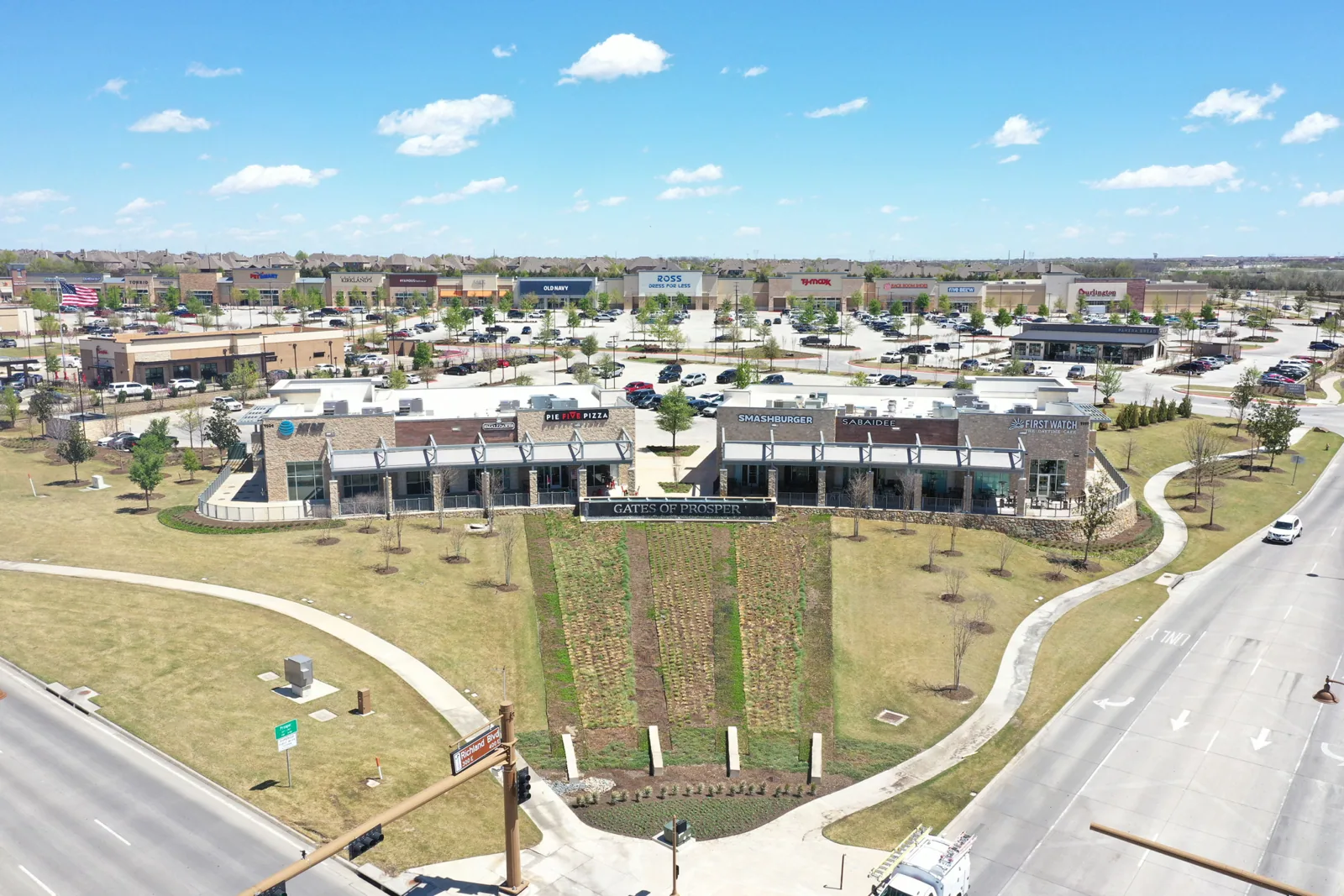
Confirm the site before dispatch
Planning materials define a Prosper Business Park area for commercial, light-industrial, and warehouse uses. The plan places the district near the BNSF Railroad and Dallas North Tollway, with the rail corridor and highway access as transportation features. Those facts can inform future coordination, but they do not establish whether a particular parcel is built, occupied, or in service. Confirm the property name and current access instructions before dispatch. The Prosper municipal service area covers the city context, while Anna coverage is another separate location in the wider Collin County radius.
Where a project is under construction or recently completed, obtain current roof plans and closeout details rather than relying only on a planning map. A building may have construction-phase openings, temporary membrane, new equipment curbs, or multiple trades working at the perimeter. Confirm who can approve access and whether the roof contractor or general contractor controls protection of an unfinished edge. For an operating property, record actual roof zones and contact names. A district label cannot serve as a substitute for a project address or a building-specific scope.
Coordinate roof work with construction logistics
A commercial or industrial site near rail and highway corridors can have staging constraints that differ from an established office property. Confirm truck entry, material unloading, crane or lift position, storage limits, rail-side restrictions, and active loading routes with the site's manager. If the work falls during construction, synchronize roofing with mechanical, electrical, and façade trades so new penetrations do not leave the membrane open. A phased work schedule can define work zones, daily weather protection, and which party inspects the tie-in at each handoff.
Before mobilizing, identify the person who can authorize added work if a test opening reveals wet insulation, damaged deck, or an unrecorded assembly. Agree how an open area will be protected if weather pauses the work, and where crews can stage without blocking emergency or delivery access. A site with concurrent trades needs a written distinction between roofing work and equipment or wall work. At each shift end, document completed seams, temporary edges, penetrations awaiting trade coordination, and remaining checks. This lets a superintendent or facility director see the condition without relying on a verbal update.
Inspect the full path around each penetration
Rooftop equipment and later trade work create interfaces where membrane, curb, conduit, and flashing must remain connected. We compare the equipment layout with the roof plan and inspect curb corners, fasteners, counterflashing, seams, and surrounding drainage. An interior leak report should be matched to the actual roof zone, not assumed to sit directly above a ceiling stain. Photos identify each detail and show whether the full perimeter was accessible. A roof inspection can document the interface and any hidden condition that needs a test before repair.
When a property is not fully built out, the inspection boundary should be especially clear. A walkover of a completed roof does not assess an unfinished area or a roof surface still controlled by another contractor. Identify sections under construction, material storage, temporary membranes, or active tie-ins. If equipment has not been installed yet, preserve a record of planned curbs and require a post-installation roof check when the vendor completes its work. This closes the gap between a construction drawing and the final membrane detail, without implying that the roof is complete before it has been inspected.
Set weather protection before opening the assembly
Spring is the Dallas-Fort Worth region's strongest severe-thunderstorm season, and the metroplex experiences hail, damaging winds, flooding, and tornadoes. A regional alert does not establish conditions at one site, but it can affect the work plan. Before opening the roof, choose a weather-tight stopping point and have compatible temporary protection ready. After a reported storm, document actual punctures, displaced edges, open seams, or blocked drains. A post-storm review records what the crew observes and what requires follow-up.
Hot summer weather can make roof surfaces difficult to work on and affects the timing of some adhesives and coatings. Check product requirements and surface conditions before application. If rain interrupts a new installation, the closeout should identify what was finished and whether a temporary tie-in remains. Water entering beneath an incomplete roof can affect insulation or interior areas before the permanent system is ready. A project manager should know who monitors weather, who secures the opening, and who inspects the completed seam after work resumes. Do not leave that responsibility implicit between trades.
Specify materials from verified layers
For a new commercial building, system choice follows deck, insulation, drainage, edge, equipment, and access design. For an existing structure, identify the installed membrane or panel before proposing a compatible repair. We review attachment, substrate, seams, penetrations, and prior layers. A coating should not conceal saturated insulation or a failed drain. A repair scope names the exact material and boundary, while a TPO roof design must still account for the building's edge conditions and mechanical layout.
A recover can be evaluated only after confirming the number and condition of existing layers, moisture, attachment, drainage, roof height, and current code. Tear-off exposes concealed material and can reveal deck or insulation work that was not visible from above. The proposal should describe how the system ties into walls, curbs, drains, edges, and adjacent roof phases. If a project is not yet built, coordinate those details with the design team and trade sequence. If the building is existing, use field measurements and tests rather than a plan label to establish quantity or material compatibility.
Set scope boundaries that survive project handoffs
A small repair may correct an isolated seam or flashing failure if nearby material is sound. Widespread moisture, loose attachment, or unstable deck can require a larger project. We compare repair, recover, and replacement on a defined roof zone and identify which conditions remain untested. A recover review should include layer count, drainage, and attachment checks; a replacement scope should identify removal, dry-in, disposal, equipment coordination, and closeout.
On a developing property, scopes can shift when a new curb is installed or another trade modifies a penetration. Tie each change to a dated photo, approval, and a marked roof map. The same boundary should appear in the estimate, field report, and closeout, so the next contractor can see what was actually completed. If a test opening changes the amount of wet insulation to remove, pause for approval and document the revised limit. That process reduces confusion between a field condition and a planned allowance while keeping the owner informed about cost and schedule drivers.
Retain a commissioning record for the roof
A completed installation needs a usable handoff: material data, roof plan, tested seams, flashing and drain photos, change approvals, warranty documents supplied by the manufacturer or installer, and the final closeout. A condition report can capture roof zones and unresolved items without substituting for the actual closeout package. Record which penetrations were completed by other trades and whether the roofing interface was checked afterward.
Commercial Roofing Questions
Does the Prosper plan prove a building is operating?
No. We confirm the site status and access contact before scheduling an inspection.
Can a roof inspection happen during construction?
Yes, with the responsible contractor coordinating access, open edges, and work-area protection.
Who should coordinate new equipment curbs?
The property or project contact should identify the mechanical trade and authorize a roof-side inspection after installation.
Can an unfinished roof be included in a closeout?
Only completed sections should be described as inspected; unfinished zones and temporary protection must be recorded separately.
What belongs in a new roof handoff?
Keep material records, roof maps, seam and detail checks, change approvals, warranty documents, and closeout photos.
