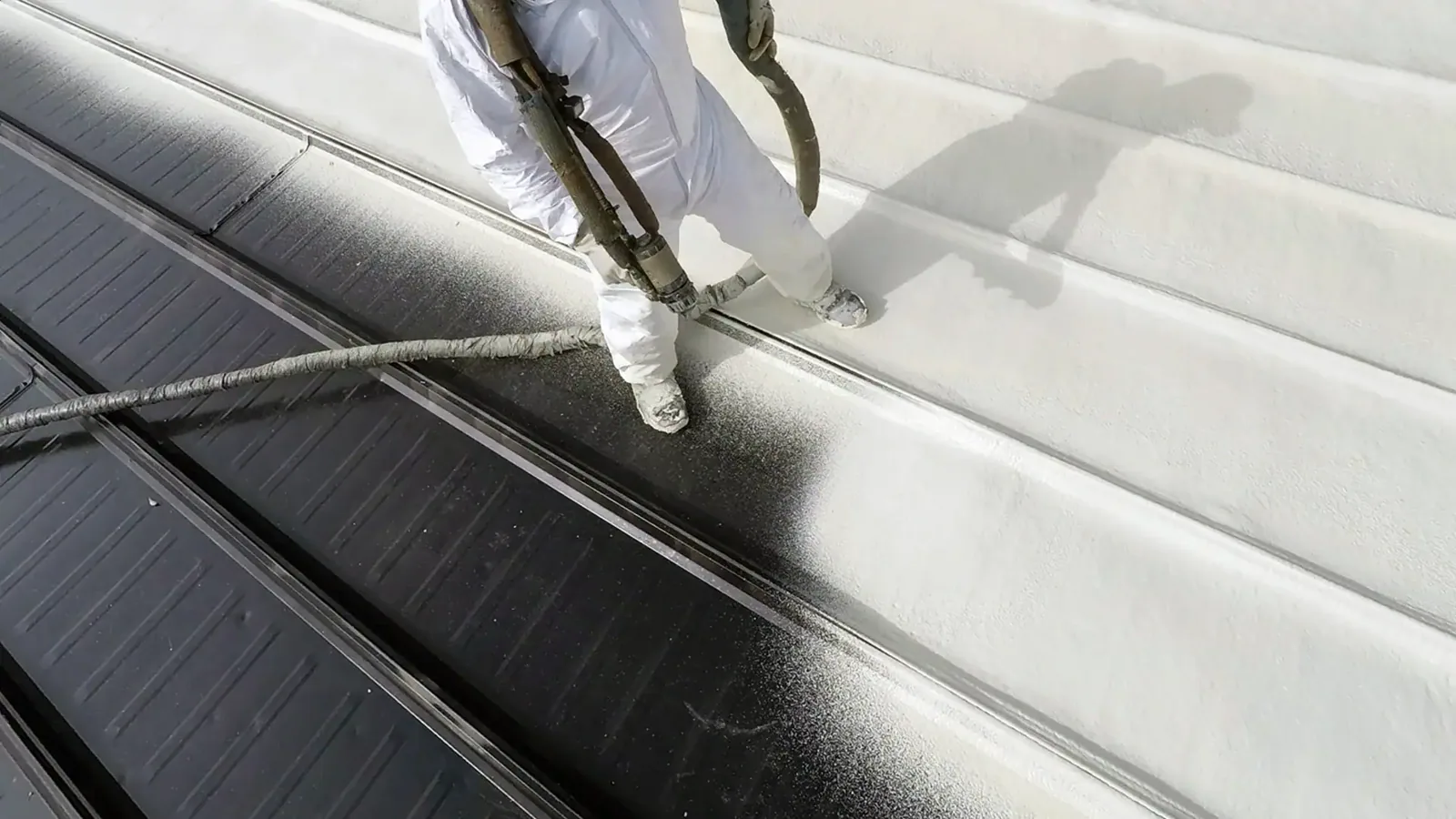
Commercial Standing Seam Metal Roofing in Allen, TX
Long metal panels expand in Allen's summer sun and contract as temperatures fall. Standing seam systems use raised, joined panel edges and concealed clips designed to secure the roof while accommodating movement. Those clips, seams, fasteners, substrate, and transitions all have to work together. We inspect the panel profile, attachment, existing underlayment, and roof geometry before recommending repair or replacement. Spring storms also put wind and hail pressure on the roof and its accessories. For commercial standing seam roofing in Allen, we can review the assembly on an office, warehouse, or industrial building around Watters Creek and 121 Tech Park.
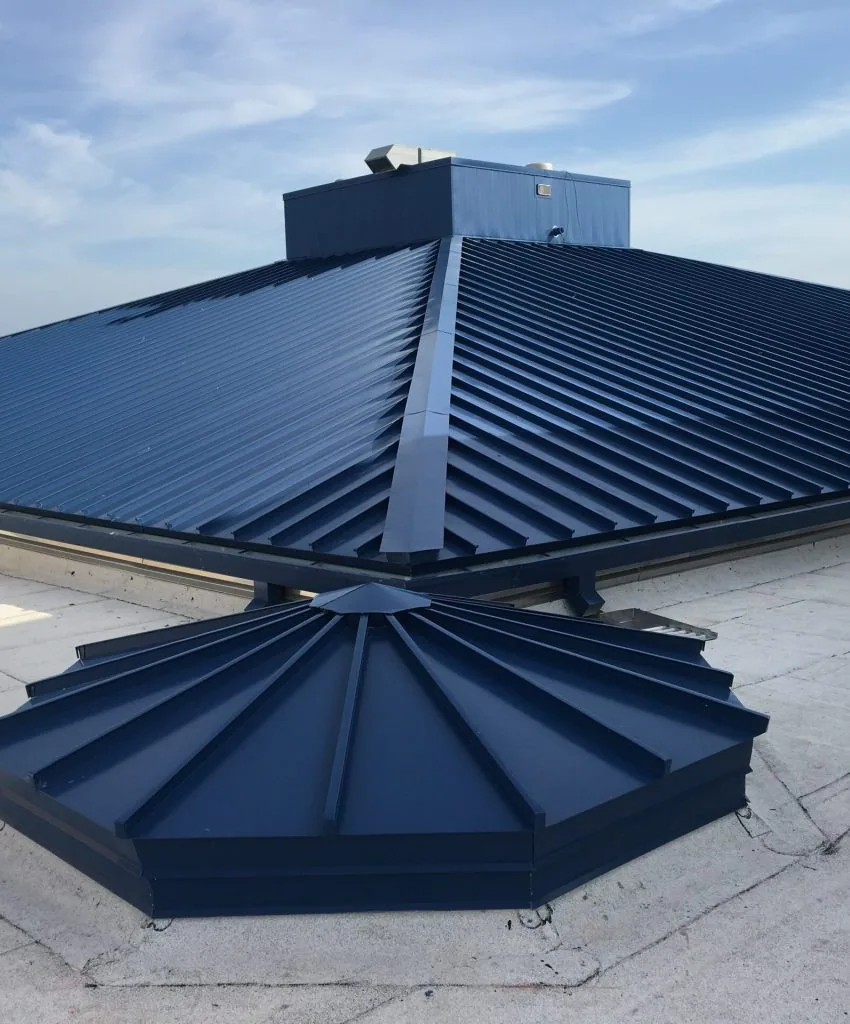
Allow panels to move with temperature
A metal panel changes length with temperature. Many standing seam assemblies use concealed clips, including sliding clips in systems designed to permit panel movement. Fixity points, panel run, clip selection, support spacing, and end details determine how movement is managed. If panels are restrained at both ends or clips bind, stress can transfer to fasteners, seams, trim, or the supporting structure. We review the installed profile and clip details where access allows before diagnosing oil canning, buckles, noise, or leaks.
Panel length and roof geometry affect movement and material handling. The design should specify where panels are fixed, how they move, and how eaves, ridges, valleys, and penetrations are finished. A clip that fits one profile may not fit another. Do not substitute a visually similar clip without confirming compatibility. A metal retrofit system can use a different support and attachment strategy from a new standing seam assembly. We compare the roof structure and existing panel condition before choosing either path.
Choose panel and seam construction
Standing seam panels can be snap-lock or mechanically seamed, with different profiles, seam heights, clips, and accessory details. Mechanically seamed panels are closed with a seaming tool after placement; snap-lock panels join through a formed engagement. The specified design determines how each seam is assembled and tested. Panel material, thickness, coating, width, and support spacing should fit the building's exposure and structural requirements.
We check for open seams, panel distortion, loose clips, backed-out fasteners, damaged coatings, and corrosion. Oil canning is a visible waviness in the metal that may be cosmetic or reflect panel stress, support irregularity, or installation conditions; it does not automatically mean the roof leaks. A roof drawing and close inspection help determine whether a panel can be adjusted or must be replaced. For a low-slope roof where sheet waterproofing is more suitable, a single-ply membrane or multi-ply assembly may be considered instead.
Account for Allen heat and storm loads
Dallas-Fort Worth's hot summers create strong thermal movement in exposed metal. In spring, severe weather can strike the DFW area with hail, gusts, and heavy rain. The panel profile, clip attachment, structural supports, eave and rake details, and edge conditions affect how the roof responds. Wind resistance must be established for the full assembly under project design requirements. A thicker panel alone does not resolve an attachment or substrate issue.
After hail, inspect panel surfaces, seams, ridge caps, gutters, and penetrations for impact or displacement. A dent may be cosmetic, but split coatings or open seams can create a future corrosion or water path. We photograph conditions and note whether there is an active leak. A storm damage inspection can document the roof and related flashing, and edge-metal service can secure damaged trims and gutters. We base the repair on the observed panel condition, not the storm report alone.
Protect the deck and condensation plane
The metal panels are the weathering layer, but the underlayment and insulation below them protect the building and control heat transfer. We inspect for wet insulation, corrosion, water staining, and condensation at the deck. Metal can cool quickly after sunset, and interior humidity can contribute to condensation when the assembly lacks suitable control layers or ventilation. The right correction depends on the building's construction, air movement, and climate loads.
Roof penetrations need compatible boots, curb flashings, and closures so water and wind-driven debris do not enter at cut panel edges. The panel's high ribs may require formed closures at eaves and ridges. Where the roof is insulated below purlins, clip height and thermal spacers may affect continuity. We review the thermal layer and check skylights, exhausts, and equipment openings. Flashing parts should match the panel profile and roof geometry.
Set panels and clips to the approved layout
Installation starts with a sound support structure and the approved panel layout. We verify purlin lines, clip locations, end laps if specified, and the orientation of each panel. Panels need to lie without waves, distortions, or fastening stresses, and clips must engage the seam correctly. A motorized seamer is used only where required by the system. Fasteners, sealants, closures, and trim follow the selected manufacturer's details.
Material length and handling can require a crane or special staging area. Wind can make long panels difficult to control, and rain may interrupt underlayment protection. The installation schedule should define temporary dry-in and secure conditions each day. Dallas-Fort Worth summer heat affects worker safety, panel surface temperature, and movement during placement. If the roof remains occupied, we coordinate deliveries, overhead work, roof access, and interior protection. We inspect seams and terminations before moving onto the next section so errors do not become concealed under trim.
Estimate and schedule depend on panel length, roof height, existing panel removal, deck and purlin repairs, clips, trim, and access for long material. A new penetration or curb can require custom panel cuts and flashing; a patch on a seam may need a larger panel area opened to reach secure attachment. We document those limits and identify any concealed framing condition that could change quantities. The owner can then compare the metal scope with an alternate membrane system on the same building. We also confirm panel cut edges receive specified corrosion protection before trim or closure covers them.
Inspect seams, fasteners, and coatings
Metal roofing needs inspection for loose clips, opened seams, corrosion, scratches through protective coatings, damaged sealant, displaced closures, and blocked gutters. Rooftop equipment service may dent panels or loosen flashings. Use walk paths or fall-protection provisions that fit the panel profile, and avoid placing loads on unsupported ribs. Clean debris from valleys, eaves, and gutters so water does not collect behind trim.
For Allen facilities, check the roof after severe wind or hail and after work by mechanical trades. A roof inspection can track panel and attachment condition. A condition report preserves photographs of areas that need monitoring. Keep panel profile, finish, and clip information with the building record so repairs can use compatible parts and account for movement.
Commercial Roofing Questions
Why do standing seam panels move?
Metal changes length with temperature. Clip and fixed-point details are designed to manage that movement without transferring excess stress to seams or trim.
Can you replace one standing seam panel?
Sometimes. Access, panel engagement, length, adjacent seams, and the condition of concealed clips determine whether selective replacement is practical.
Are visible waves in metal a leak?
Not necessarily. Waviness can come from panel stress, support conditions, or appearance. We inspect seams, fasteners, and water paths to determine whether repair is needed.
Can hail damage be repaired without reroofing?
Localized damage may be repairable when the panel coating, seams, and attachment remain sound. The condition of the affected panels guides the scope.
Do standing seam panels need regular maintenance?
Yes. Check seams, clips, trim, sealants, coatings, gutters, and penetrations, especially after severe weather or equipment service.