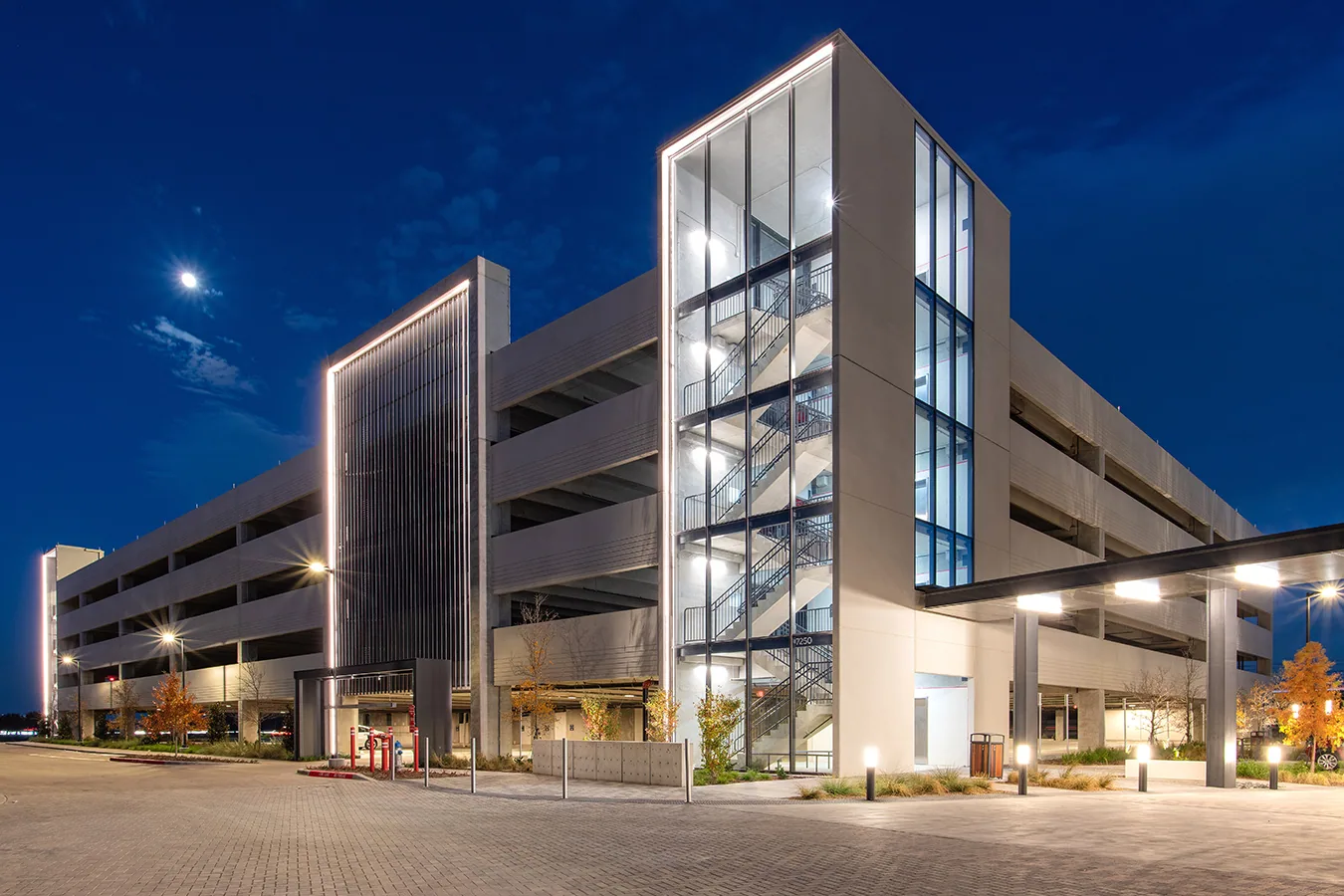
Commercial Roofing in Fairview, TX
Commercial roof service in Fairview, TX starts with the property and the roof condition, not assumptions about a town's building stock. Fairview is a Collin County municipality with an economic development corporation. Greenville Avenue connects the town and rural Collin County with Allen-area business routes. We inspect the actual roof, identify the system, and plan repairs or renewal around access, building use, and the conditions observed on site.
Find the roof entry point before patching
A ceiling stain or active drip can be distant from the opening above. Water may travel along a deck, insulation, or a roof slope before it becomes visible inside. We compare the reported location with seams, penetrations, curbs, parapets, drains, and previous repairs. The inspection records active water, visible damage, possible moisture, and any zone not accessed. If evidence remains incomplete, testing or a controlled opening can help set a repair boundary. A commercial roof inspection gives the facility contact photos and observations tied to roof sections.
Coordinate routes between Fairview and Allen
Greenville Avenue connects Fairview and rural Collin County with Allen-area business routes. That route context helps coordinate access and service scheduling; inspection establishes each roof type and condition. We confirm the building, roof contact, and access instructions before dispatch. Where an owner has work in both communities, the Allen service area and Allen Central Business District can be coordinated on the same regional calendar, while reports and estimates stay specific to each municipality and property.
Identify the material and details on the roof
A field inspection may encounter a membrane, asphaltic layers, metal panels, foam, or a liquid-applied surface. We identify the installed material and substrate, then inspect seams, edges, penetrations, drains, and transitions before selecting a patch, weld, adhesive, or flashing method. A repair to a membrane field differs from work at a metal edge or wall flashing. If concealed insulation or deck condition affects the decision, identify the test needed rather than pricing an assumed repair. A roof repair scope names the material, zone, boundary, tie-in, and open question.
A Diligence Notes should identify what is known from visible evidence and what requires testing. If the roof is coated, record the coating condition and the membrane or substrate beneath only where it can be confirmed. At drains, note whether the outlet is clear, whether water remains nearby, and whether the membrane detail needs work. At penetrations, identify the curb, flashing, and any recent equipment change. Those observations help the owner separate routine service from a repair that needs removal or material replacement. They also keep a future bid tied to the inspected area rather than a general description of the property.
Attribute weather to the region, then inspect the site
The Dallas-Fort Worth region sees its strongest severe-thunderstorm frequency in spring, and hail, damaging winds, flooding, and tornadoes occur across the metroplex. After a reported storm, we inspect the accessible roof, photograph visible conditions, and separate wind displacement, punctures, drainage issues, and existing wear. In hot summer months, material handling and work timing also need planning. We attribute the weather context to the region and base the recommendation on roof evidence at the property.
Inspection timing should account for whether the roof is dry enough for testing or repairs. If moisture readings are taken after rain, record the affected area and the method used. A later visit may be needed to confirm that trapped water or a temporary cover did not change the visible condition.
Set a work sequence with the site contact
Before opening a roof, confirm the access route, staging point, work hours, equipment restrictions, and any room or asset below the repair that needs protection. If an opening exposes wet insulation, determine who can authorize added removal and how the work area will remain weather-tight during a pause. For multi-shift projects, define the section that will be left closed at the end of each day. A phased roof work plan can organize that sequence around the property schedule without assuming a fixed duration before the scope is known.
If a building stays in use during work, identify the rooms below the repair and agree on how the area will be protected. The site contact can also provide delivery hours, roof hatch access, and a person who can approve a change if concealed material is damaged. The work plan should say what remains open at each phase and how the crew will leave the roof if weather conditions interrupt the shift. Those constraints influence the sequence even when a repair method is technically straightforward.
Compare a repair with broader renewal
An isolated defect may support a focused repair when the surrounding roof remains dry and stable. Repeated leaks, wet insulation, loose attachment, or deck deterioration can justify a broader option. Recovery depends on current layers, moisture, attachment, roof height, drainage, and applicable code requirements. Tear-off exposes concealed conditions but requires disposal, dry-in, and interior protection. We state what each approach includes and which tests remain open. A recover assessment and a replacement proposal should identify the same roof boundary and list their access, equipment, and tie-in assumptions.
When pricing work, confirm whether the scope includes temporary protection, removal, disposal, insulation, edge metal, and a final inspection. If testing is incomplete, identify the area sampled and any additional opening that could change the estimate. A proposal should show what is included in the base work and how a concealed condition would be documented and approved before removal continues. These details help a property owner compare estimates on the same roof boundary and the same assumptions.
Keep findings available to the next manager
A clear roof file includes the inspection date, roof map, photos, material identification, repair approval, closeout, and follow-up. If a test opening was made, record its location and how the assembly was restored. If access prevented a complete survey, mark the zones that still need review. A roof condition report can preserve that context when a facility contact or vendor changes. The next service request can then build from what was confirmed instead of treating an old invoice as proof that the entire roof was checked.
A dated photo can help locate a seam or curb at the next service call, but the caption should say which roof section it shows and whether the repair was completed or still under review.
Record which work was permanent and which was temporary, along with any follow-up date. If a roof section was inaccessible, keep that limitation in the file until a later visit clears it. A complete handoff can name the next action and the person responsible for arranging access, so a roof finding does not disappear when a tenant, property manager, or maintenance vendor changes.
Commercial Roofing Questions
Do you provide commercial roof service in Fairview?
We assess commercial properties in Fairview and confirm access, roof system, and current conditions before preparing a scope.
Does Fairview's location identify the kind of roof we have?
No. We verify the actual membrane, panel, attachment, and details on the property. Local routes do not establish roof construction.
Can the DFW storm season cause damage in Fairview?
Regional storms can affect roofs, but a metroplex report does not confirm impact at one building. We inspect the actual roof after a reported event.
What affects repair timing and cost?
System type, access, work limits, testing, material availability, deck condition, weather, and occupied-building coordination can all affect the scope.
Can you inspect and repair a roof in one visit?
Some visible defects can be scoped promptly. Concealed moisture, unsafe access, or testing needs may require a separate step before permanent work.