
About Commercial Roofing Allen
A roof decision should tell a facility director what was found, what remains concealed, and which approval moves the work forward. Commercial Roofing Allen works with owners, property managers, facility teams, and general contractors on low-slope and metal commercial roofs. We repair, replace, recover, restore, coat, inspect, and maintain roof assemblies. Work starts with the actual property, access requirements, roof history, and reported condition. From there, we map observations by roof zone and define a scope that states its limits.
Allen combines a broad professional-services base with campuses supporting enterprise computing, electronics, telecommunications, and finance. Watters Creek brings offices, retail, lodging, and conference activity into one commercial district. 121 Tech Park combines technology, office, and industrial uses near US 75 and SH 121. Each property has distinct contacts, equipment, tenants, and access rules. We identify the roof system and condition at the building instead of inferring either from a tenant or district label.
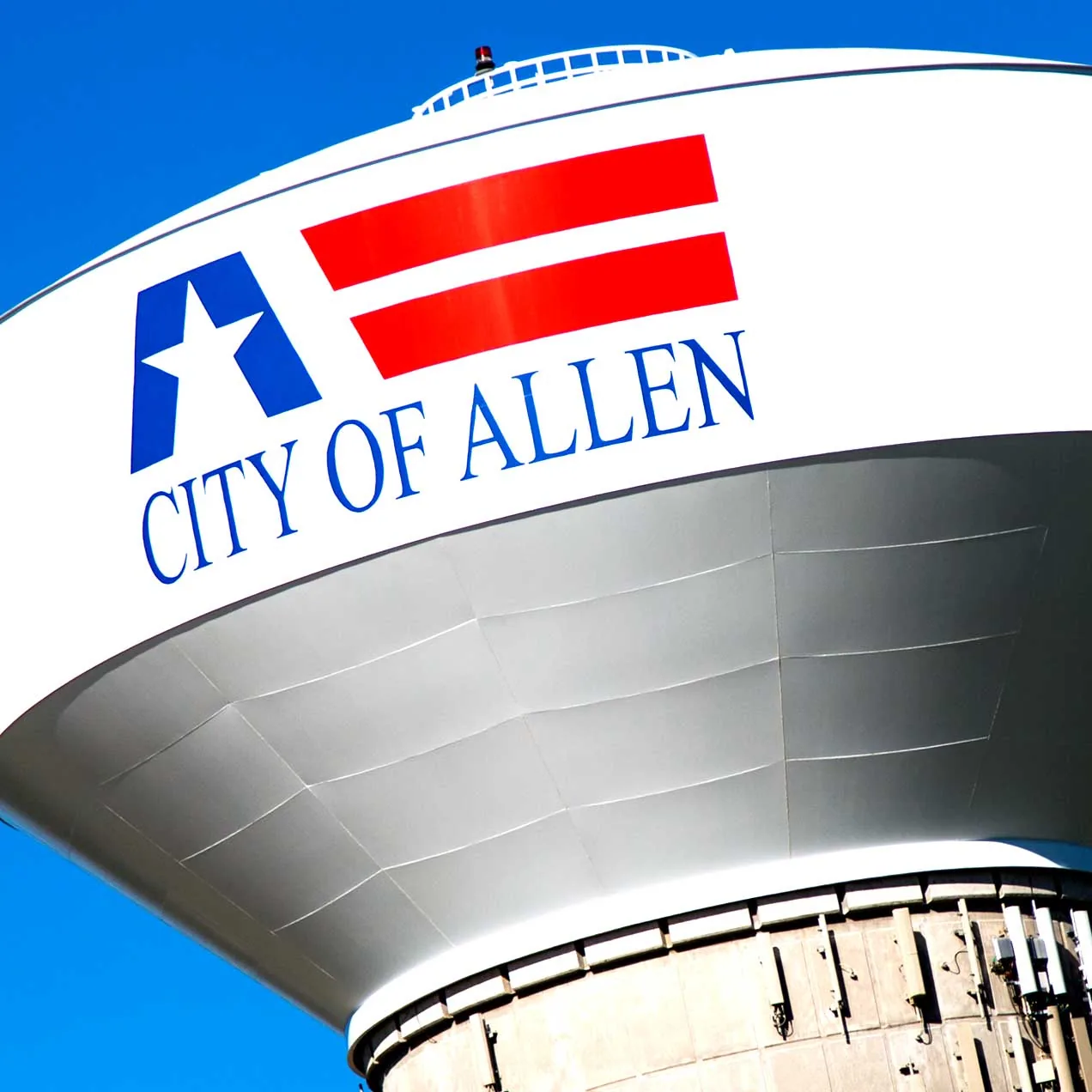
Inspect, repair, and plan commercial roofs
For a leak, we compare the interior report with roof slopes, seams, curbs, penetrations, drains, edges, and previous repairs. A commercial roof inspection records the areas reached and whether testing is needed before concealed insulation or deck is included in a repair quantity. If water is entering and immediate protection is authorized, temporary stabilization is documented separately from the permanent correction, with its limits and return point.
For a broader project, we identify the assembly and substrate before comparing repair, recover, replacement, or restoration. The scope describes measured quantities, material, preparation, tie-ins, access, staging, debris, protection below, and approvals. Drone and infrared methods can support an inspection where conditions allow, but concealed layers still require verification. A claim documentation scope can organize dated photos and service history when requested by the owner.
Agree on access and the work boundary
Before mobilization, confirm the building contact, roof access, safe route, material staging, delivery timing, lift placement, debris path, and areas below that need protection. The property contact identifies tenant paths, loading, equipment service, and operating restrictions. A phased sequence names roof zones, the exposure limit, temporary protection, daily dry-in check, and the person who can release the next phase. Those details keep work coordinated with the building instead of leaving site decisions until a crew arrives.
If an inspection suggests moisture, damaged deck, poor attachment, or a different assembly than a plan shows, document the discrepancy and propose the test. State the opening location, restoration method, and approving contact before removal expands. Work stops at the authorized boundary while the owner reviews new evidence. This preserves a distinction between visible quantities and a test-dependent allowance. At closeout, record installed materials, photographs, approvals, excluded work, and any follow-up due.
Commercial Roofing Across Collin County
Work with Allen properties and North Texas weather
Watters Creek's multi-phase office park has existing Class A buildings and additional build-to-suit sites alongside retail, hotel, and conference uses. The 121 Tech Park district serves office, industrial, and technology tenants. These examples represent different operating contexts, not a single roof assembly. We confirm the property, access, and system at the specific structure before preparing a scope.
Dallas-Fort Worth sees its greatest severe-thunderstorm frequency in spring; hail, damaging wind, flooding, and tornadoes occur across the metroplex. A regional weather report does not establish damage at an individual Allen building. After a site-specific report, we inspect the roof, document observed conditions by zone, and distinguish impact from existing wear. Hot summer exposure can also affect membranes, metal details, and drainage. The inspection record connects those conditions to evidence rather than making a claim based on geography alone.
Make the service record useful next year
The property file should retain its roof map, inspection date, photographs, material identification, repair boundary, approvals, closeout, and remaining questions. A condition report can establish a baseline. Roof asset management can track service history by building, while capital planning can sequence testing, repairs, and larger work. Those records support comparison without treating roofs as identical.
Warranty and maintenance information should stay tied to the assembly and documents supplied for the property. The owner or authorized contracting party confirms applicable terms. A warranty file can organize notice dates, inspections, and repairs. A maintenance program can track drains, seams, flashing, and earlier work at an agreed interval. When a mechanical vendor changes a penetration, record the date and arrange a roof-side review.
Give owners clear options
A visible seam split may support a local repair; recurring leaks, broad moisture, loose attachment, or deck deterioration can point to broader renewal. A recover assessment checks existing layers, moisture, attachment, drainage, roof height, and code. A replacement scope states removal, insulation, equipment, edge details, access, protection, and tie-in assumptions. Each choice uses the same roof boundary so the owner can compare its actual scope.
Cost and timing may change with test openings, wet insulation, deck repairs, staging, lift access, disposal, interior protection, or equipment shutdowns. If an interim repair is appropriate while capital work is prepared, state what it protects, what remains open, and when to review it. The proposal should distinguish emergency water control from permanent correction. That gives facility and ownership teams a decision record they can use after the immediate service call.
Bring the building details to the first visit
For a service call, send the property name and address, site contact, roof concern, access window, available drawings, and repair history. Include recent equipment work or interior reports where available. We confirm whether the visit is an inspection, repair, emergency response, or capital assessment, then identify any testing or approval needed. If an active leak is reported, note which space is affected and whether water is still entering.
A useful first visit ends with a clear next action. The report names the zones checked, observed conditions, limits, photographs, and work that remains subject to testing. The owner receives a scope tied to the actual building, not a generic response based on a city or property type. For help planning a roof review in Allen or its surrounding service areas, contact Commercial Roofing Allen with the property and access information.
For portfolio work, agree on a consistent condition scale and keep each building's evidence attached to its record. A summary can help owners prioritize visits, but it should identify the date and limits of every inspection. If plans are incomplete or the roof has several additions, note the assembly separately for each section. That gives the next reviewer a practical starting point without carrying assumptions from one wing to another.
When the scope is approved, confirm the work boundary, materials, protection, access, and closeout contact in writing. If field conditions differ, pause at the agreed limit and document the change before extending removal. After completion, retain photos and material information with the property file so future repairs can be compared with what was actually installed.
Commercial Roofing Questions
What information helps you prepare for a site visit?
Send the property, roof contact, access instructions, current concern, available plans, and prior service records.
Do you assume a roof system based on property type?
No. We identify the surface, substrate, attachment, drainage, and prior work at the building.
Can work be phased around tenants or equipment?
Yes. The property contact helps set access, operating windows, protection, daily dry-in, and approval points.
What is included in a closeout?
A dated record of zones reached, photos, materials, work limits, approvals, and follow-up items.
Roof leak or storm damage in Allen? Call 555-555-5555