Ponding Water Roof Repair in Allen, TX
Water that remains on a low-slope roof after surrounding areas have drained can signal a blocked outlet, inadequate slope, deck movement, or another drainage condition. Allen's Watters Creek and 121 Tech Park show the city's mix of office, retail, technology, and industrial properties, but each roof has its own flow paths. We inspect ponding water conditions in Allen by roof area before recommending a correction.
Trace the route from low point to outlet
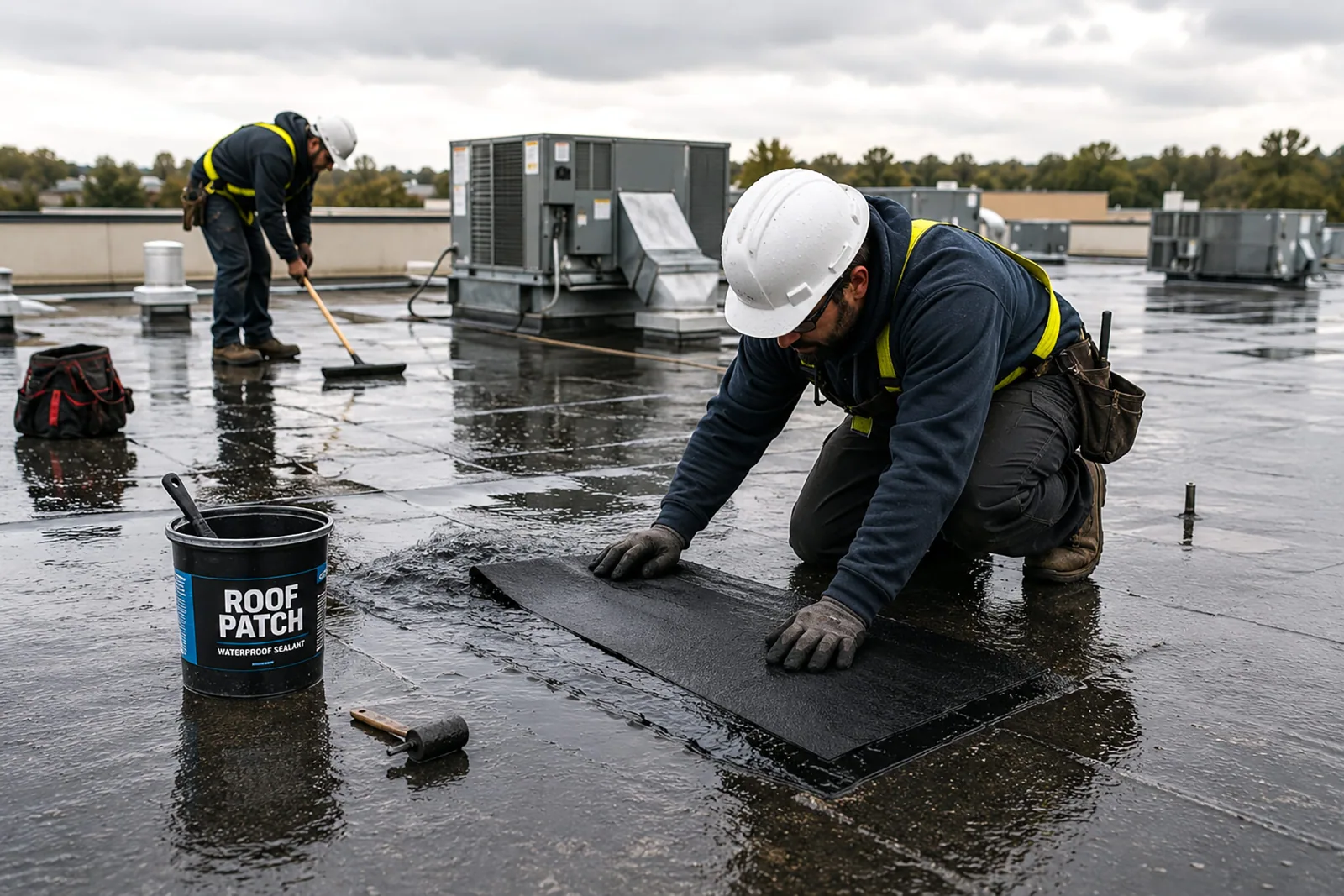
Inspection starts at the water mark and follows the drainage path to the drain, scupper, gutter, or overflow. Debris, a blocked strainer, displaced insulation, or an improperly routed repair can slow discharge. We note where water collects, how broad the affected area is, and whether an outlet is accessible. We test the outlet and check the low area after surrounding water drains to distinguish a blockage from recurring ponding.
We check drain bowls, strainers, leader connections, scuppers, overflows, crickets, parapets, and surrounding membrane. A roof drain and scupper service can address a blocked or damaged outlet, while slope or deck conditions may need separate review. Photographs from more than one point help identify whether water follows a channel or remains in a depression after the rest of the roof clears.
Look beneath the surface before adding material
Repeated ponding can stress seams, flashings, and coatings, particularly where water sits near a penetration or edge. We inspect whether membrane seams remain closed, if previous patches have lifted, and whether insulation or deck appears compressed or changed. Where the surface gives no clear answer, moisture testing or a controlled opening may be appropriate to confirm the layers below.
Adding a coating or patch without restoring the drainage path may leave the underlying cause in place. The repair should address the correct layer and preserve flow to the outlet. A roof inspection maps defects by zone; flashing repairs or seam repairs may be needed where standing water has exposed a separate weakness. Each condition is recorded separately from the observed ponding.
Review recurring low areas and deck changes
A repeated low spot can relate to roof geometry, compressed insulation, deck deflection, or a change made during prior work. We compare the location with roof plans and earlier repair photos where available. If a structural concern is visible, the owner should obtain the required evaluation before additional loading or material is added. The roofing scope describes observed roof conditions and identifies when a separate structural review is needed.
A new scupper or drain relocation may change the path water follows and affect parapet or wall details. We coordinate any proposed change with the building's design and code requirements. Allen adopted building and energy codes should be checked against current amendments for replacement work. The report states whether water remains after drainage, how the roof is sloped toward the outlet, and what project detail would change the route.
Check drainage after North Texas rain
The Dallas-Fort Worth region has its wettest periods in spring and fall, with spring thunderstorms bringing much of the severe-weather risk. Allen also sees hot summer periods that can age exposed membrane and sealant. These conditions make drain maintenance important but do not explain a persistent low area by themselves. We inspect the property after reported ponding and identify whether the water was still present after the roof had a chance to drain.
After convective rain, debris may move to strainers or low points and restrict an otherwise clear outlet. We record roof drains, overflow routes, and the areas where runoff enters. If water reached the interior, staff can identify timing and location while the roof inspection tracks the likely path. A wind-related roof review may be needed when loose edges or displaced materials accompany the drainage report.
Choose cleaning, correction, or replacement
If debris blocks a drain and the assembly is otherwise sound, clearing and restoring the outlet may resolve the immediate condition. A recurring low area can require insulation or deck correction, and widespread moisture may expand the scope. We identify confirmed conditions, testing needs, and the water path before proposing repair, recover, or tear-off. Those options depend on attachment, existing layers, roof height, and drainage design.
Cost depends on access to outlets, repair limits, material removal, deck or insulation work, and whether the roof remains occupied during construction. The proposal identifies any temporary protection and explains what concealed conditions could change the work. A drain maintenance plan can track cleaning and follow-up observations. For a property with broad distribution or warehouse operations, warehouse roof planning coordinates the repair with storage and dock use.
Keep a record of water and maintenance history
The roof record should show the date, rainfall report from the property, outlet condition, location and extent of water, and any repair made. We can provide a roof condition report with photos and remaining actions. The facility team can add routine drain cleaning and contractor visits so the next inspection can compare the same low area.
Closeout identifies whether the outlet was cleared, a new drain path was installed, or concealed layers were replaced. If a low spot remains under observation, the report names a follow-up date and the measurement or inspection needed next. A water mark is not enough to confirm that a correction worked; the facility can compare observations after later rain and update the roof record accordingly.
A maintenance log can show whether water appears after each storm, whether a drain cleaning temporarily changes it, and which roof section stays wet. Those details help distinguish a one-time blockage from a recurring slope or deck concern. Facility staff can attach photos from the same reference points and note when the inspection occurred. A consistent record gives the repair team a useful comparison without relying on memory or a single visit.
Where the low area is near rooftop equipment, the work plan should preserve service clearance while improving drainage. If a curb, walkway, or screen needs to move, the final position is coordinated before the membrane is restored. We identify how the repair meets the existing roof and whether adjacent insulation needs testing. Those boundaries are included in the proposal so the owner can evaluate both immediate correction and future maintenance needs.
After a larger project, the closeout identifies what material was removed, whether the drain or slope changed, and any remaining monitoring item. A later inspection can then compare the same outlet and low point, which helps confirm whether water is moving as intended.
Commercial Roofing Questions
How long can water remain on a commercial roof?
Timing depends on the roof design, weather, and drainage. We assess whether the outlet is blocked or a recurring low area remains after surrounding sections drain.
Does ponding mean the roof must be replaced?
No. A blocked drain may need cleaning, while a persistent low area, wet insulation, or deck change requires additional evaluation. The repair follows the confirmed condition.
Can a coating fix standing water?
A coating does not clear a blocked outlet or correct a deck or slope problem. We inspect drainage and the underlying assembly before recommending a surface treatment.
What should I report after heavy rain?
Note where water remains, how soon it was seen, whether the outlet was clear, and whether any interior area became wet. That helps guide the roof inspection.
What if ponding is near a roof drain?
We inspect the bowl, strainer, connection, membrane, and surrounding slope. If the outlet is open but water still collects, the roof geometry or underlying layers may need review.