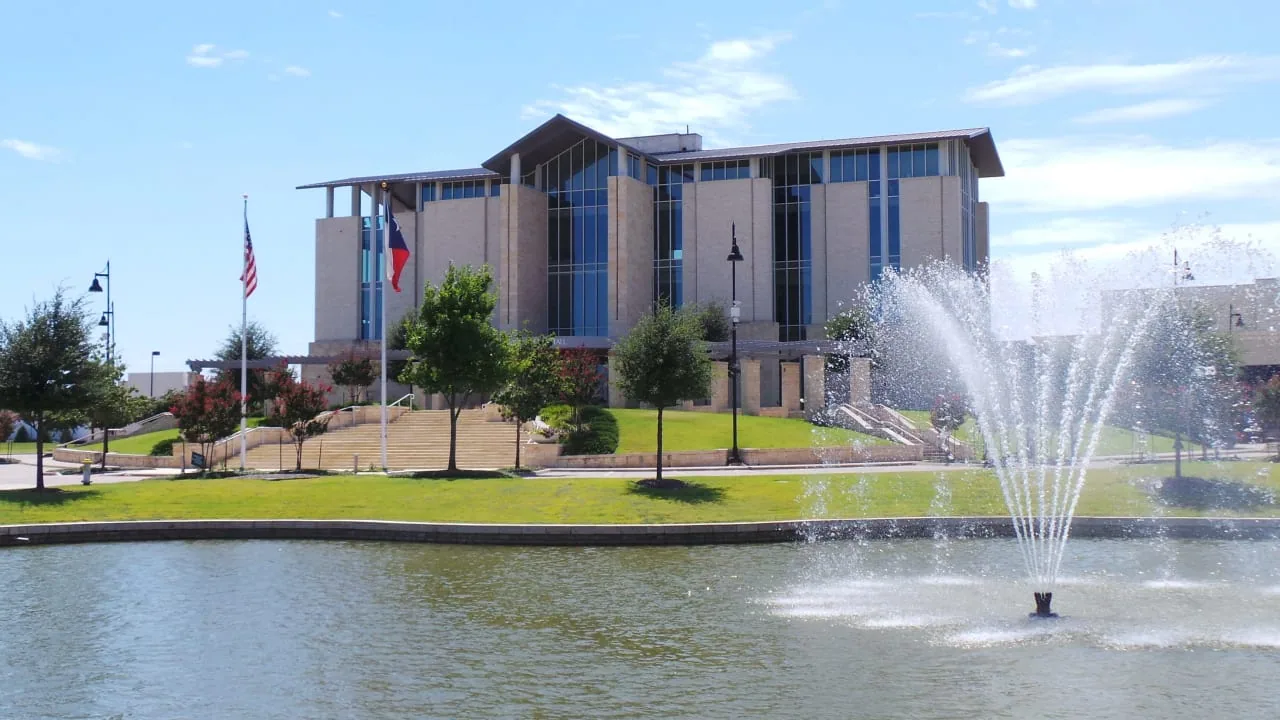
Commercial Roofing in Richardson, TX
Richardson is a Collin County municipality in the connected North Dallas employment market south of Allen. We review roof records, reported conditions, and operating needs at the specific property, then map findings to roof zones. The recommendation follows observed and tested conditions in each building.

Coordinate visits across nearby cities
Richardson sits south of Allen in the connected North Dallas market. Visits can be coordinated with Garland or Addison when access windows align, with a separate plan for each property. Before dispatch, confirm the building name, owner contact, roof-access procedure, prior work, and reported interior issue.
If several buildings share ownership, compare roof records only after matching addresses and structure identifiers. The report should identify whether it covers one wing, an addition, or a full roof surface. Equipment changes, tenant improvements, and earlier patches can make nearby sections different. Ask who can authorize testing and whether a mechanical vendor must coordinate access. That preparation gives facilities teams a clearer service sequence and keeps each roof assessment tied to its own use and assembly.
Investigate the condition at each roof zone
A leak report may point to an interior room while water entered through a seam or transition elsewhere. We examine roof slope, membrane joints, curbs, parapets, drains, edge metal, and earlier repair areas, then map observations to a zone. A roof inspection records access limits, photos, and testing that may be needed to define concealed moisture. The report should state what the crew saw and what remained hidden.
On roofs with additions or several levels, label the slope, elevation change, nearby drain, and direction to the nearest edge on the field map. That gives another technician a repeatable route to the same seam or curb and prevents one repair method from being carried across unlike assemblies.
The connected employment market can include facilities with sensitive schedules or multiple trades. Coordinate interior access with the manager and rooftop equipment work with the vendor responsible for that unit. If screens obscure flashing or a roof area cannot be reached safely, mark the limitation. At drains, inspect the membrane connection rather than stopping at debris removal. If staining is intermittent, note when it appears and compare that timing with rain or equipment work, while keeping cause separate from observation until the roof evidence supports it.
Review North Texas heat and storm exposure
Long North Texas summers and spring storm activity make exposed membranes, edge securement, and drainage worth checking. The regional weather record provides context, while a direct inspection establishes conditions at a Richardson facility. After a storm report, inspect roof details for openings, shifted edges, and drainage blockage. A site-based storm review records observed conditions rather than transferring a regional event to every roof.
Hot, humid summer exposure can age membranes and stress metal details or sealants. Check how the roof handles water after convective rain, and distinguish ponding caused by a blockage from a drainage design issue. Work timing may depend on safe surface conditions and the selected material's installation limits. If the roof is wet or access is restricted, record the constraint and return when conditions allow. A facilities manager can use the report to prioritize review without treating climate context as proof of a specific failure.
Specify repairs for the assembly in place
A compatible repair requires identification of the actual surface, attachment, substrate, and tie-in. A property may have membrane, metal, asphaltic layers, coating, or several assemblies across additions. We inspect seams, penetrations, curb flashings, drains, and perimeter terminations before choosing a patch. A repair scope defines the affected material, removal edge, preparation, and what remains to be tested.
Recovery is not a default alternative to replacement. Confirm existing layer count, moisture, attachment, drainage, height, and code requirements before considering another roof layer. Removal can reveal wet insulation or deck deterioration but needs a weather plan, debris handling, and protection below. If prior coating obscures the membrane, test compatibility rather than layering blindly. Compare the options on an identical roof boundary so a capital reviewer can see whether each includes insulation, curb work, edges, and equipment coordination.
Build the work window around facility needs
The property manager should confirm roof access, material staging, lift location, loading constraints, noise windows, tenant notice, interior protection, and authority to approve changes. A phased roof plan can sequence work areas and require a weather-tight daily stop. If HVAC or electrical work is planned, arrange a joint review of curbs and penetrations before the roofing crew closes the detail.
A route that includes Richardson and nearby cities can reduce repeat mobilization, yet every property retains its own logistics. Confirm who will receive a same-day update and what happens if weather stops work. If a test opening reveals a larger wet area, protect it and request approval before expanding removal. At shift closeout, record the roof zone finished, any temporary edge or cover, and the next inspection. This lets the facilities director make an informed decision even if they were not on the roof during the work.
Compare the work boundary before choosing a system
An isolated flashing or seam issue may support local repair if surrounding material remains sound. Repeated service calls, broad moisture, loose attachment, or damaged deck can support a larger renewal scope. Compare the same roof area under each option. A recover analysis identifies layer, moisture, attachment, drainage, and code assumptions; a replacement proposal identifies removal and restoration details.
Cost and schedule can change with testing, lift equipment, insulation work, interior protection, disposal, tenant coordination, and rooftop-unit shutdowns. A sample opening may identify a hidden condition that changes removal quantities. If replacement must wait for a capital approval, an interim repair should describe what it protects and what remains at risk. That distinction helps an owner balance near-term operations with the condition of the full assembly without mistaking emergency stabilization for a permanent correction.
Preserve a dated baseline for future reviews
Keep the roof map, photos, identified materials, test results, approved scope, closeout details, and remaining actions in the property file. A condition report can help compare visits if each finding carries a date and zone. Add mechanical work dates where a new curb or conduit may change the roof interface. Mark what could not be inspected and do not describe hidden layers as intact before testing.
Photograph prior patches before removing or covering them. Record the new tie-in, repair material, and any surface left outside the approved boundary so future inspections can distinguish old work from a new condition.
A subsequent visit should revisit the same seam, drain, or termination when possible. Record whether a repair remained intact after rain and whether water flowed freely after outlet maintenance. If a summary covers several Richardson buildings, retain a link to the individual report and map. A portfolio summary can help prioritize maintenance across several Richardson buildings, while dated maps and photos preserve condition details for each roof. The file should tell the next reviewer what changed and what still needs attention.
Commercial Roofing Questions
Does Richardson's employment-market location identify a roof problem?
No. We inspect the property and document the conditions observed there.
Can storm damage be inferred from regional weather?
Regional conditions provide context. Site evidence establishes whether the roof shows damage.
What if multiple buildings share an owner?
We can coordinate visits, but each report and scope remains tied to its own structure.
Can maintenance and replacement be compared in one estimate?
Distinct options can be shown with a shared roof boundary and clearly listed assumptions.
What records help the next inspection?
Keep maps, dated photos, materials, test results, approvals, closeout, and unresolved items together.