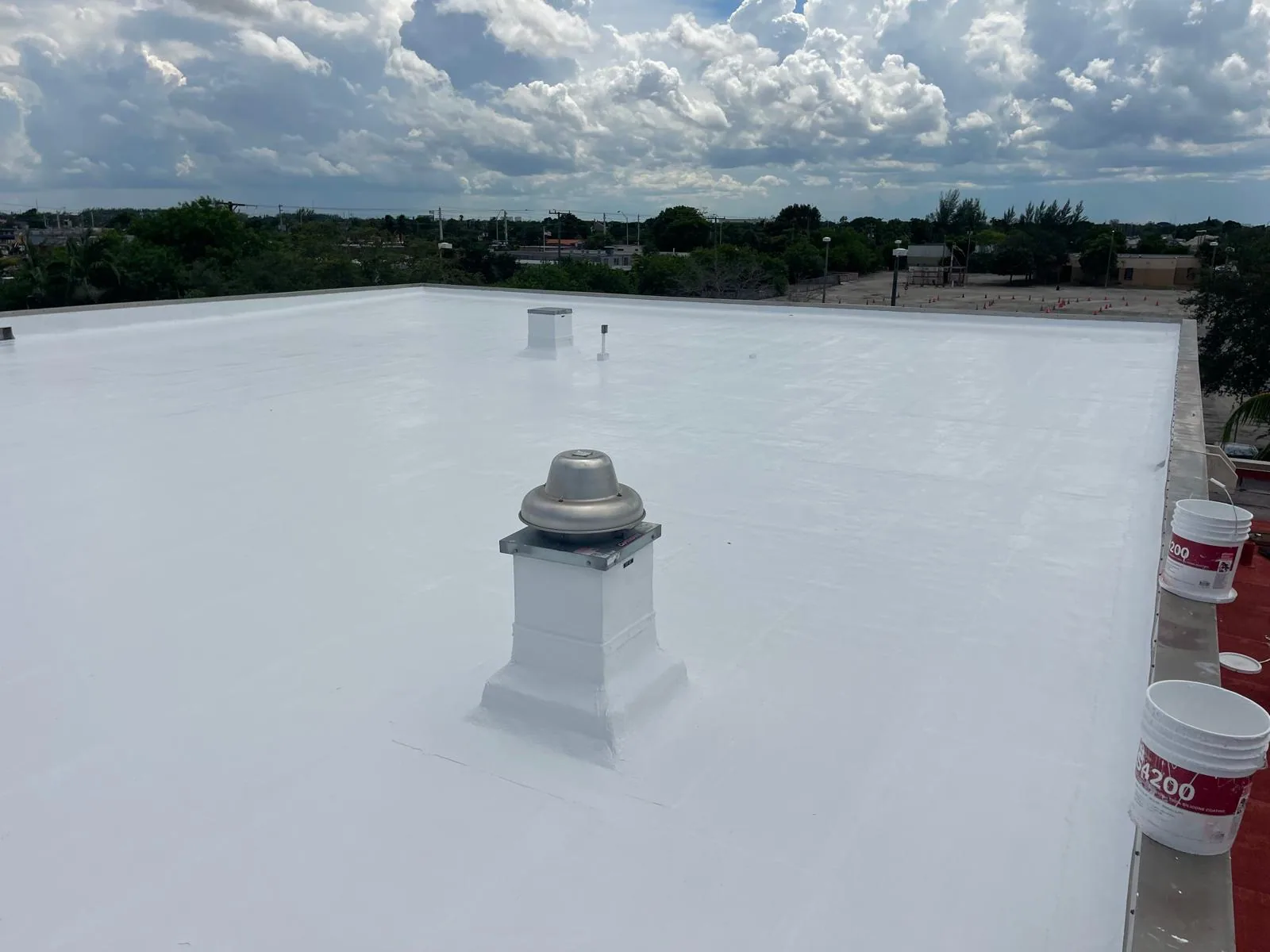
Commercial Modified Bitumen Roofing in Allen, TX
Modified bitumen roofs use asphalt sheets reinforced with fabric, often installed as a multi-ply assembly with a base and cap sheet. The system suits low-slope roofs where layered construction and repairability fit the building. In Allen, the roof also faces long periods of summer heat, humid weather, and spring storms that can test laps, drains, and flashing. We identify the existing plies, surface condition, attachment, and prior repairs before recommending work. Offices around Watters Creek and industrial buildings near 121 Tech Park may have different equipment and access patterns. Request a modified bitumen roof inspection in Allen to assess the assembly and its remaining serviceable areas.
Identify the sheet and attachment method
Modified bitumen membranes may use SBS or APP modifiers, reinforcement, and different surfacing. The system may be installed with hot asphalt, cold adhesive, self-adhered sheets, mechanical attachment, or torch application when the specific product allows it. These methods are not interchangeable. We identify the installed system and review its product requirements before selecting a repair method or proposing another layer.
A granulated cap sheet protects the underlying asphalt from direct exposure and provides a finished surface. Smooth-surfaced membranes may have a separate coating or surfacing layer. We check for granule loss, exposed asphalt, blistering, open laps, splits, and repairs that have hardened or pulled away. If another membrane is being considered, compare built-up roofing or a single-ply system based on the deck, building use, and installation constraints. Product data, not a generic description, determines the compatible assembly.
Read the roof by its layers
A multi-ply roof distributes protection through connected sheets. A base ply secures to the substrate, and cap sheets or additional plies form the exposed weathering surface. Failure can occur at the field, side lap, end lap, flashing, drain, or transition to another material. We inspect where water can cross those interfaces and note whether damage is isolated or repeated across the roof. A blister or wrinkle may indicate an adhesion issue, trapped moisture, or movement; cutting it without understanding the cause can enlarge the repair.
Interior symptoms can appear far from the entry point because water moves between plies and across deck flutes. We compare stains with roof slope, seams, penetrations, and drainage. Moisture below the membrane may require testing or a targeted opening before we can define removal limits. A roof inspection records those conditions, while a moisture survey may guide verification. If wet insulation or deck damage is confirmed, a surface patch alone will not restore the full assembly.
Choose a safe installation approach
Application method affects fire risk, fumes, access, and sequencing. Torch work uses an open flame and requires a qualified crew, fire prevention controls, and attention to combustible materials and concealed spaces. Hot asphalt and cold adhesives have their own handling and weather limits. Self-adhered sheets require a properly prepared substrate, suitable temperature, pressure, and roll-down technique. We select the method specified for the product and building rather than changing installation methods to suit convenience.
Before work begins, we review roof access, adjacent structures, stored materials, vents, skylights, wall cavities, and interior operations. The fire watch and inspection procedures follow the project requirements and applicable safety controls. Weather conditions in Allen influence surface temperature, adhesion, and safe work periods. Tear-off and re-cover work is staged so each section can be made watertight before the crew leaves. Tenant access, daily dry-in, substrate, and insulation planning should be settled before mobilization. The project schedule identifies the area, method, and protection step for each day's work.
Rebuild the flashing and drainage
At drains, membrane plies must be integrated into the bowl and clamping detail. At a parapet or curb, flashing rises and terminates above the path of water. Seams and corners require careful treatment to avoid a weak junction between horizontal and vertical surfaces. We inspect scuppers, overflow outlets, edge metal, equipment curbs, and expansion joints so a field repair does not leave a nearby leak path untouched.
Allen's spring storms can bring heavy rain, hail, and wind across the Dallas-Fort Worth region. A clogged drain can expose low areas for longer, while wind can test edge fastening and wall transitions. We clear and repair outlets as needed and secure any loose perimeter component. If hail or wind damage is reported, we inspect the roof surface and document observed damage instead of assuming the full roof requires replacement.
Repair compatible material in defined areas
Repair begins with identifying the existing membrane and the bond between layers. We remove loose surfacing and unsound material to reach a stable base, prepare the surface, and install compatible sheets or flashing. The repair should extend beyond the visible opening to sound, well-bonded material. Edges are secured and surfaced as required so water does not enter below the new patch. If prior coatings or multiple overlays are present, we review compatibility before applying another product.
Recurring leaks at several locations can indicate broader assembly deterioration. We map the repair history and check whether insulation is wet, seams are separating, or flashing is failing in multiple zones. For localized damage, a targeted roof repair may preserve serviceable plies. Widespread moisture or unstable attachment may call for a new assembly. A replacement evaluation compares removal, insulation, and edge modifications with continued patching, taking building access and work disruption into account. Labor and schedule are influenced by how many plies must be opened, the installation method, roof temperature, moisture found below the cap sheet, and fire protection requirements. A clear boundary helps estimate both the repair and the follow-up inspection.
Protect the cap sheet after installation
Maintenance checks for open laps, exposed asphalt, lost granules, blistering, punctures, blocked drains, and damage from rooftop service. Loose gravel or debris can conceal a split, so clear inspection paths matter. Coatings should be used only when compatible with the membrane and installed over a prepared surface. A roof coating does not correct wet insulation or failed plies beneath it.
Allen's heat and humidity can age exposed asphalt and sealants, while spring weather can move debris across the roof. The facility team should log equipment service, roof traffic, and interior leak reports so each issue can be compared with previous conditions. A maintenance program can revisit drains and flashing after storms, and a roof condition report can retain photographs and repair limits for the asset file. Keep the membrane type and approved repair guidance with the building record so future crews do not mistake a modified bitumen roof for a built-up system. Record any open repair item with its roof area, temporary protection, and next inspection date.
Commercial Roofing Questions
How can you tell if the roof is modified bitumen?
We inspect the exposed surfacing, seams, repair layers, and available roof records. Granules or asphalt alone are not enough to identify every assembly.
Do all modified bitumen roofs use a torch?
No. Product systems may use hot asphalt, cold adhesive, self-adhered sheets, mechanical attachment, or approved torch application. The product instructions control.
Can you coat a granulated cap sheet?
Some coatings may be compatible after proper preparation, but the existing roof must be dry and sound. Granule condition and adhesion need review.
Can a modified bitumen roof be repaired in one area?
Yes, when the surrounding plies are well bonded and the substrate is suitable. Repeated leaks or moisture may require a broader scope.
What determines the reroof schedule?
Tear-off, wet insulation, deck repairs, hot-work controls, access, weather, and occupied-space coordination all affect timing.