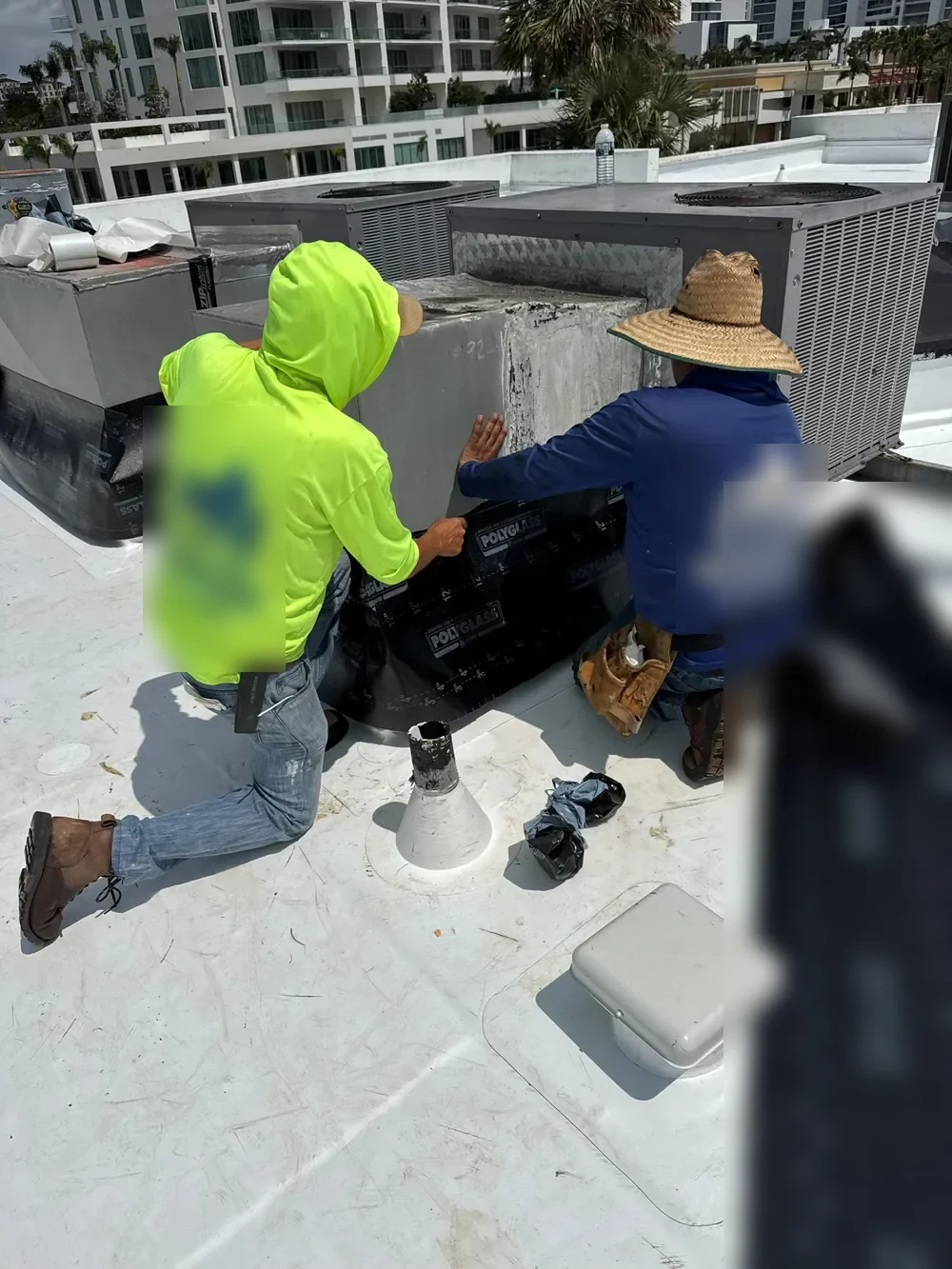
Infrared Roof Moisture Survey in Allen, TX
A dry roof surface can conceal wet insulation below it. Infrared scanning helps locate temperature patterns that may correspond to trapped moisture, giving the facility director a map for targeted testing. The scan does not prove moisture by itself. We interpret the pattern with roof construction, recent weather, surface conditions, and field checks, then use selective cores where confirmation is needed. In Allen, office properties near Watters Creek and mixed office, industrial, and technology sites near US 75 and SH 121 can have different assemblies and drainage behavior. A survey should identify which areas need repair, further testing, or no action. For a commercial roof in Allen, that map can keep a replacement scope focused on confirmed findings.
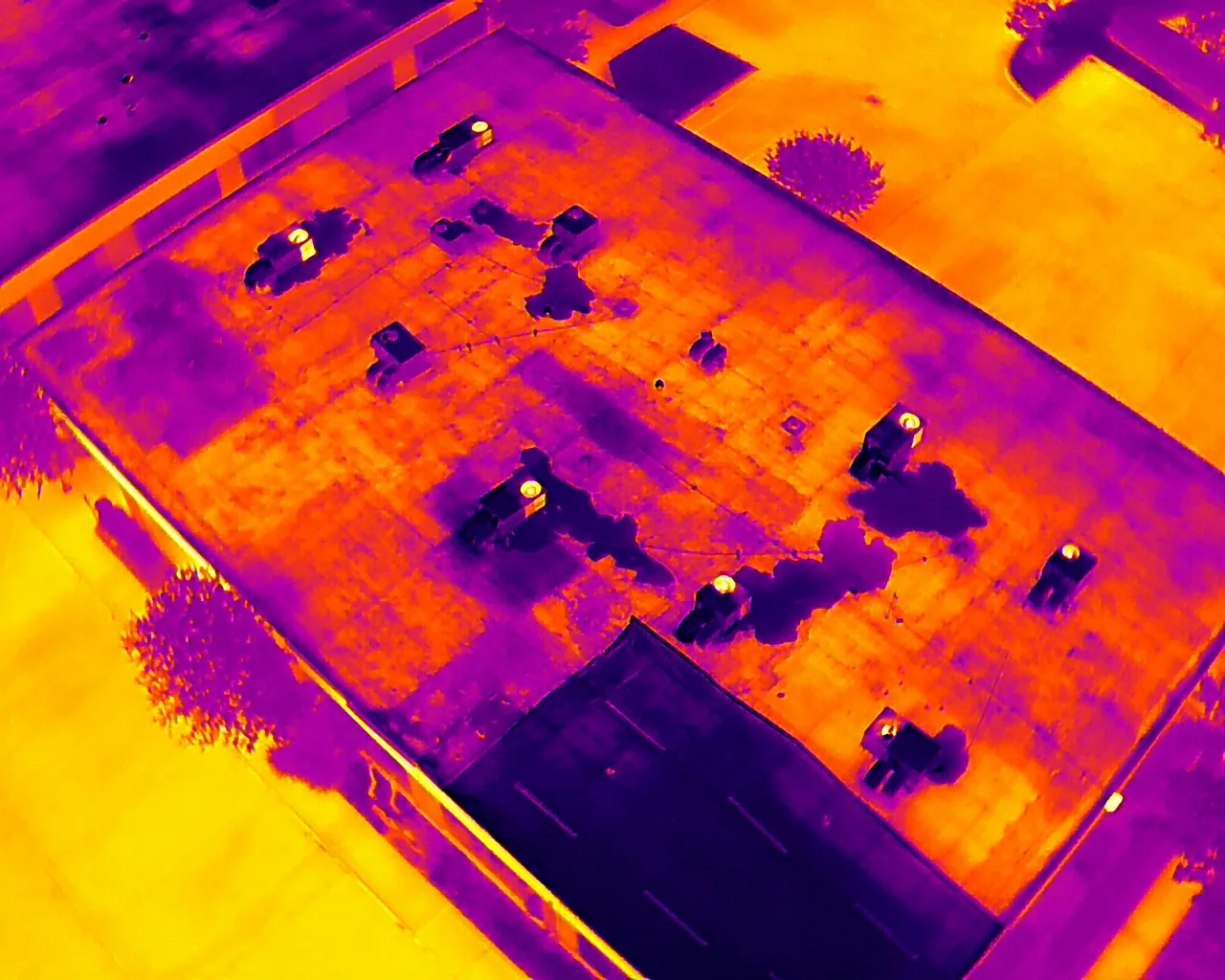
What infrared can reveal
Roof materials warm and cool at different rates. Moisture beneath a membrane can retain heat after the surrounding dry roof changes temperature, producing a pattern that deserves closer investigation. The result depends on the roof layers, weather, surface cover, time of day, recent rain, and scan conditions. We review the pattern in context rather than labeling every anomaly as wet insulation. Areas that warrant confirmation are marked for ground inspection or a core cut.
Before scanning, we review known leaks, recent repairs, roof sections, and any available assembly information. Changes in insulation, substrate, shadow, equipment, or surface color can also affect temperature and create misleading signals. We note those conditions so the field team knows where to verify. The map identifies suspected zones and their boundaries, not a universal moisture percentage or a fixed repair quantity. A hands-on roof inspection adds direct review of seams, curbs, flashings, and drains that temperature imagery cannot evaluate.
Confirm before removing material
A scan narrows the search. It does not replace physical confirmation where the scope depends on whether insulation is wet. We select representative points for core cuts or other approved checks and record what each opening shows. That can confirm moisture, reveal the roof layers, and help determine whether material can remain or should be removed. The openings are repaired after examination using compatible materials and details.
If a suspected area is confirmed wet, we measure its extent and relate it to seams, drains, penetrations, and the leak history. A broad wet area may support removing insulation and replacing it before reroofing. An isolated zone may be handled as a selective repair. If no moisture is found, we document the test and consider other causes for the infrared pattern. This verification step keeps a roof budget from treating every visual anomaly as a tear-off area. For active water entry, a separate leak investigation follows the pathway between the interior symptom and the actual roof defect.
Use the map to define the work
The final deliverable groups suspected and confirmed conditions by roof section. It shows the scan pattern, test locations, results, and recommended next step. The owner can use that map to compare a localized repair, a recover, or complete replacement. We explain which zones are confirmed wet and which still need evaluation. If moisture is concentrated at an edge or equipment curb, the repair may address that detail rather than remove material across the whole roof.
When moisture is distributed across multiple sections, a replacement scope may be more practical than repeated cutouts. The choice also depends on deck condition, roof attachment, existing layer count, and how drainage will be restored. When moisture mapping leads to an assembly change, we review current city and permit requirements before finalizing the scope. A recover evaluation can consider an existing dry assembly; a replacement survey can define removal boundaries. The scan informs those choices but does not make them alone.
Choose the right survey conditions
Survey timing affects what infrared data can show. The roof needs an appropriate temperature transition, and recent rain, cloud cover, wind, and surface water can alter the pattern. We confirm conditions and tell the facility contact if a scan should be delayed or repeated. Areas under deep shade or covered by equipment may need another inspection method. The report identifies the conditions under which images were collected, so the pattern is not separated from its context.
North Texas has hot, humid summers and spring storms that bring hail, wind, and heavy rain across the DFW region. A recent storm may leave standing water or wet surface materials that affect interpretation. We allow the surface and assembly conditions to stabilize enough for a useful scan, then verify representative zones. If a storm has opened the roof and water is actively entering, emergency protection comes first. A temporary dry-in can stabilize the building before moisture mapping and permanent repair are scheduled.
Coordinate tests with building operations
Infrared surveys require roof access, a clear understanding of building schedules, and coordination with any follow-up openings. We arrange escorts and identify restricted areas, equipment that must remain in service, and interior spaces where a core cut should be avoided. The facility team can share leak locations, prior repairs, and roof plans before the visit. Those records help us focus the scan without replacing field verification.
Allen's Watters Creek district includes occupied offices and mixed-use activity, while the 121 Tech Park area includes office, industrial, and technology properties. We coordinate any testing or repair work around the site's access rules and operations. A core opening is localized, protected from weather, and repaired after inspection. We note any zone that could not be scanned or tested, so the report does not imply complete coverage where access was unavailable. An occupied-building work plan can coordinate broader follow-up if multiple roof sections need opening.
Keep the survey tied to future work
Moisture mapping is most useful when later crews can find the same areas. We label roof sections, mark scan patterns and test locations, attach representative images, and describe the results. If repair or replacement follows, the work record can refer to the same section names and boundaries. That helps prevent a temperature pattern without field confirmation from being treated as a permanent defect after the roof has been repaired.
Allen's commercial building stock includes offices, retail, industrial, and technology properties, each with its own assembly and maintenance history. An asset manager can use condition records to compare buildings while preserving those differences. We can note follow-up tests, repairs, and observation windows in the report. A roof condition report or capital plan can carry confirmed moisture findings into a broader investment decision. The map remains a tool for locating evidence, not a substitute for examining the roof itself.
Commercial Roofing Questions
Does infrared prove that insulation is wet?
No. Temperature patterns identify suspect areas. We use field inspection and selective test cuts to confirm moisture before defining removal quantities.
When is the best time to scan a commercial roof?
The scan needs suitable temperature contrast and stable roof conditions. Recent rain, cloud cover, wind, shade, and standing water can affect the result.
Will you cut into the roof during the survey?
Only when confirmation is needed and the facility approves the locations. Each test opening is documented and repaired after examination.
Can the survey reduce tear-off?
It can help distinguish localized wet areas from dry sections, but the repair or replacement boundary also depends on deck, attachment, code, and system conditions.
Can infrared locate the entry point for an active leak?
It may help map moisture, but water can travel before appearing inside. A leak investigation traces the pathway and inspects the roof details directly.