Commercial Roof Seam Failure Repair in Allen, TX
An open roof seam can let water reach insulation and deck even when the membrane looks intact a short distance away. Seam type, surface preparation, attachment, and movement all affect the repair. Allen's Watters Creek office and retail district and the technology and industrial uses near 121 Tech Park contain varied commercial roof conditions. We inspect commercial roof seams in Allen before deciding how much material must be repaired.
Find where the seam opened
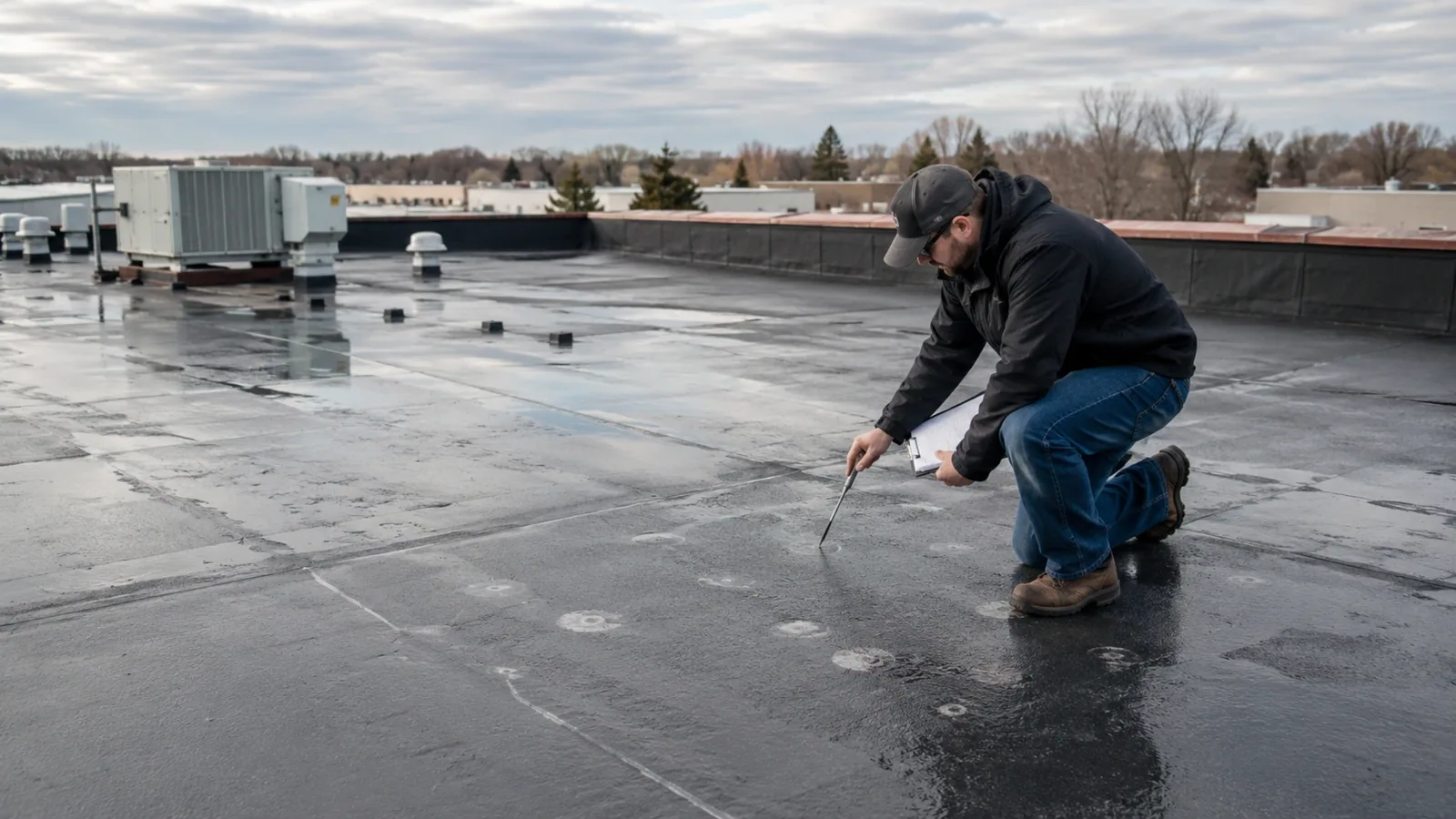
We inspect the length of the seam, not only the point where water appeared inside. A leak can travel along insulation or deck and show up away from the opening. The survey also checks nearby laps, penetrations, curbs, edge details, and previous patches. Photos record the seam type and its connection to the surrounding field so a future inspection can return to the same location.
For single-ply roofing, seam separation may be associated with contamination, incomplete welding, movement, poor attachment, or an earlier repair. For metal systems, panel laps, clips, exposed fasteners, and sealant details differ. A roof inspection maps these observations and notes where moisture testing could confirm damage below the membrane. We distinguish an open seam from a surface mark that has not breached the assembly.
Identify the membrane or panel before repair
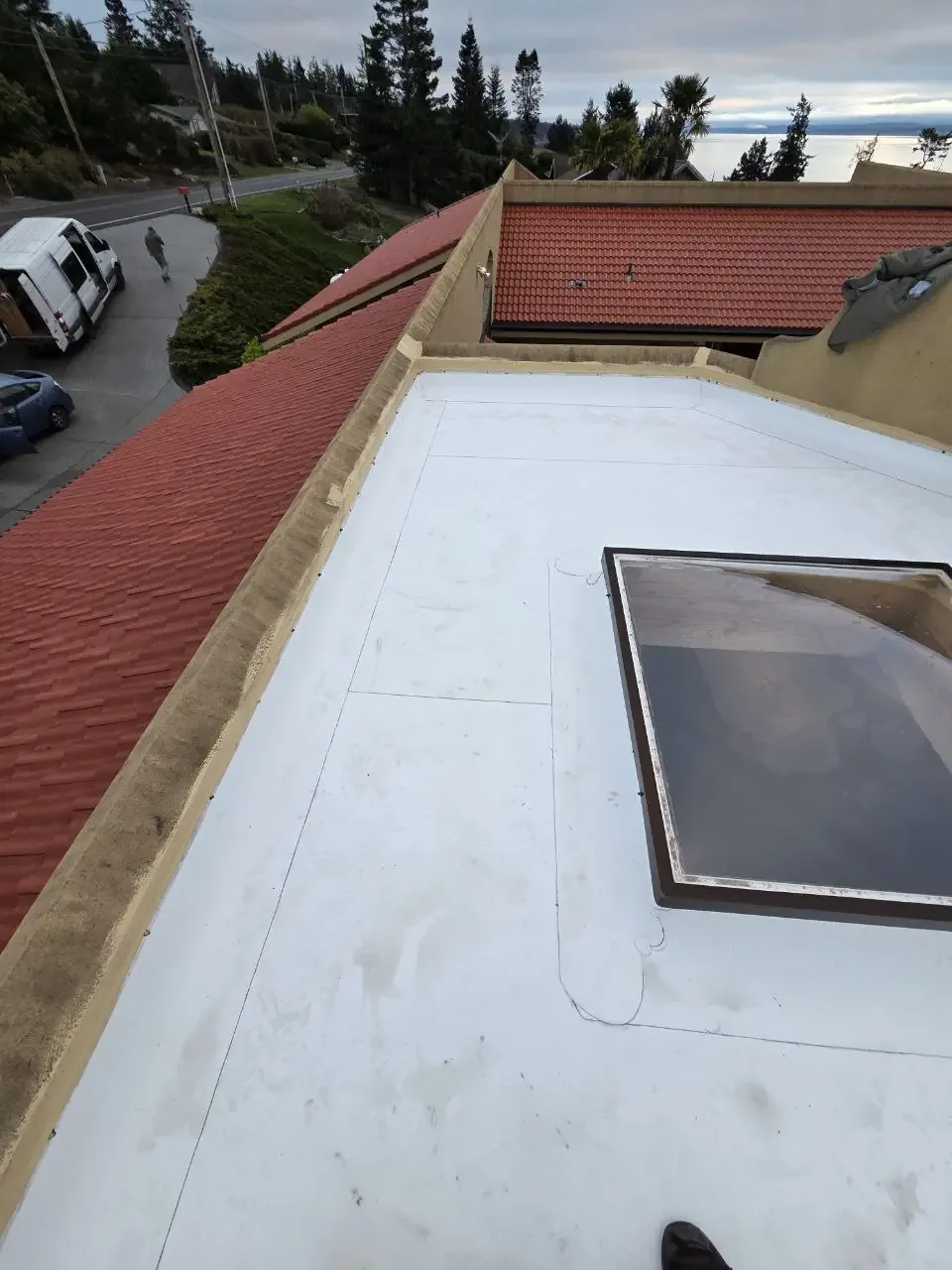
A compatible seam repair starts with the installed roof type. TPO and PVC seams are heat-welded, EPDM seams use a different bonding approach, and metal panels have their own lap and attachment details. We verify the surface, seam profile, contamination, and prior coating before selecting materials. A repair product applied over an unknown or dirty surface may not restore the connection.
Surface preparation can require cleaning, removal of failed patch material, or replacement of a section with damaged edges. If the seam is at a curb or parapet, flashing and field repairs may need to be coordinated. A EPDM system has distinct seam requirements from TPO. The scope identifies the installed assembly, repair width or panel extent, and the method used to rejoin it.
Check insulation, deck, and interior path
Water beneath an open seam can spread laterally and soften insulation before reaching a ceiling. We check for visible moisture, compression, corrosion, and changes around the deck when accessible. If the extent cannot be determined from the surface, targeted testing or a controlled opening can confirm the removal boundary. The report separates confirmed wet material from areas that remain suspected or concealed.
Interior staff can identify where water was observed, what was affected, and whether it appeared after rainfall or rooftop service. The roof map locates the likely entry point and path. If a puncture or cut accompanies the seam issue, a separate membrane puncture repair may be needed. That repair is documented apart from seam restoration so the owner can understand the material and work limits for each defect.
Account for Allen heat and storm movement
Dallas-Fort Worth summers can reach or exceed 100°F, and humidity stays high across the region. Heat changes membrane and metal movement; spring thunderstorms bring hail, wind, and convective rain risk across Dallas-Fort Worth. These conditions provide inspection context but do not prove that a specific seam failed during a particular storm. We document the actual roof condition and compare it with prior repair history.
After a storm, we check seam openings, edge details, drainage, and rooftop equipment near the reported area. Wind can affect attachments as well as a membrane lap. A wind damage review can identify loose edges or displaced components, while the seam repair addresses the connection itself. Temporary protection may be needed until the complete repair can be installed.
Set a sound repair limit
A short seam opening may be repaired when surrounding material and attachment are sound. If several laps have separated, insulation is wet, or deck condition has changed, the scope may need to extend beyond one seam. We map the confirmed area, identify any test location, and show where new material ties into the existing roof. The recommendation follows field conditions rather than the length of the leak report. The repair map identifies start and stop points so another seam is not left partially treated at the same roof transition line across the property.
Repair cost and schedule depend on roof type, access, preparation, removal, moisture, and temporary weather protection. For a larger section, we compare local repair with replacement or recover, noting code, attachment, and roof-height considerations. A commercial roof repair can address a limited defect. If recurring failures point to broader assembly problems, replacement planning may be appropriate.
Verify and document the repaired seam
Closeout records the seam location, system, preparation, materials, repair limits, and completion photos. The owner can add the repair to a roof condition report so future inspection compares the same area. If the repair remains under observation, the record names the next check and any signs that should trigger follow-up.
Maintenance staff should report equipment work or roof traffic near the repaired seam. A technician may cross the same path repeatedly or move a nearby unit; those changes can affect the surface later. We note any walking path or adjacent condition that deserves inspection. The final record distinguishes the repaired lap from other seams that were inspected but did not require work.
During repair, we inspect the seam edges and adjacent field for contamination, separation, or movement that could affect the tie-in. If the material is wet, the removal limit is confirmed before new membrane is installed. The work record states whether the substrate was visible, whether insulation was replaced, and what portion remains concealed. This helps the owner understand what the repair established and what was not part of the opening.
A seam can be exposed to rooftop traffic, equipment service, or water that collects at a low point. Facility staff can note any mechanical work after the repair and ask that technicians avoid the marked area. At the next maintenance visit, we compare photos from the same vantage point and look for a new gap, lifted edge, or stain. This follow-up is particularly useful when similar calls have come from other roof sections.
When several seams fail along one assembly, a broader review can examine attachment, substrate, installation details, and moisture extent. We identify whether failures are limited to one repair zone or recur across separate areas. That distinction informs whether continued local work is practical or whether a replacement scope deserves evaluation. The report documents the observed pattern without assuming the same issue exists across the whole building.
Commercial Roofing Questions
What causes a commercial roof seam to open?
Movement, contamination, attachment problems, incomplete welding or bonding, and prior repairs can affect seams. We verify the roof type and inspect the surrounding assembly before selecting a fix.
Can an open seam be sealed with a coating?
A coating is not a substitute for restoring the seam connection or replacing wet insulation. The repair material and preparation must match the installed system.
How do you know if insulation under a seam is wet?
Visible signs and targeted testing can identify likely areas. A controlled opening may be needed to confirm the insulation and deck condition.
Can you repair one seam without replacing the roof?
Yes, if the defect is localized and surrounding material remains serviceable. Repeated seam failure or broader moisture can change the recommendation.
What should be documented after seam repair?
Record the roof system, location, preparation, material, repair boundary, photos, and any moisture area or future observation that remains.