Emergency Commercial Roof Repair in Allen, TX
Active water entry changes the order of work: first limit exposure, then make the next repair safe. Our emergency commercial roofing response in Allen is available around the clock, including nights, weekends, and holidays. We assess the active leak or roof opening, protect affected space, and document what conditions require permanent work. A temporary dry-in is a stabilization measure, not a replacement for repairing the assembly. Watters Creek offices and retail spaces may have public entrances and scheduled events, while technology operations near US 75 and SH 121 may have equipment and access controls to coordinate. We confirm the site's immediate needs with the facility contact, then set a practical sequence from protection to permanent repair. For a building in the Allen service area, fast response still begins with a clear roof and interior assessment.
First response: control water and access
We ask where water is entering, when it began, what rooms or equipment are affected, and whether roof access is safe. Those details help determine what staff should protect while the crew travels. If electricity, ceiling materials, or rooftop equipment create a hazard, the facility team should isolate the area and follow its own safety procedures. Building staff should stay off a wet or wind-damaged roof. Once on site, the crew checks safe access, weather, and the condition of the affected area before choosing a temporary measure.
Water may travel beyond the point where it becomes visible indoors. We inspect the interior location and likely roof pathways, looking for open seams, displaced flashing, broken penetrations, punctures, blocked drains, or edge damage. Photos and notes locate the affected area and help plan the next visit. If conditions are still changing, we identify what remains exposed and how the facility team can monitor it. A leak investigation can continue from stabilization into a permanent repair once the assembly is ready.
Choose a safe temporary measure
Temporary protection depends on the opening, roof material, weather, and how water is moving. A cover may be secured over a localized breach, an accessible drain may be cleared, or a temporary patch may limit entry until the roof dries. Each measure must avoid adding risk through loose materials, blocked drainage, or unsafe access. We consider wind exposure and attachment before installing a temporary cover. If conditions do not allow safe roof work, we explain the limitation and focus on actions that can protect the interior until access improves.
At an occupied building, temporary work can affect entrances, loading areas, HVAC intake, or rooms below. The site contact receives the location and expected duration of the measure, plus any restrictions or follow-up needed. A dry-in should not be described as a permanent repair unless the damaged detail has been restored using compatible materials. We record temporary material separately so maintenance staff and later crews know where it was installed. Once the immediate exposure is controlled, we prepare the permanent repair scope and identify any wet insulation or damaged deck that must be evaluated.
Storm damage needs a property-level check
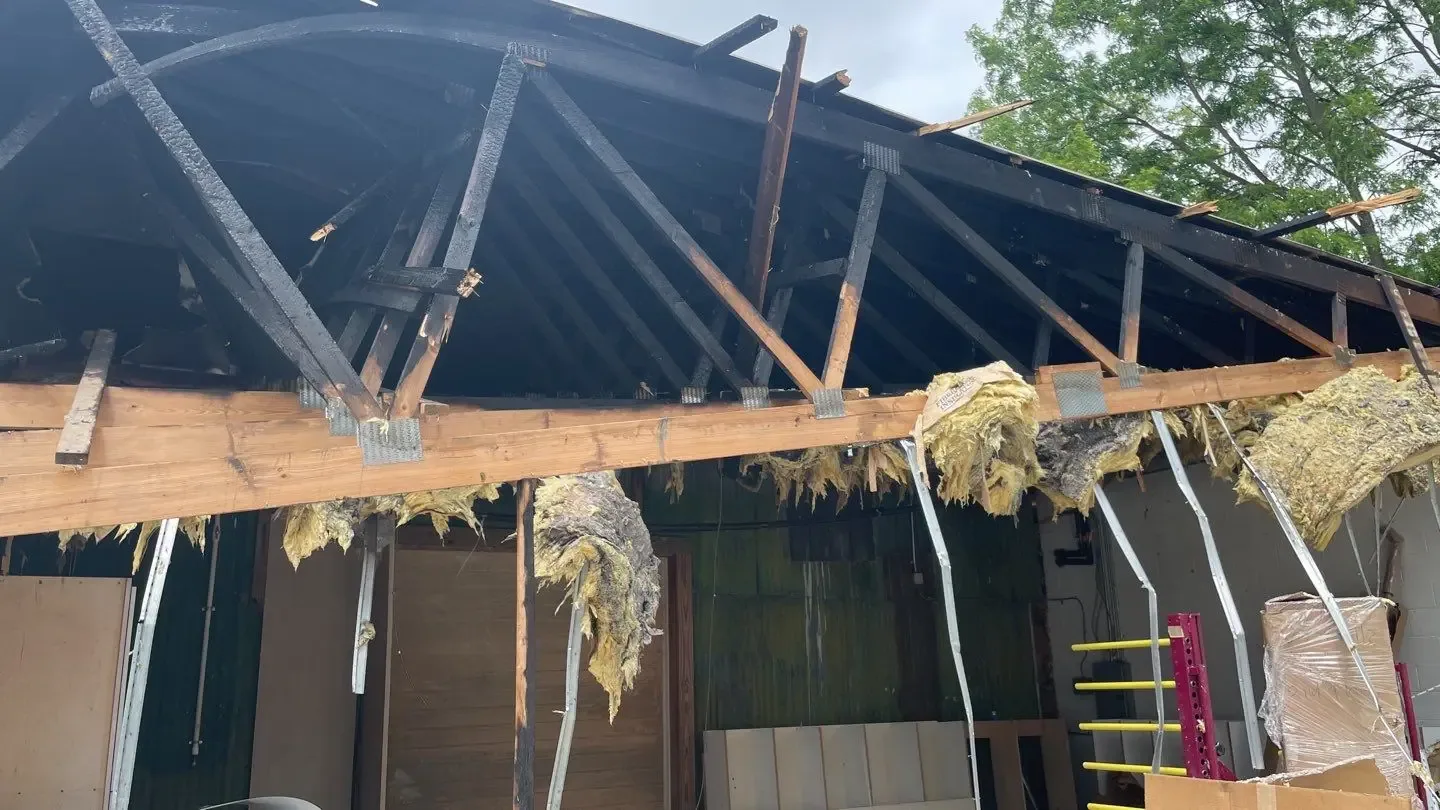
North Texas spring storms can include hail, strong wind, flooding, and tornadoes. Regional forecasts help identify a period of concern, but they cannot show what happened to one roof. We inspect the building for lifted seams, displaced coping, punctured membrane, damaged flashing, loose rooftop accessories, and water entering through the assembly. The condition can vary from one roof section to another, especially where additions, repairs, and different systems meet.
If a storm is ongoing, stabilization may need to come before a complete assessment. Once the roof can be reached safely, we document visible impact, temporary protection, and recommended permanent repairs. Older wear and previous damage are described separately when visible. This gives the facility director an organized record for maintenance and any insurance review, without treating the weather event itself as proof of a claim. Our storm-damage repair service can continue with a broader survey after the immediate opening is controlled.
Turn stabilization into a lasting repair
The permanent repair must address the failed detail and the roof layers affected by water. We verify whether insulation is wet, whether the deck is sound, and whether the surrounding membrane can accept a compatible patch. A seam opening, curb failure, metal panel issue, or blocked drain calls for its own method. Where water has spread beneath the surface, the repair may need to extend beyond the visible entry point. The scope records what will be removed, dried, replaced, or sealed.
We also look for related conditions that may cause another entry, such as loose edge metal or a failed wall termination above the temporary cover. Repair materials match the membrane or metal system, and the completed detail is photographed. If the roof has broad wet areas or repeated failures, we explain why emergency work alone will not resolve the entire assembly. The facility director can then compare localized work with planned commercial roof repair, a recover option, or replacement. This decision is based on observed roof condition, not just the age of the building.
Coordinate around active facilities
Emergency work still has to respect the way the building runs. We coordinate roof access, escorts, security rules, operating hours, rooftop equipment, and interior protection with the responsible site contact. Sensitive areas may need temporary shutdowns or alternate access. Retail or hospitality sites may need a route that keeps entrances and delivery areas clear. For industrial and technology spaces, equipment operating requirements are confirmed with the people who manage them rather than inferred from the property's label.
Allen's Watters Creek district combines offices, retail, hotel, and meeting uses; neighboring business districts include different building configurations and work constraints. We explain which area will be protected, what noise or odor is expected, and whether a temporary cover remains after the crew leaves. If a longer repair requires staging or material delivery, those details are planned after the immediate exposure is controlled. A phased work plan can support the permanent repair when operations must continue.
Leave a record the next crew can use
The closeout identifies the reported leak or opening, roof section, temporary protection, permanent repair completed, and any unresolved condition. Photographs show the area before and after work. If materials remain in place temporarily, the record says where they are and what follow-up is planned. The facility team also receives any observations about drains, nearby seams, or wet interior areas that should be monitored.
Emergency stabilization may be narrow, while permanent replacement or changes to the assembly can require separate city permit review. We identify when a condition moves beyond emergency repair into planned capital work. This prevents a short-term response from being mistaken for a full roof assessment. An inspection can establish the broader condition, and roof condition reporting can carry the findings into future maintenance decisions.
Commercial Roofing Questions
Can you respond outside normal business hours?
Yes. Emergency roof response is available at all hours, including weekends and holidays. Dispatch timing depends on site access, weather, and crew safety.
Will the first visit permanently repair the roof?
Sometimes a permanent repair is possible on the first visit. If weather, moisture, or access prevents it, we stabilize the opening and document the permanent work needed.
What should staff do while waiting for the roofer?
Keep people away from unsafe ceilings or electrical hazards, protect movable contents where safe, and report the affected areas and roof access conditions. Do not climb onto a wet or damaged roof.
Can you provide storm documentation?
We can record visible roof conditions, photos, temporary protection, and repairs performed. The report distinguishes what was observed from any cause that cannot be confirmed.
Will emergency work cover the whole roof?
The first response focuses on the active opening and immediate risk. A broader inspection can identify additional conditions and help plan permanent work.