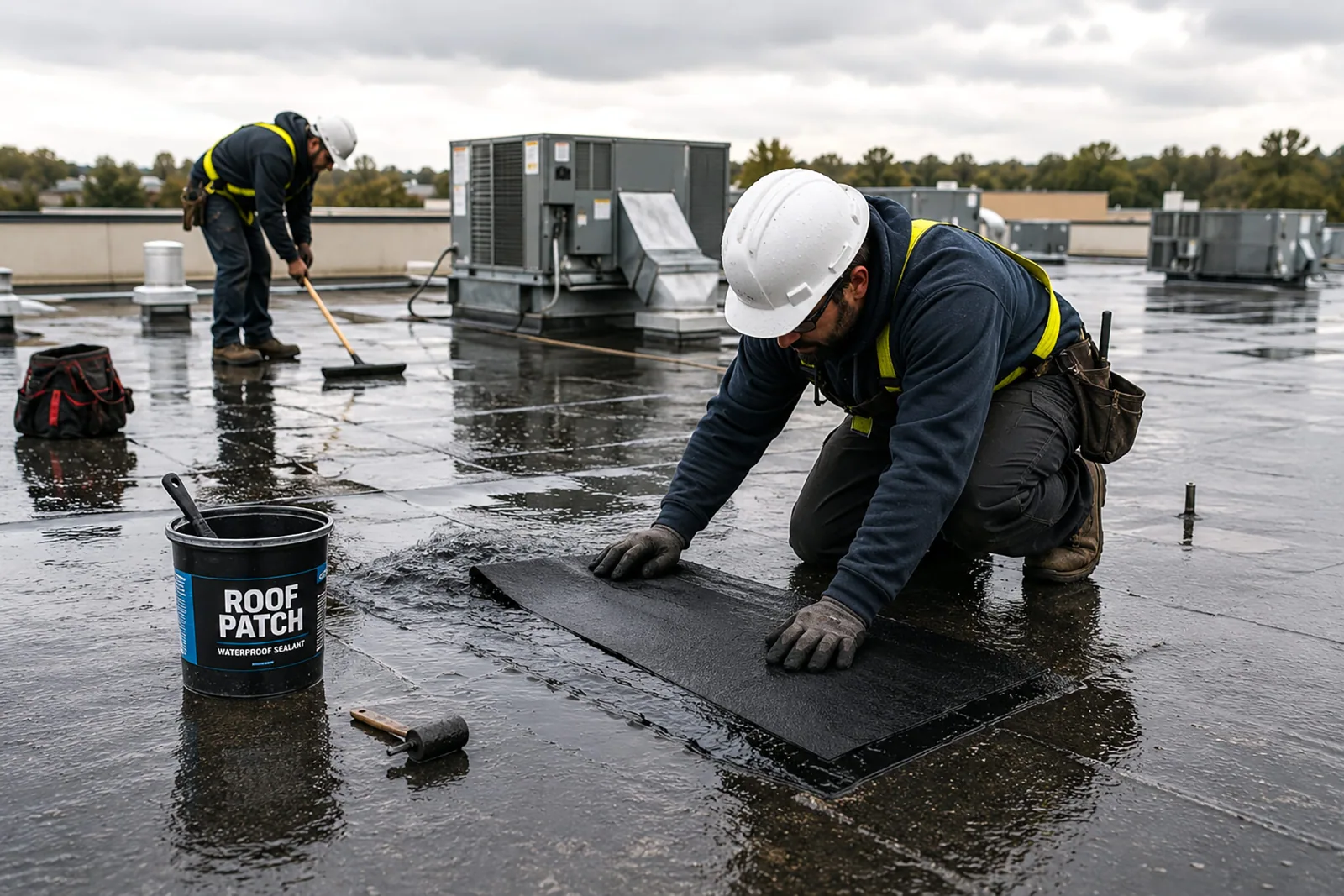
Commercial Roof Membrane Puncture Repair in Allen, TX
A puncture may be small at the surface and still let water reach insulation or the deck. The repair needs to identify the membrane, opening, and material below before a patch is installed. Allen's commercial mix at Watters Creek and 121 Tech Park includes different building uses and roof assemblies. We inspect commercial membrane punctures in Allen and define the repair by confirmed roof conditions.

Cover an active opening safely
If water is entering, the exposed area needs temporary protection before the next rainfall. We identify a safe access route, the size and condition of the opening, and what sits below it. A temporary cover should be secured without creating a trip hazard or blocking drainage. The property contact receives a record of what was protected and which materials or sections need permanent replacement.
Interior staff can identify whether water reached inventory, equipment, electrical systems, or occupied space. We coordinate access and record the roof zone separately from any interior cleanup. A commercial emergency repair can address active exposure, while the permanent patch follows after the surface and substrate are ready. Temporary protection is not described as a completed membrane repair.
Find the puncture and check surrounding material
We inspect the reported area and nearby paths used by maintenance workers, mechanical contractors, and equipment service. Sharp debris, dropped tools, fasteners, or repeated foot traffic can damage a membrane. A roof puncture may be hidden beneath a walkway pad or equipment support, so adjacent details are checked before work is scoped. Photos show both the opening and its position relative to the roof zone.
Inspection also checks seams, flashing, drains, curbs, insulation, and visible deck condition. A roof inspection can help determine whether the opening is isolated or part of a wider failure. If moisture has traveled beneath the membrane, testing or a controlled cut may confirm how far wet material extends. The report distinguishes the puncture itself from any separate seam, flashing, or drainage condition.
Use a patch compatible with the membrane
A repair must match the installed membrane and its preparation requirements. TPO, PVC, EPDM, modified bitumen, and coated roofs do not use one universal patch. We identify the surface, remove incompatible material, and prepare the surrounding area according to the repair system. Dirt, coating, moisture, or a patch from a prior contractor may change what needs to be removed first.
The patch should extend onto sound material and restore a secure transition. If the opening sits at a seam, curb, or edge, the work may need to repair that detail as well. A rubber membrane system uses different seam and patch materials from a thermoplastic assembly. Seam repair may be needed when the puncture crosses or damages a field lap.
Address the activity that damaged the membrane
A patch can be punctured again if the cause remains. We ask about recent service work, roof access, material staging, walking paths, and equipment changes. The facility can establish routes for rooftop vendors and require them to report membrane damage after a visit. Pads or walkways may protect high-traffic paths when they are suitable for the roof and do not interfere with drainage.
After a storm, debris or displaced equipment may have caused a cut, but the condition must be inspected at the property. A wind damage review can document adjacent loose edges or rooftop items, while the puncture scope identifies the actual membrane opening. We record existing wear separately from fresh damage when evidence supports that distinction.
Check for water movement after the repair
Allen's spring storm season can bring heavy rain and damaging winds across the region, so we inspect the roof field, edges, and equipment details after a reported event. After repair, the area should be checked for a secure patch and any water path below it. High summer temperatures and humidity also affect exposed roof materials. We inspect the repair and nearby transitions rather than assuming a small surface opening was the only issue.
Drainage near the patch matters if water collects at the location. We verify that the repair does not bridge or close an outlet, and that runoff can leave the surrounding roof zone. If water remains, a drainage assessment can identify a separate low-point concern. A roof patch restores the membrane; it does not by itself correct a blocked drain or wet insulation beyond the repair limit.
Set the repair limit based on moisture
A dry opening with sound surrounding material may need a local patch. Wet insulation, deck corrosion, or a puncture that reaches the structural layer can broaden the work. We map confirmed conditions and identify any test opening needed to establish removal limits. The owner sees where the patch begins and ends, what material is replaced, and whether hidden layers remain under observation.
Cost and timing depend on roof type, access, substrate condition, moisture extent, repair material, and temporary protection. A proposal states whether related seams, flashing, or insulation are included. If damage extends across multiple areas, commercial roof repair may be scoped by roof zone. The repair plan also identifies how rooftop access will be controlled to reduce repeat damage.
Keep the patch visible in maintenance files
Record membrane type, puncture location, cause if known, repair materials, photos, and any wet insulation or deck found during work. A roof condition report can note the repair and the next inspection date. Facility staff can add contractor visits or equipment changes that may have affected the area.
After repair, we document whether water entry stopped and which nearby details were reviewed. If the patch remains under observation, the record names what to check and when. A follow-up inspection after rainfall can compare the same area and identify whether the patch or an adjacent detail needs more work. Clear records help maintenance teams avoid cutting or attaching new equipment over a repaired section.
Before closing the repair, we check whether the patch lies near a walkway, equipment curb, drain, or roof edge that could see additional traffic. The property contact can review access arrangements with service vendors and mark the area in facility records. If rooftop equipment is moved later, the installer should know the existing patch and avoid placing a support or fastener through it without an approved detail.
When a leak was active, the owner may also need to track interior drying or finish repair. The roof record notes the external opening, protection, and permanent patch, while the facility keeps any interior work in its own file. This separation makes it clearer whether a later ceiling mark is related to the repaired puncture or a new roof condition requiring inspection.
Commercial Roofing Questions
Can a small membrane puncture cause a major leak?
Yes. Water can travel beneath the membrane and wet insulation before appearing inside. The inspection checks the opening and tests hidden layers when needed.
What creates punctures in commercial roofing?
Foot traffic, dropped tools, fasteners, debris, or equipment service can damage a membrane. We inspect the area and identify activity that may need a protected path.
Can you patch a puncture the same day?
Active openings may need immediate temporary protection. Permanent repair depends on identifying the membrane, preparing a dry compatible surface, and confirming the material below.
How large should a roof membrane patch be?
The repair extends onto sound compatible material. The required limit depends on the puncture, substrate, seam location, and any wet insulation that must be removed.
How do you prevent another puncture?
Facility staff can set roof access routes, protect service paths, and require vendors to report damage after equipment work. The repair record can identify the area to avoid.