Commercial KEE Roofing in Allen, TX
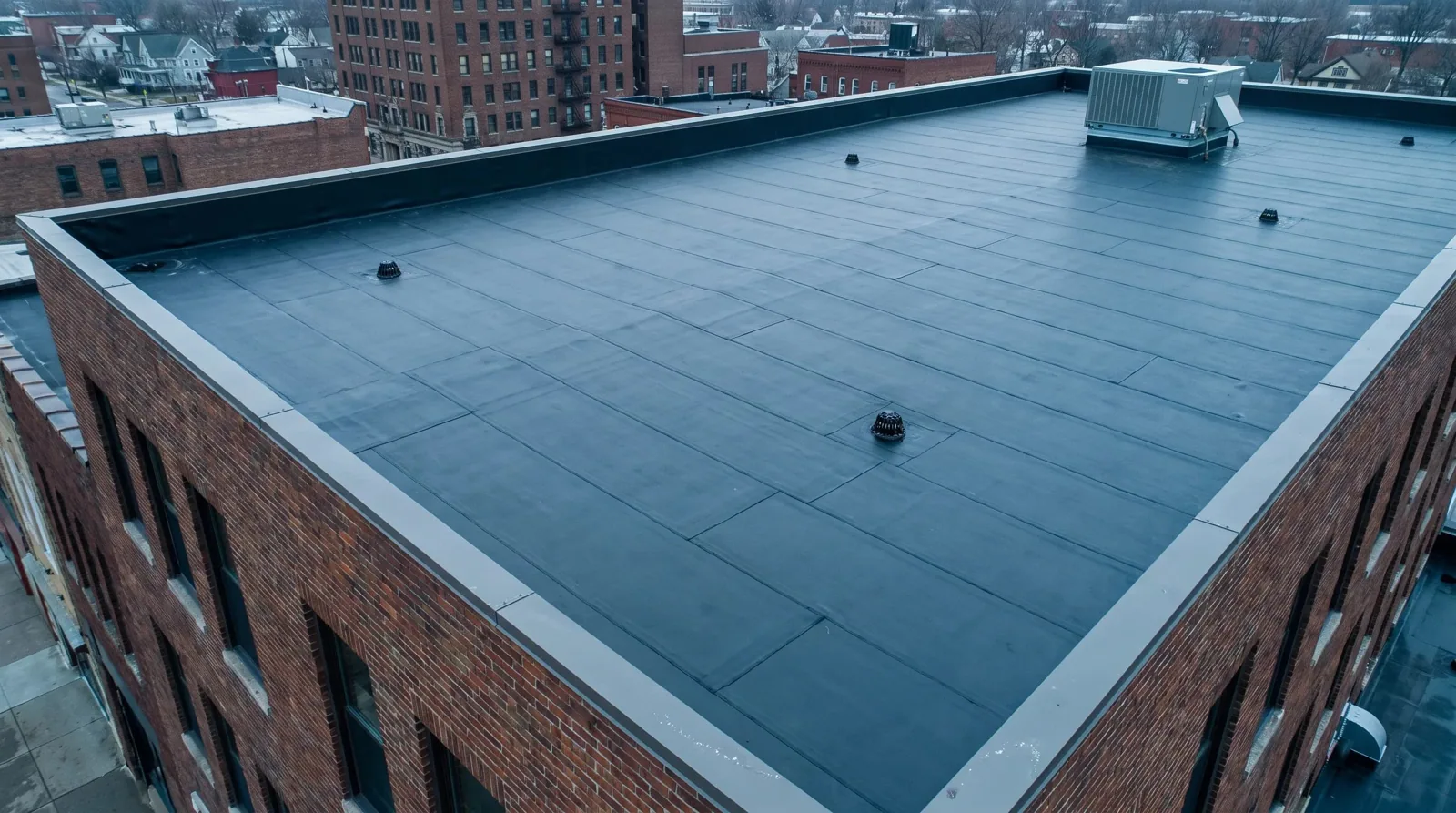
A commercial kitchen exhaust, process vent, or rooftop chemical can change which membrane belongs on a roof. KEE is a PVC-based thermoplastic roofing formulation with a ketone ethylene ester modifier, used where a project calls for added flexibility or resistance to certain exposures. Product specifications determine the actual performance. Dallas-Fort Worth summer heat and the range of uses around Watters Creek and 121 Tech Park make exposure review important before material selection. We inspect the roof, identify what reaches the surface, and match the assembly to the documented conditions. Start with a commercial KEE roof consultation in Allen before replacing or repairing a membrane near exhaust or equipment discharge.
Verify the exposure before specifying
KEE modifiers can improve some properties of a PVC compound, but no membrane is universally resistant to every chemical. The effect depends on substance, concentration, temperature, and duration of contact. We ask facility staff about exhaust location, process cycles, condensate, cleaning agents, and any known spills. Product data should be checked against those details. If the specific exposure is not known, the design team may need a sample or manufacturer compatibility review.
A commercial kitchen roof can experience grease near exhaust hoods, while industrial properties may have process fumes, coolants, or cleaning residues. Those conditions call for a closer look at the plume direction, exhaust maintenance, and surrounding membrane. A manufacturing roof assessment can account for process areas and equipment access. If the exposure is ordinary weather and foot traffic, a conventional PVC roofing system or TPO assembly may also be evaluated. Material choice follows the building's actual use, not a label alone.
Confirm the roof assembly below the KEE
KEE is a membrane layer within a roof system. Deck, insulation, cover board, attachment, seams, flashings, and edges work together. Before a recover, we check the existing roof for wet insulation, unstable attachment, repeated repairs, and damaged deck. A new membrane does not remove water or correct a weak substrate beneath it. If the existing layers are unsuitable, tear-off and replacement may be the more appropriate scope.
Attachment can be mechanically fastened or adhered to a suitable substrate depending on the system design. The selected membrane thickness and assembly need to follow project specifications and product requirements. Edge zones, corners, and transitions need particular attention in the wind exposure. New insulation can affect roof height at drains and curbs, and the layout should be coordinated before work begins. A cover-board and insulation review can identify what needs replacement, and a reroof plan can rebuild the assembly where moisture or damage extends below the surface.
Build clean heat-welded seams
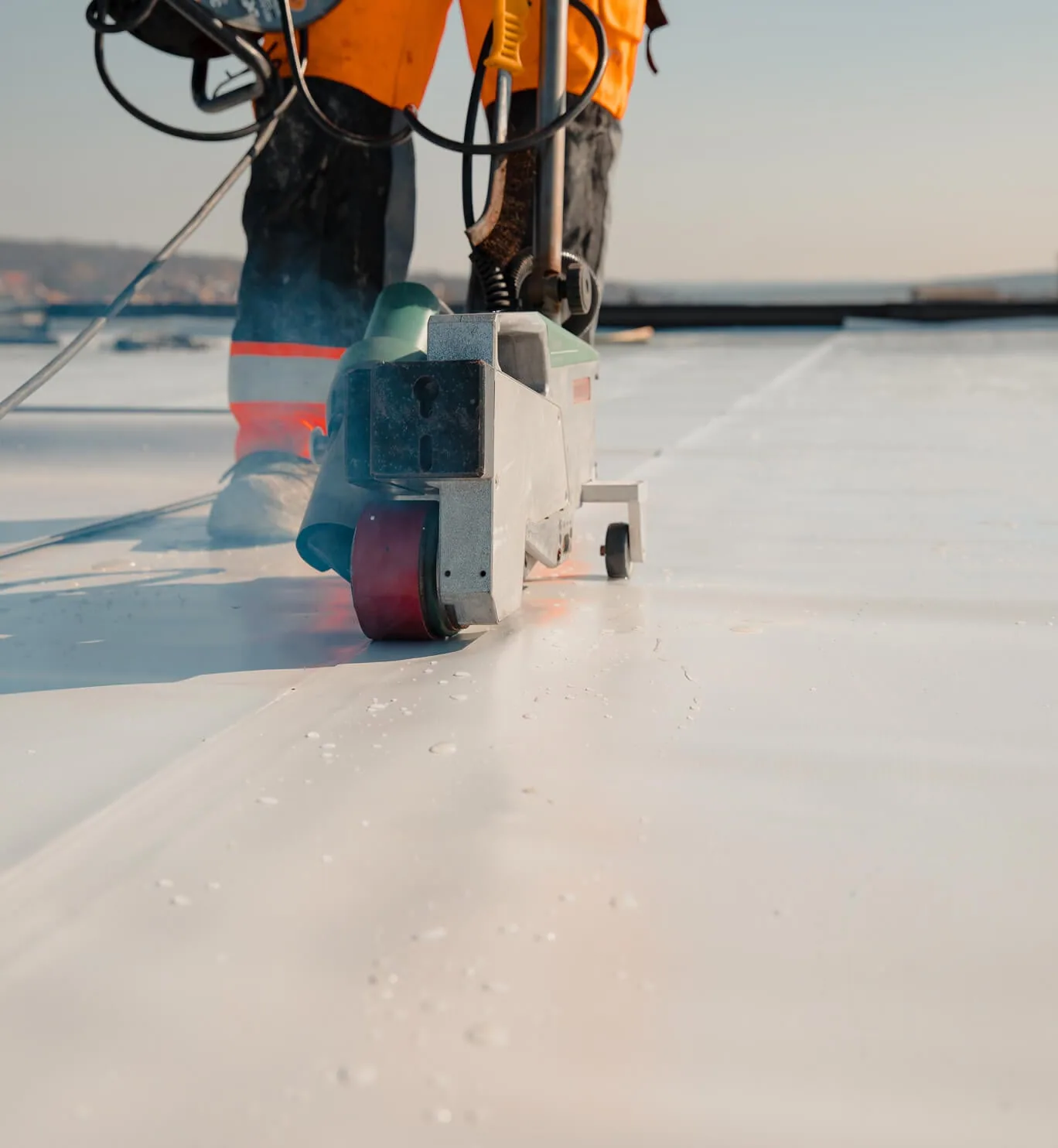
KEE roof sheets are thermoplastic and use hot-air welding at laps and flashing. The installer prepares the surface, sets equipment for the membrane and weather, and checks welds after they cool. Dust, grease, moisture, or weathered residue can interfere with the bond. Seams, corners, patches, and curb wraps need steady overlap and pressure so water cannot track beneath the lap. Manufacturer instructions govern cleaning and welding procedures for the selected membrane.
Field seams are only one part of the waterproofing. Drains, penetrations, walls, expansion joints, and metal edges must be integrated with compatible accessories. We probe the completed welds and photograph the details that will be concealed or difficult to revisit. If the roof is exposed to grease or chemicals, the repair method and cleaning products should be reviewed for that condition as well. A roof inspection can map suspect seams and transitions, while a membrane repair addresses a confirmed defect with compatible material.
Protect drains, curbs, and roof edges
Roof details need to hold up under the same exposure as the field membrane. At a drain, the sheet terminates into the bowl with a secure clamping detail. At a curb or wall, flashing rises and attaches above the surface water line. Perimeter metal needs sound fastening and a compatible membrane transition. If grease exhaust lands near a curb, that area may have different cleaning and inspection needs from the open roof field.
Allen's spring storms can bring wind and heavy rain across the region. We check drainage paths, scuppers, overflows, parapets, and rooftop equipment after weather events, then note any blockage or displaced detail. An outlet blockage or loose perimeter should be corrected before water reaches the membrane tie-in. Equipment service routes should be visible and walk pads placed where repeated access occurs so the membrane is not cut by tools or scuffed by unplanned traffic.
Plan exposure controls during the work
Before tear-off or installation, the facility team and roofing crew should identify active exhausts, chemical discharge, cooling lines, and access restrictions. If a vent may expose fresh material to grease or process residue, the source may need to be shut down or redirected during work. Equipment coordination is defined with the responsible mechanical provider. Roof sections are staged so new membrane can be installed and secured without leaving the building exposed overnight.
Weather conditions affect the work. Allen's summer temperatures can change adhesive behavior and crew access, while wind or rain may shorten the safe production window. The crew prepares the deck and insulation, positions membrane, welds seams, and completes flashings before advancing to the next area. If unexpected wet boards or corrosion appear, we record what is open and define the added replacement area before closing it. Cost and timing depend on the existing layers, tear-off, penetrations, equipment density, compatibility review, and details around the roof edge.
Maintain the membrane for its actual use
Service checks should account for what the roof encounters. Inspect seams, flashing, drains, equipment supports, and zones under exhaust discharge. Remove grease or residue with methods approved for the membrane, and avoid solvents or cleaners that can damage the surface. If a process changes or a new exhaust is added, reassess exposure before the equipment starts operating. Keep a record of the substance and area affected so later repair material can be checked for compatibility.
For Allen facilities, post-storm and seasonal maintenance can note punctures, loose seams, clogged outlets, and wear near rooftop equipment. Regular service revisits the same details, and a roof condition record captures photos and open items. The owner should retain membrane product data, repair instructions, and roof plans with the facility file. That record supports a faster material check when future HVAC, kitchen, or process work changes the roof's exposure. Photograph the area below each exhaust so changes in discharge pattern can be compared with roof wear over time, before approving membrane cleaning.
Commercial Roofing Questions
What makes KEE different from standard PVC?
KEE is a modifier used in certain PVC membrane formulations. The specific product data describes its properties and intended exposures; products should not be treated as interchangeable.
Will KEE resist any chemical from a rooftop exhaust?
No. Chemical compatibility depends on the substance and exposure conditions. We review the exact product data and discharge location before specifying a membrane.
How are KEE seams completed?
The membrane laps are prepared and hot-air welded, then checked after cooling. Clean surfaces and controlled equipment settings are important to the bond.
Can KEE be installed over an older roof?
A recover may be possible if the existing assembly is dry, stable, and compatible. Moisture, attachment, roof height, drains, and edge details all need review.
Does an exhaust need to stop during roof work?
Some work requires temporary shutdown or controls to protect fresh material from grease or process discharge. The facility and mechanical teams set that plan.