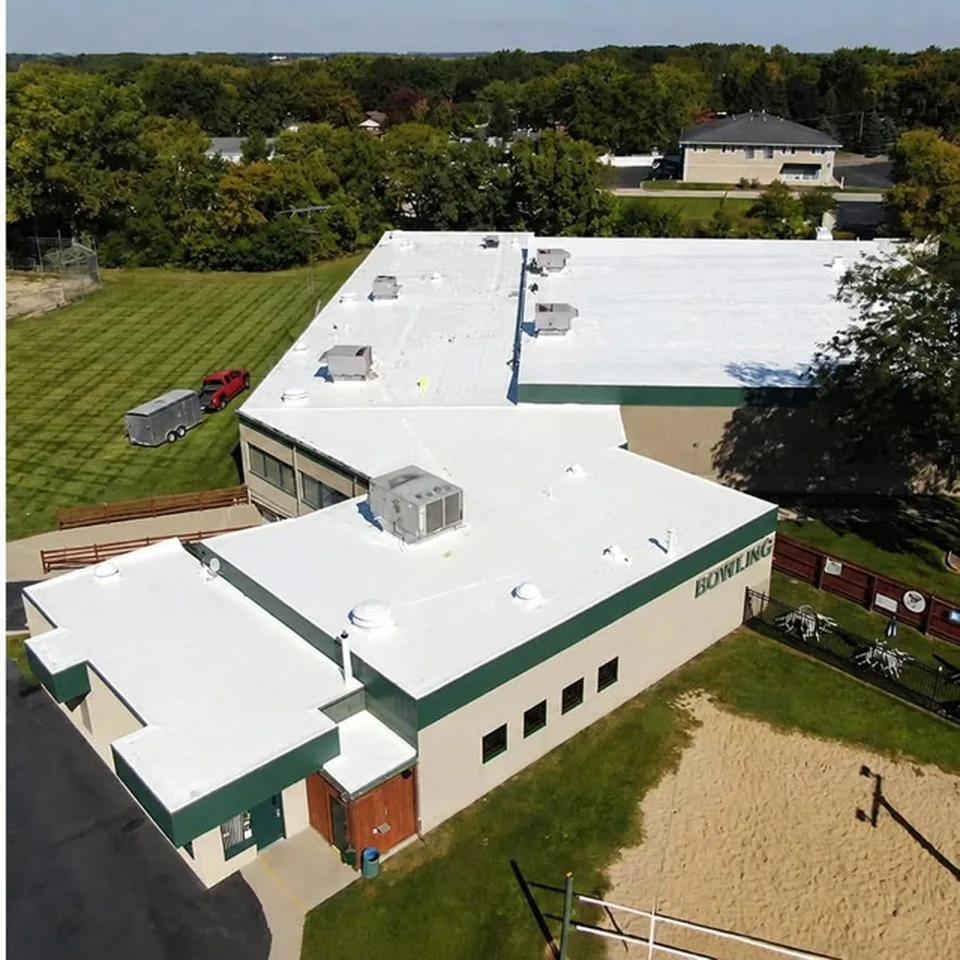
Commercial Roofing for Manufacturers in Allen, TX
For a manufacturer, roof decisions affect production continuity, equipment protection, and the capital plan at each facility. Allen employers include electronics, telecommunications, information technology, financial, and professional-service firms, and 121 Tech Park contains industrial and technology space near US 75 and SH 121. Those local uses call for a roof assessment grounded in the actual property. We plan commercial roofing in Allen around production constraints and confirmed conditions.
Connect roof work to production control
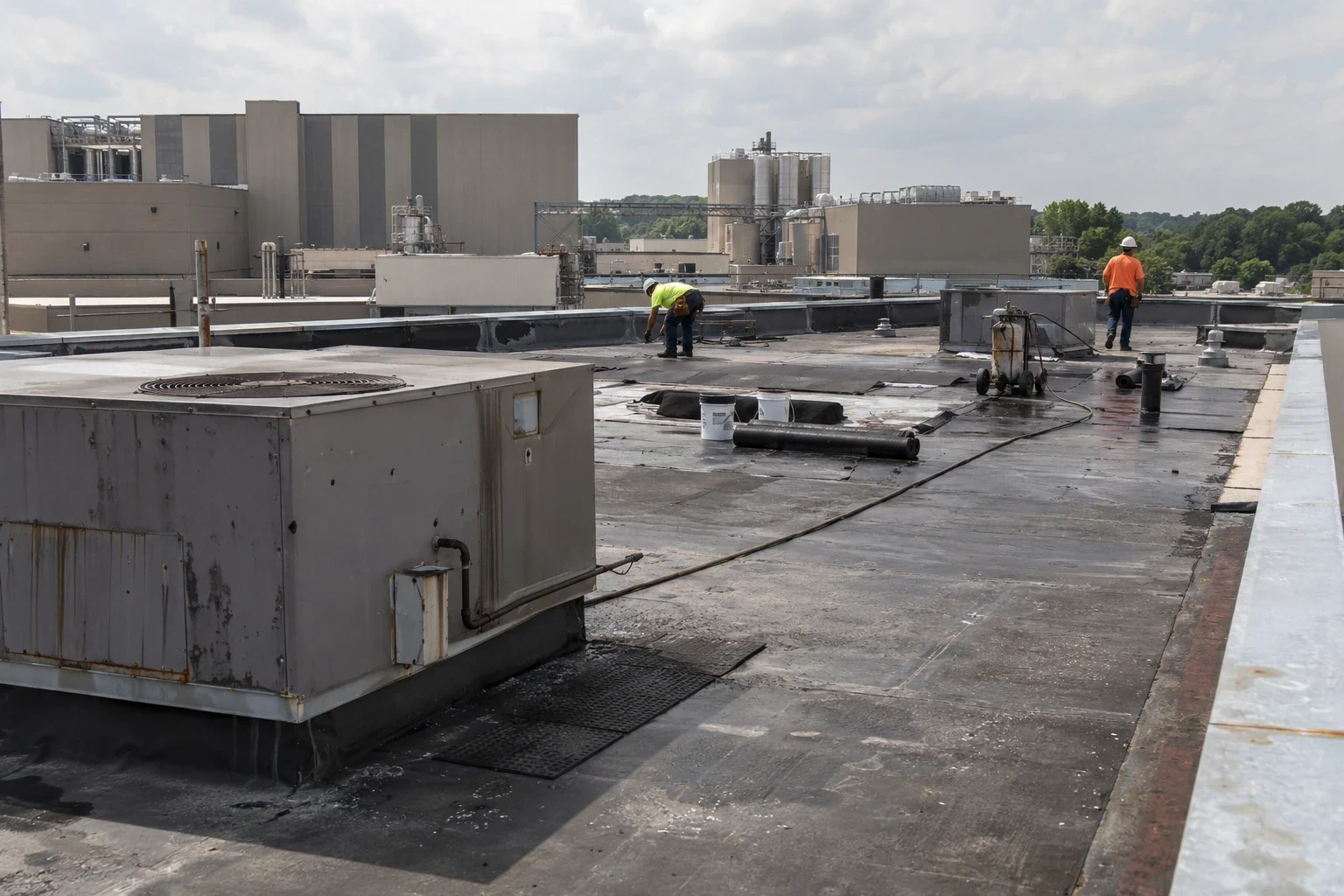
Plant managers identify lines that cannot stop, areas where vibration or dust affects product, and the maintenance windows available for work overhead. Facilities staff can flag controlled access, electrical rooms, process ventilation, and loading routes. We translate those limits into roof zones, staging, and the order of removal. A project plan also states how weather delays are handled and what condition each section must reach before a shift ends.
A phased sequence may let production continue while separate roof areas are repaired, if tie-ins and access permit. A planned outage can create a different work window, but surrounding operations may still need protection. The building-specific plan identifies which departments receive notice and who approves interior entry. For a facility with active tenants or multiple uses, manufacturing plant roof work addresses production-floor conditions, while occupied-building reroofing sets the work boundaries.
Protect equipment, inventory, and process areas
A leak above controls, packaged components, finished goods, or a production line can have different consequences from one over a noncritical corridor. The facility team identifies those areas and the temporary protection available below each roof zone. We trace the likely entry point and document where water was observed. A roof repair scope should not infer that a whole line is affected from one ceiling stain, or assume that a dry surface means insulation is sound.
Rooftop equipment and service routes can change over time as production layouts change. We inspect curbs, exhausts, pipe supports, conduit, and prior equipment openings. Mechanical contractors should confirm final unit location before new flashing is installed. A property record can include maintenance work orders and roof repairs together so a leak reported after a unit move can be reviewed against the relevant detail. Logistics operators may share dock and schedule concerns but have distinct distribution demands.
Use one condition standard across facilities
Manufacturers may run different roof systems at each site and may have additions built at different times. We identify membrane or panel type, attachment, insulation, deck observations, drainage, and repair history for every facility. The report separates confirmed moisture from suspected areas and notes where access was limited. Those distinctions support portfolio comparisons without claiming that a condition found at one plant is present at another.
A commercial roof inspection can create a photo record by building and zone. If hidden moisture could change a repair limit, targeted testing or a controlled opening may be necessary. The manufacturer can apply a common reporting format and still allow each facility's roof to have its own risk ranking. Flex industrial properties add shared-tenant equipment and access considerations to some manufacturing portfolios.
Plan checks around North Texas exposure
DFW’s July and August highs can meet or pass 100°F, while its severe-thunderstorm frequency peaks in spring. Heat and humidity affect roof materials and drainage, while hail and damaging wind can damage exposed components. These are regional conditions, not confirmation that a particular plant was struck. After a reported storm, we document visible impact, loose edge metal, open seams, and interior reports at the facility itself.
Drainage paths deserve attention after convective rain, especially around rooftop equipment and parapets where debris collects. A blocked outlet and a recurring roof depression require different corrections. We inspect the actual condition, note any active water, and identify temporary protection if a production space is at risk. The site record can then distinguish an emergency repair from planned restoration and show what still needs testing.
Choose a scope that fits the asset condition
A contained defect can be repaired when adjacent material is serviceable. Repeated leaks, broad wet insulation, attachment failures, or deck deterioration can point toward a larger renewal. We map each area and state what is confirmed before comparing repair, recover, and tear-off. A recover depends on dry existing layers, secure attachment, available roof height, drainage, and applicable code; tear-off exposes concealed conditions but adds removal and protection needs.
Scope cost and timing depend on system type, hidden material, equipment density, access, staging, and operational windows. The proposal states boundaries and conditions that could change after an opening. A multi-site roof program can organize inspections and capital priorities while preserving property-level conclusions. When a general contractor is sequencing related construction, roof coordination for general contractors can address trade interfaces without merging responsibility.
Keep maintenance and capital teams aligned
A manufacturer can retain system notes, repair images, equipment changes, testing results, and the next review date in one asset file. Our condition report separates urgent corrections from work to budget later. Facilities, procurement, and finance can then refer to the same map when reviewing shutdown windows or reserve needs.
Scheduled roof maintenance can check drains, flashings, seams, and rooftop service paths after repairs. A later inspection should compare the same locations and record what has changed. If the manufacturer operates several Allen-area properties, the manager can sequence work by water risk and production schedule instead of age alone. Closeout notes preserve the boundary of each repair so future teams can distinguish completed work from items that still require testing.
Manufacturing maintenance teams can track roof observations alongside equipment shutdowns and planned line work. If a production event restricts access, the report should show what the inspector could reach and what remains for a later visit. A date and zone reference allow staff to compare new water reports with the last inspection. This avoids treating a note from a different wing or plant as evidence about the current roof.
During procurement, the manufacturer can compare bids by work area, removal scope, deck assumptions, temporary protection, and closeout requirements. We identify how an opening will be secured if weather interrupts work and who receives the decision request if concealed conditions expand the repair. Those controls let operations review the schedule before production commitments are made and keep the roofing scope tied to the facility's own project plan.
That handoff also lists which roof zones were not accessed so the next review can complete them deliberately at a later planned facility visit. The facilities dashboard can track these dates.
Commercial Roofing Questions
Can production continue during roof replacement?
A phased job may keep unaffected operations running when access, tie-ins, weather protection, and interior controls allow it. Plant leadership identifies which lines or rooms cannot be interrupted.
What does a manufacturer need to provide before inspection?
Identify roof access, production limits, equipment service windows, reported leaks, and any safety or escort requirements. Recent mechanical work orders can help locate changed roof details.
How do you prioritize roofs across manufacturing sites?
We compare active water, confirmed moisture, attachment, deck observations, equipment risk, and the facility schedule. Each roof retains its own condition evidence.
Can roofing be combined with an equipment project?
Yes, when trades agree on unit locations, curb dimensions, penetrations, access, and who restores the roof assembly. The sequence is established before openings are made.
When is a plant roof beyond repair?
Widespread moisture, repeated failures, loose attachment, or deck deterioration can support replacement. We document the conditions and any test areas before defining the work boundary.