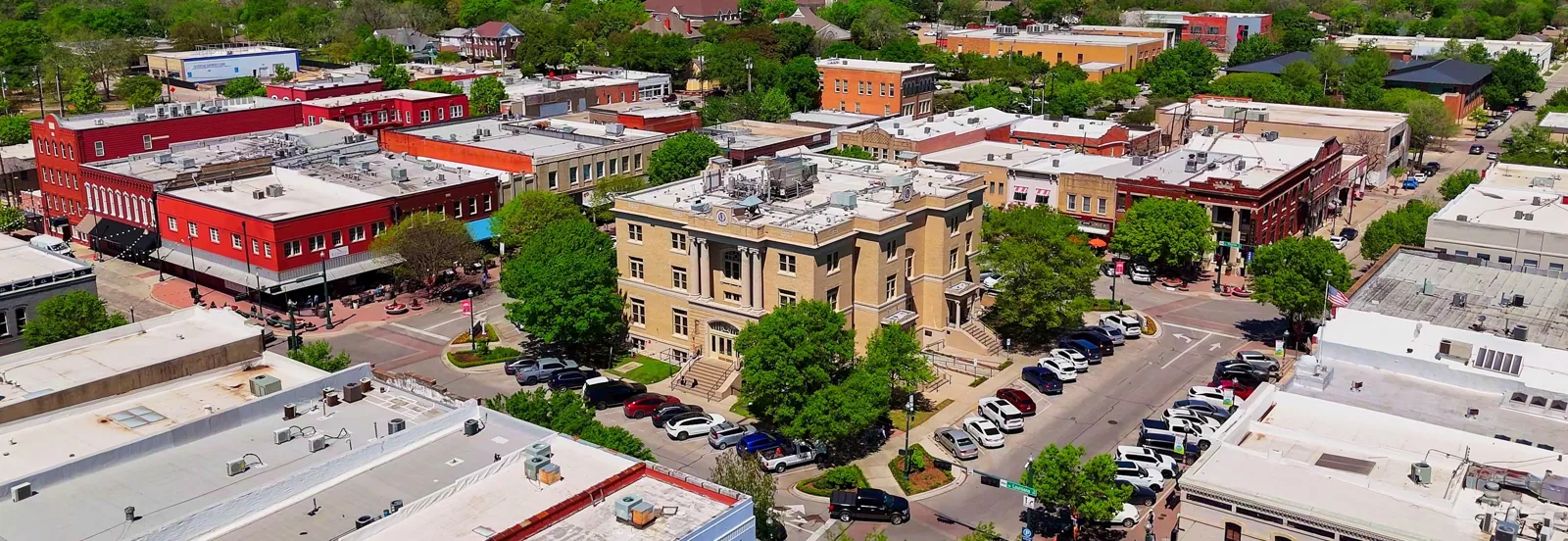
Commercial Roofing in Allen's Central Business District, TX
Allen's Central Business District includes downtown and civic, cultural, and historic destinations within a broader commercial area. Commercial work here starts with the building and its operating needs, not a single property address. We identify the roof assembly, inspect its condition, and coordinate access with the owner or facility contact. Allen's streets connect commercial areas near US 75 and Stacy Road with the wider city, but those connections do not describe the roof materials on a particular building. Each repair or renewal scope is based on roof evidence gathered at the property.

Work across a broader civic and commercial area
The district spans downtown and nearby civic, cultural, and historic destinations. That makes a city-center description more useful than naming one facility as the service location. Roof work can involve occupied offices, community uses, or commercial buildings, with access and public activity confirmed at each property. We do not infer a roof type, construction age, or condition from the district label. For nearby mixed-use work, the Watters Creek district and the Stacy Road corridor are separate broader service areas with their own site contacts and conditions.
A service request can begin with an owner, tenant, or municipal facilities contact. We confirm who controls roof access and whether the work area shares a route with public entrances or active community uses. The visit is then scheduled around that building's hours and roof access, rather than a generic downtown timetable. If a property has more than one structure, note which one reported the condition before setting a repair visit.
Document each roof zone and access limit
A roof assessment records what was reached, what was visible, and what needs additional testing. We inspect seams, penetrations, curbs, drainage, perimeter metal, and prior repairs, then map each finding to a roof area. If downtown access requires an escort, ladder coordination, or restricted work hours, note that before the visit. An interior stain is logged as a reported symptom until the roof-side evidence identifies a likely path. A commercial roof inspection can establish current conditions and list any area that remained concealed or unavailable during the assessment.
A useful photo sequence includes a wide view, a closer view of the defect, and a view that shows how the detail meets a wall, curb, or drain. We label those images with the building and location and record whether water was present during the visit. If a ladder or hatch is unavailable, the report shows the portion not assessed. This is important when a manager needs to decide whether an inaccessible area requires a return visit before approving a larger scope.
Plan material movement around district activity
Public entrances, business hours, deliveries, and civic activity can affect where roofing materials are staged and how a lift reaches the roof. We coordinate with the property contact on pedestrian routes, loading periods, roof hatch access, and interior protection. If the work requires a sample opening, confirm who can approve the test and how the roof will be restored. Each shift should end with a weather-tight boundary and a record of the section completed. An occupied-building roof plan can account for tenants or visitors while sequencing repair or replacement work.
Before work starts, confirm whether materials can be moved through a service entrance, whether a lift can be positioned safely, and who will control the area below. A staged project may use different access routes for inspection, repair, and tear-off. The plan names the work boundary and tells the site contact what will happen if a change in weather requires an earlier closeout. That information gives the property time to protect people and equipment below without implying that the roof can remain open past the planned shift.
Separate weather context from damage evidence
Dallas-Fort Worth summer heat can regularly exceed 100°F, and the region sees its strongest severe-thunderstorm frequency in spring. Hail, wind, rain, and tornadoes may affect different parts of the metroplex, but a regional report does not establish impact at a downtown Allen building. After a reported event, we check the roof, photograph visible changes, and compare observations with past repair records. An open seam, displaced edge, blocked drain, or puncture should be described separately from ordinary aging. A storm damage assessment can document actual conditions and note what remains uncertain.
Identify the roof before selecting a repair
The district may contain different low-slope and metal systems; the building's records and surface details determine what is installed. We identify the membrane or panel, attachment, substrate, seams, flashings, and earlier repairs. TPO, PVC, EPDM, modified bitumen, built-up roofing, and standing-seam metal use different methods. If wet insulation or deck damage is suspected, testing or an opening can establish the limit. A repair scope should identify material, preparation, tie-in, and any concealed condition that could change the work. We do not use a product specification for one roof area as evidence for another.
If the building file identifies a product but the surface or seam suggests another system, pause and verify before material is ordered. A short inspection of a test area or an available roof edge may resolve the discrepancy. The scope then names the system supported by field evidence and the repair method selected for that material.
Compare the work options on evidence
A focused repair may fit an isolated defect when the surrounding system is stable. Repeated leak calls, wet insulation, loose attachment, or deck issues may support recovery or replacement. Recovery depends on the existing layers, moisture, drainage, attachment, roof height, and code requirements. Tear-off exposes concealed materials and requires debris, temporary protection, and interior coordination. We state the boundary and assumptions for each option and identify tests still needed. A recover review and a replacement proposal can then be compared against the same roof evidence and building constraints.
Keep the service record with the building
Save the roof map, photos, system identification, repair scope, materials, closeout, and follow-up date in the property file. Identify who can arrange access and who will respond if water returns. In a civic or commercial district, responsibilities may move between owner, tenant, and facilities staff; the roof history should show the current contact without confusing responsibility with diagnosis. A roof condition report can preserve the record for the next manager. If the property is part of a larger portfolio, the Allen service area coordinates work while keeping each building's observed conditions separate.
The record can also include the date of any test opening, the layer observed, and the material used to close it. If a future leak appears near that spot, the inspector can compare it with the earlier work. A fresh service report should note whether the area was inspected directly or described from a tenant call. That distinction makes the file more useful during property turnover or a later capital review.
Commercial Roofing Questions
Does the Central Business District refer to one roof or building?
No. The district is a broader civic and commercial area. We assess the specific building and roof zone that needs service.
Can roof work be planned around downtown activity?
We coordinate staging, access, business hours, public routes, notices, and interior protection with the property's contact.
Do historic or civic uses mean the roof is a particular age or type?
A civic or historic designation does not state the age or system of a roof. We inspect the specific building and record the materials and condition observed.
Does a Dallas-Fort Worth storm report confirm roof damage here?
No. We inspect the actual roof and document observed conditions, separating a reported event from confirmed damage.
What should a roof service file contain?
Keep the roof-zone map, photos, materials, repair scope, test results, access limits, closeout, and any open follow-up with the building record.