Commercial Roof Leak Repair in Allen, TX
The ceiling stain is evidence of water, not a map of the opening above it. In an Allen commercial building, water can move across insulation or a deck before it appears indoors, so sealing the nearest roof seam may leave the real entry point untouched. We inspect from the reported interior area back to likely roof pathways, then document the defect and repair. Watters Creek's office and retail mix and the technology properties along US 75 and SH 121 bring different access rules, but the diagnostic work is the same: trace the path, verify the assembly, and protect the space while the opening is corrected. For a commercial roof leak in Allen, the repair starts with evidence from the building, not an assumption based on the stain.
Follow the water path
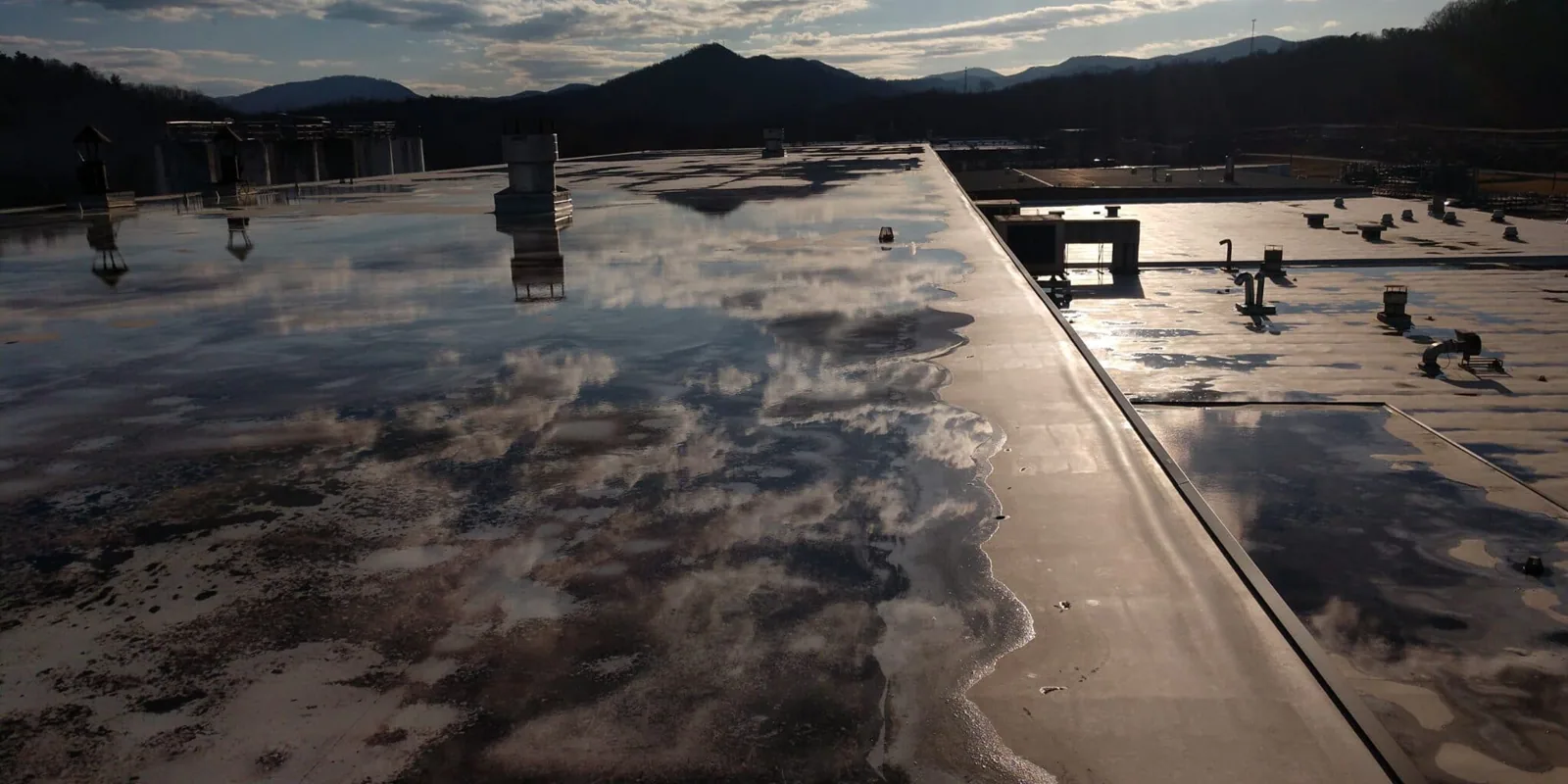
We begin with the timing and pattern of the leak. Water that appears during wind-driven rain may enter at a wall termination, curb, or perimeter detail. A leak that begins after a long storm may point toward a drain, seam, or low area holding water. Interior observations help narrow the search: ceiling location, wet insulation, equipment, and the route of pipes or steel above the room. The likely entry point can still be several feet from the interior symptom.
On the roof, we inspect seams, penetrations, edge metal, flashing, drains, previous patches, and nearby equipment. If the membrane is intact at the obvious location, we widen the search and look at uphill details and pathways through the assembly. Infrared imaging can help locate suspect moisture, while test cuts may confirm what is below the surface. We mark observed conditions and distinguish confirmed openings from areas that need further testing. That record keeps a one-room leak from turning into multiple guesses. A targeted moisture survey can help on larger roofs or where the leak path is not visible.
Protect the interior first
Active water can damage ceiling systems, inventory, electrical equipment, and finishes before a permanent roof repair is possible. We first confirm that the roof can be accessed safely and identify any interior area that needs to be isolated. Temporary covers, controlled drainage, or a localized dry-in may keep water away from sensitive space until the roof is ready for permanent work. The building contact should know which area is protected and what conditions still need monitoring.
Allen includes office, financial, technology, telecommunications, and retail activity. The facility team identifies equipment or spaces operating below the repair, so protection can fit the actual risk. Access may need coordination around tenants, deliveries, or equipment shutdowns. The temporary measure is documented separately from the permanent repair, with its location and expected follow-up noted. If a roof opening must wait for dry weather, we explain what protection is in place and what would trigger another visit. For immediate conditions, emergency roof response can stabilize the building while a permanent scope is prepared.
Restore the assembly at the source
Once the opening is identified, repair materials must match the existing roof. A membrane patch needs clean, dry, compatible material and an attachment method suited to that assembly. A failed curb detail may need new flashing that ties into the field membrane and terminates correctly at the equipment base. Metal roofing repairs may require replacing fasteners or restoring a moving panel joint rather than sealing across it. Drain repairs call for inspection of both the outlet and membrane around the bowl.
We remove loose or contaminated material, prepare the surface, and restore the detail without blocking drainage or hiding another defect. If insulation is wet, the scope identifies whether it can dry or should be removed. A successful repair addresses the route water used and the materials it crossed, rather than the mark it left indoors. Photographs record the area before and after work. Where defects repeat or surround the repair, we explain that boundary so the owner can decide whether a larger scope is appropriate. Drain and scupper work may be needed when outlets contribute to recurring water entry.
Separate storm impact from aging
Spring thunderstorms in the Dallas-Fort Worth region can bring hail, damaging winds, flooding, and tornadoes, though those hazards do not reach every property each year. We inspect the actual building for punctures, lifted seams, displaced edge metal, damaged flashing, and blocked drains. The assessment identifies conditions at the property rather than relying on a regional storm report.
When a leak follows a storm, we record storm-related impact separately from older repairs, brittle material, and ongoing maintenance needs. That distinction can help a facility director prioritize work and prepare documentation. The service record includes photos, location, observed condition, temporary protection, and permanent repair. Where an insurance claim is being evaluated, we can provide roof findings and repair records without stating a cause the inspection cannot confirm. A separate storm-damage inspection can expand the review beyond the active leak to the exposed roof area and perimeter.
Close the loop after repair
Leak work is not complete when water stops appearing indoors for one day. We document the repair and the adjacent conditions that could affect it, then agree on any follow-up check needed after the next rain. If a ceiling or insulation area remains wet, it may take time to dry and should not be confused with a new roof leak. The facility team receives a concise record of what was opened, what was replaced, and what remains for observation.
Allen's commercial properties face hot, humid summers and recurring spring storm periods. Heat can stress sealants and exposed materials, while heavy rain tests drainage and repaired transitions. A follow-up review checks the actual repair area, not every roof element without a reason. If inspections identify recurring issues, the findings can become part of maintenance planning before a small defect expands into another interior call.
Choose the right repair material
Roof products are not interchangeable across assemblies. We identify the membrane or metal system, its surface condition, and the existing repair materials before choosing new components. A welded thermoplastic seam, an EPDM patch, modified bitumen, and a metal panel joint each require distinct preparation and detailing. The visible opening may also involve flashing, fasteners, sealant, or a drain bowl. We repair the detail that failed while preserving the material transitions around it.
For a TPO membrane, a compatible TPO repair needs a prepared surface and a properly welded patch. A coating may protect a suitable roof, but does not correct wet insulation, loose attachment, or a blocked drain. We check those conditions before recommending a surface treatment. Allen's code list includes the 2021 IBC and IECC, and applicable amendments are reviewed if the scope changes the assembly. Where one isolated defect grows into a broader scope, the facility team can compare localized repair with larger work based on the documented condition.
Commercial Roofing Questions
Why is the leak appearing away from the roof opening?
Water can travel through insulation, along a deck, or beside a structural member before reaching the ceiling. We trace likely pathways instead of treating the stain as the entry point.
Can you stop water before the permanent repair?
We can use a temporary dry-in or other protection when the roof is safe to access. That measure is recorded separately and followed by permanent work when conditions allow.
Will a roof leak repair include ceiling work?
The roofing scope corrects the exterior entry point. We document interior wet areas, but ceiling finish and interior restoration are separate unless specifically included.
How do you confirm a leak is fixed?
We document the completed roof detail and may schedule a check after rain. Existing wet insulation or finishes can take time to dry even after water entry is corrected.
Do you investigate leaks after hail or wind?
Yes. We inspect the roof for observed impact, separate storm-related conditions from existing wear, and document what the field evidence supports.