Commercial Roof Due Diligence Surveys in Allen, TX
A transaction file can contain a roof plan, old invoices, and a recent leak report without showing the current condition across the building. A due-diligence roof survey checks what is visible, identifies where the record stops, and describes what further testing could resolve. Allen includes mixed-use buildings and office space at Watters Creek as well as flexible industrial, office, and technology space at 121 Tech Park. Those places illustrate the variety of commercial roofs in one market, but they do not establish the assembly or condition of a property under review. We survey the specific building and report evidence for the buyer, owner, or project team.
Define the roof survey boundary
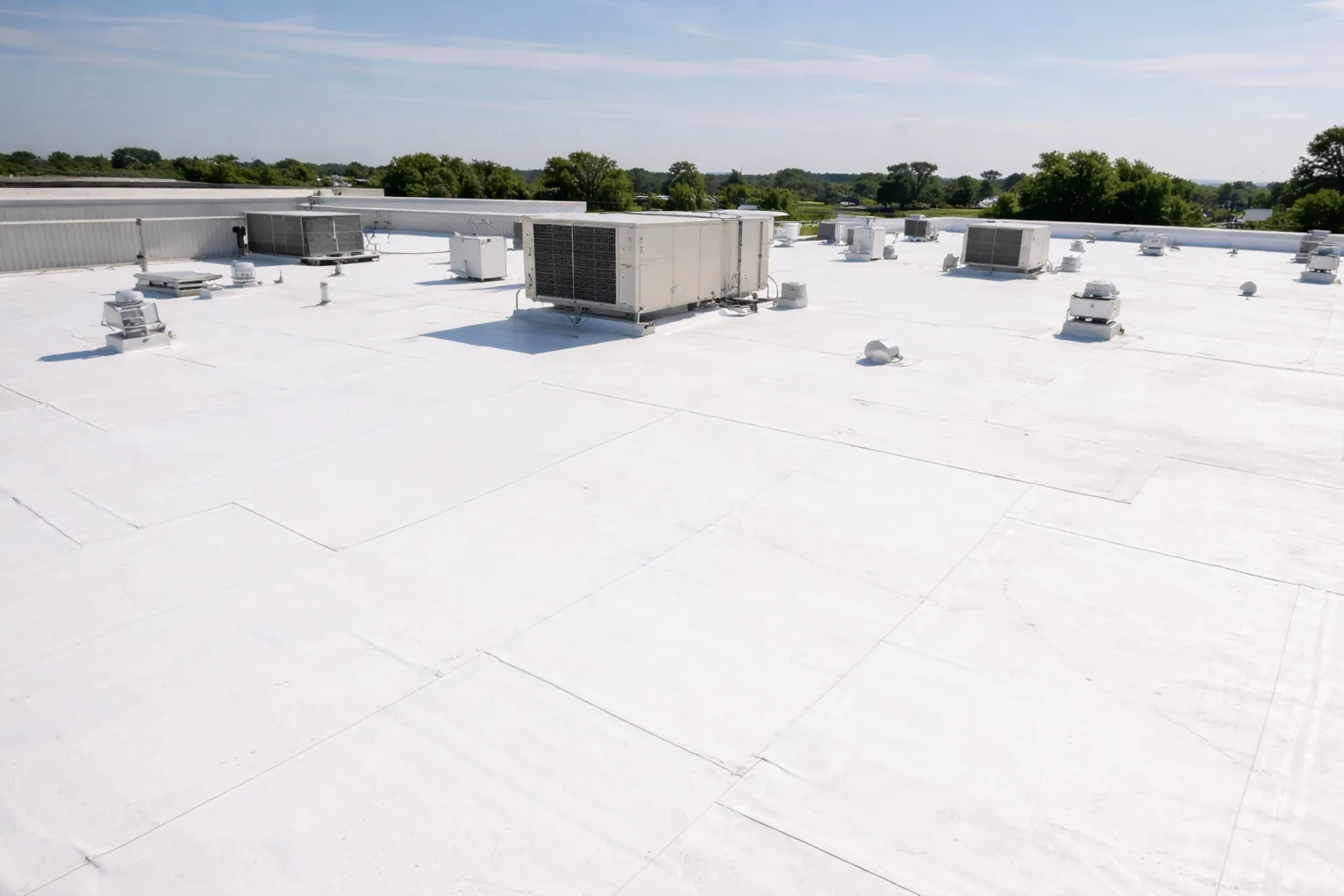
Before the visit, identify the building, roof sections, available plans, access points, transaction deadline, and decision the survey must support. We note whether every roof area can be reached and whether a lift, escort, interior access, or tenant coordination is required. If a section is unsafe or blocked, the report states that limit rather than treating it as inspected. For a multi-building parcel, each structure receives its own condition record. A roof condition report can organize field photos and observations by zone, giving the transaction team a clear basis for follow-up rather than a single broad rating.
Review records against field conditions
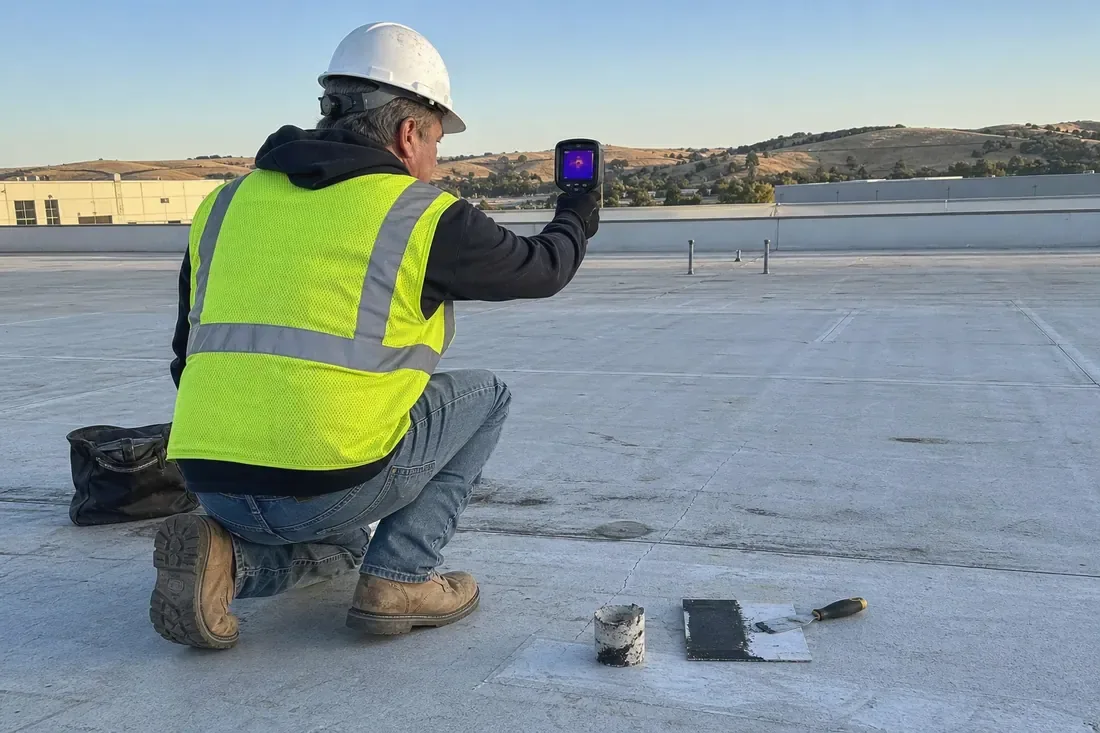
We compare available closeout documents, prior repairs, maintenance notes, warranties, and leak history with what can be seen on the roof. A repair invoice does not establish that adjacent flashing, insulation, or drainage was corrected. We inspect membrane or panels, seams, penetrations, edges, drains, and visible transitions, then identify any mismatch between the file and current observations. A commercial roof inspection can document those details and create a comparable baseline for the transaction file. If system type or installation detail cannot be confirmed visually, we say so. A warranty record review can identify documents tied to the roof, while the issued terms and any coverage decision remain with the issuer. We do not infer hidden conditions from an old photograph or property label.
State what is known and what remains concealed
Surface inspection cannot confirm every layer beneath a membrane. Moisture testing, sample cuts, or other controlled openings may be needed when wet insulation or deck condition would change the repair plan. The report identifies where testing occurred, what it found, and how much of the roof it represents. An untested zone remains an open question, not a dry area by assumption. If structural concerns appear, the report can identify the condition requiring review by the appropriate building professional; a roof survey is not a structural engineering evaluation. This distinction helps the buyer and owner understand the evidence before setting an allowance or authorizing removal.
A roof survey is also bounded by the transaction question. If the buyer needs to understand near-term water exposure, the inspection can focus on active openings and conditions that could affect interior use. If the decision concerns long-term renewal, the review may need broader moisture testing, roof history, and details on replacement access. We confirm the requested decision before the site visit so the report does not imply that one scope answers a different question. If records conflict, we describe the mismatch and state which field check could resolve it.
Use Allen market context without assigning a condition
Dallas-Fort Worth summers regularly reach or exceed 100°F, and spring brings the region's strongest severe-thunderstorm frequency. Those conditions can affect roof service and inspection timing, but they do not establish that the property experienced a particular event. Watters Creek spans office, retail, lodging, and meeting uses; 121 Tech Park includes flexible space near US 75 and SH 121. We use location information to plan roof access and discuss exposure while keeping findings tied to the building. A commercial roof survey in Allen records the actual details observed at the property under review.
Turn survey findings into transaction questions
The survey should distinguish active repair, planned maintenance, further testing, and potential capital work. We identify visible defects, repeated service areas, water entry reports, and conditions that need a closer look, then explain the next decision for each. A buyer may want a test opening before closing; an owner may prefer to document a limited repair first. We can define the information required for either path without assuming the transaction outcome. A capital plan can carry verified findings forward after the transaction. Costs and timing depend on system, repair boundaries, access, deck findings, equipment, and weather, so an estimate should state its assumptions.
Coordinate testing before the decision date
Testing takes time to arrange and repair after the opening. The project team should confirm who can authorize access, where a sample can be taken, how the roof will be closed, and who receives the result. If interior protection is needed, identify the room and operating hours before the visit. A test may refine an insulation or removal limit, but it cannot answer questions outside the sampled zone. We record the test location and method so a later estimate does not present a sample result as a full-roof measurement. Where an acquisition deadline is fixed, the report can separate decisions possible from the current visit and those that depend on additional access or testing.
When the work is approved, the opening should be located where the result will answer the stated question and the repair can be completed without creating a new exposure. The owner can decide whether a roofer, consultant, or other professional will observe the test. We record who attended, what was removed, what layers were visible, and how the area was restored. That chain of information gives the buyer and seller a shared factual basis while leaving warranty or transaction conclusions to the parties responsible for them.
Deliver a file the next manager can use
The final package should preserve roof-zone references, dated photographs, observed system details, repairs, limits, test results, and questions requiring follow-up. We identify whether a recommendation depends on an owner report, field observation, test, or an area not reached. That context helps the next property manager update the record without repeating the same investigation. For a portfolio, a roof asset record can keep due-diligence findings beside later repairs, while each building remains separate. If the next step is replacement or recovery, retain the survey boundary and assumptions with the bid documents so the selected work addresses the conditions actually reported.
The handoff can include a short list of conditions that should be checked again after occupancy, such as a repaired transition, an inaccessible roof zone, or a test area left open for later review. Each item needs an owner, target date, and the evidence that will close it. This keeps a transaction observation from being mistaken for completed maintenance and helps the incoming team plan access before the first service call.
Commercial Roofing Questions
Can a roof survey confirm the condition under the membrane?
Only where testing or an opening provides evidence. The report marks concealed or unsampled areas as unresolved and identifies what further work could answer the question.
Will the survey estimate the full replacement cost?
It can define observed conditions and repair boundaries. A project estimate depends on confirmed system, access, removal depth, deck condition, and the final scope.
Can testing be done before a transaction closes?
That depends on access approval, transaction timing, interior protection, and who will repair the opening. We can define the test area and work sequence for approval.
Does a roof survey replace a structural assessment?
No. If roof observations raise a structural concern, the report identifies it for review by the appropriate building professional.
What records should the seller provide?
Available roof plans, closeout files, maintenance and leak history, prior repair scopes, warranties, and recent inspection reports help establish context.