Commercial Roof Maintenance in Allen, TX
A maintenance visit turns small roof observations into scheduled work before they interrupt building operations. In Allen, a portfolio may include offices in Watters Creek, retail near Stacy Road, and industrial or technology space near US 75 and SH 121. Those properties do not share a single maintenance calendar. We inspect each roof's drainage, seams, penetrations, edges, equipment supports, and prior repairs, then set follow-up according to the actual condition. The plan should make it clear which items need immediate attention, which can wait for a planned window, and what should be checked again. It can align routine service with approved budgets and shutdown calendars. For a commercial building in Allen, that record links routine maintenance with capital planning and day-to-day operations.
Check the details that change
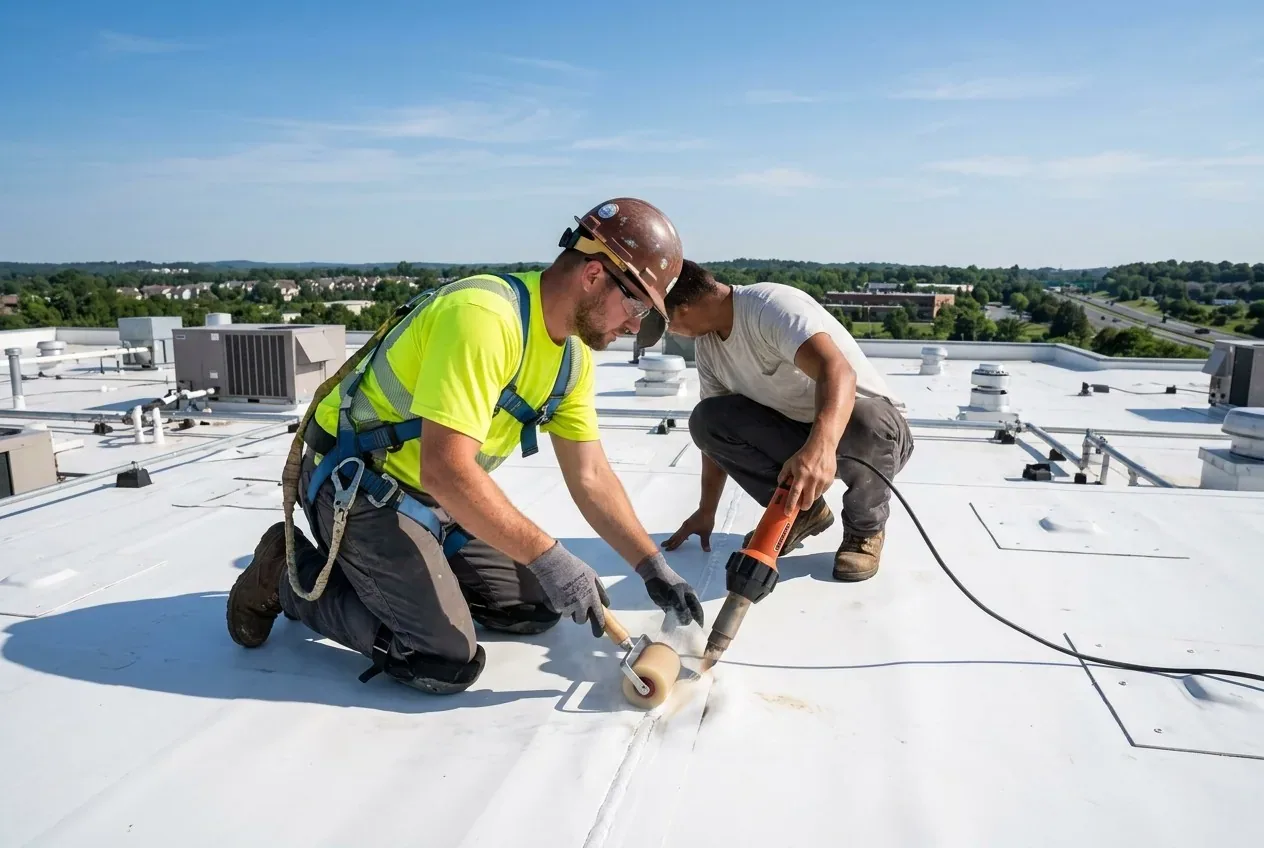
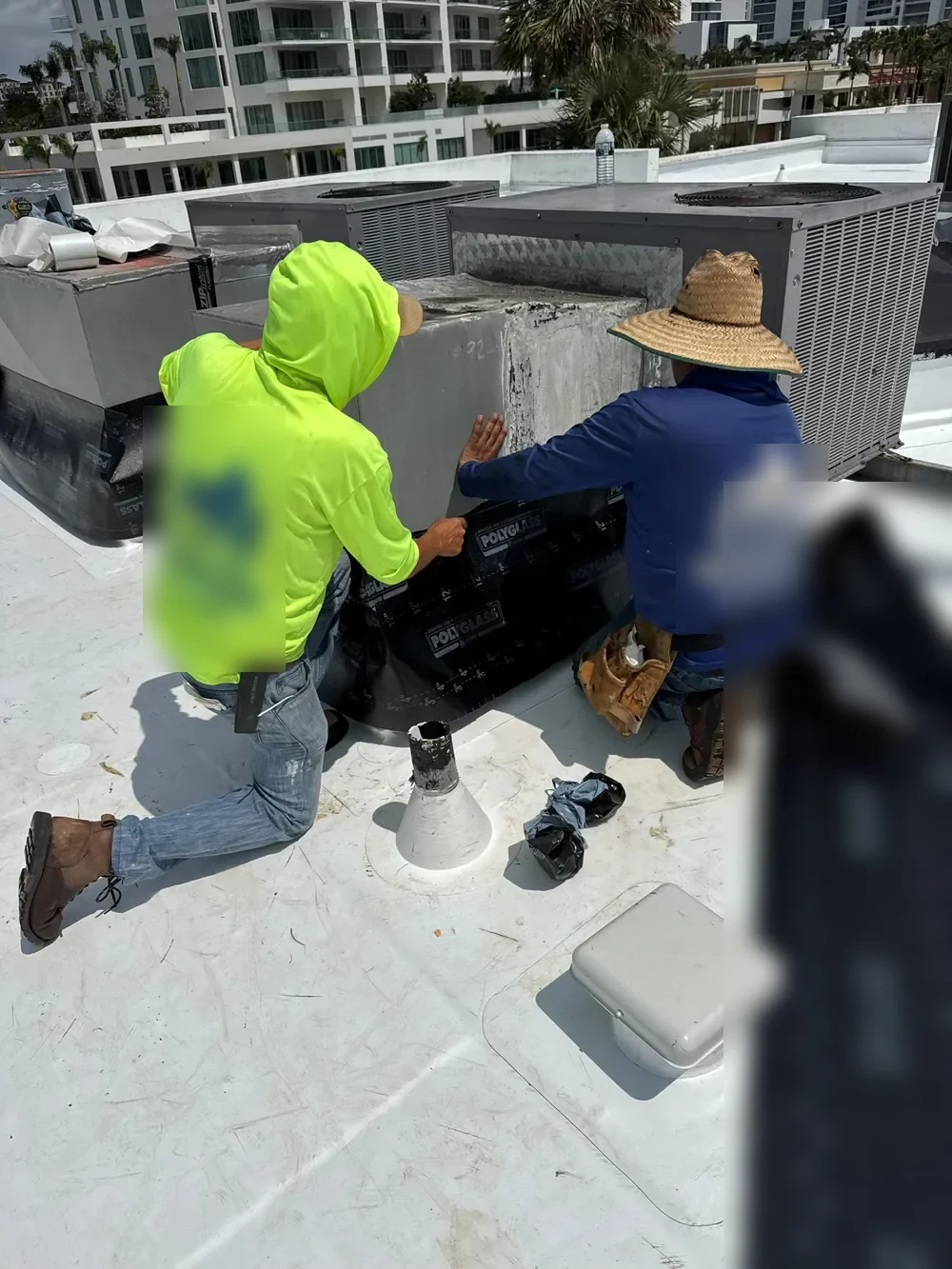
We review field seams, flashing terminations, curbs, pipe penetrations, fasteners, edge metal, drains, scuppers, and walk paths. Rooftop equipment can create foot traffic, vibration, and service access needs that affect the surrounding membrane. Debris or standing water at drains can expose a drainage issue before it becomes an interior leak. Sealants and patches are checked for separation, cracking, or loss of adhesion, and any wet insulation concern is marked for further testing.
The inspection also notes what changed since the last visit. A repair can be holding while a nearby detail begins to open. A new HVAC unit may add service traffic or change how water moves around a curb. We compare the field condition with prior photos and work records where available. Maintenance is more useful when it follows the roof's own history instead of repeating a generic checklist. For larger sections or inaccessible areas, a drone roof inspection can supplement hands-on review, while an infrared moisture survey can help map suspected moisture beneath the membrane.
Sort work by urgency
Not every maintenance finding has the same consequence. An open seam over an occupied room, an obstructed drain before a storm, and a worn surface with no visible water entry call for different timing. We group observations by current exposure and the consequence of waiting. The report describes the location, condition, recommended work, and any uncertainty that needs testing. That makes it easier to assign a maintenance ticket or add a larger project to the next budget review.
Some tasks are simple maintenance, such as clearing debris from an accessible drain or monitoring a recently repaired detail. Others need a repair scope, material replacement, or evaluation of wet insulation. We identify when a condition is beyond routine service and explain why. A targeted repair can address a failed transition; repeated defects or widespread moisture may support a broader condition assessment. The facility director can see which items protect current operations and which should be planned with a replacement cycle.
Schedule around North Texas exposure
Allen's hot, humid summers place sustained exposure on rooftop membranes, sealants, and equipment transitions. Spring thunderstorms can bring hail and damaging wind across the Dallas-Fort Worth region, and heavy rain tests the roof's drainage paths. Regional weather can help set inspection timing, but only a site visit determines whether a particular roof was affected. Maintenance checks after a storm focus on perimeter details, exposed accessories, seams, and drainage rather than presuming damage from the forecast.
Seasonal service can also remove debris, identify openings before a wet period, and document areas that deserve a closer look when the roof is dry. If an active leak follows a storm, temporary protection can precede a permanent repair. Maintenance records separate routine wear from new observed impact and identify what work was completed. A storm-damage assessment can extend the review after a hail or wind event. The goal is to move from a weather alert to a property-level condition and a manageable work sequence.
Set an interval that fits the roof
Inspection frequency depends on roof age and condition, storm exposure, drainage, foot traffic, equipment servicing, and the history of leaks. A roof with a recent repair or known moisture area may need closer observation than a stable assembly with clear drains and documented details. We recommend an interval based on findings and explain which event should trigger an additional check, such as severe weather or new water entry.
Allen's office, retail, technology, and industrial properties may have different service windows and access requirements. We coordinate keys, escorts, rooftop access, equipment restrictions, and tenant activity with the facility contact. For multi-building portfolios, the schedule can group visits by geography or operating window while keeping each roof's priorities separate. A roof asset management program can organize condition records and next inspection dates. Capital planning can then use those records to forecast larger scopes alongside routine service.
Make each visit comparable
A useful maintenance record includes the inspection date, roof section, observed condition, photos, work performed, and remaining action. We use consistent section labels so the next technician can find the same drain, curb, or seam. If a condition is not accessible, that limitation is recorded and another method can be considered. The record distinguishes a completed task from an item that still needs a repair authorization or diagnostic test.
For an Allen facility director, that history helps answer whether a repair is holding, whether a drain keeps collecting debris, and whether recurring leaks point to an underlying assembly problem. Photos and notes can be shared with the asset manager or building owner during budget review. We can tie a completed maintenance visit to the next inspection or to an open repair item. Those findings can be compared across properties without treating unlike roofs as identical.
Keep access and operations predictable
Before each visit, we confirm how to reach the roof and whether any equipment or rooms below require special coordination. Work around occupied office, retail, and technology properties may need notice, a specific access route, or a time when rooftop equipment can be approached safely. We identify any maintenance that may create noise or a short service interruption and agree on the contact for updates.
Watters Creek's office district sits beside retail, lodging, and meeting activity, so access can differ by property and time of day. At other Allen sites, loading areas and equipment yards can shape where a ladder or lift is placed. The crew records what it completed before leaving, and the facility contact receives open items and recommended dates. That gives the operations team a clear picture of the next required action. When maintenance identifies active water entry, leak repair can move ahead without losing the inspection record.
Commercial Roofing Questions
What belongs on a commercial roof maintenance visit?
We check seams, flashings, penetrations, edges, drains, equipment supports, and previous repairs, then document conditions and recommended actions by roof section.
How often should a roof be maintained?
The interval depends on condition, weather exposure, drainage, foot traffic, equipment service, and leak history. We set a schedule after reviewing the actual roof.
Can maintenance help prevent an emergency leak?
It can catch open details, blocked outlets, or deteriorating repairs before they lead to water entry. It cannot eliminate every risk from severe weather or hidden defects.
Do you clear commercial roof drains?
We inspect accessible drains and scuppers and can include clearing and related repairs in the scope. Drainage changes or inaccessible outlets may need additional work.
Can you maintain multiple Allen properties on one schedule?
Yes. Visits can be grouped around geography and operating needs, while reports keep findings and repair priorities specific to each building.