
Commercial Roofing Services in Allen, TX
A service call begins with a roof condition and the decision it needs to support. Commercial Roofing Allen repairs, replaces, recovers, restores, coats, inspects, and maintains low-slope and metal commercial roofs. We identify the building, installed assembly, access requirements, and reported concern, then set a scope from observed conditions. A leak over an occupied office, a failed drain at a warehouse, and a planned reroof need different investigation and sequencing.
Choose the first service from the condition
For active water, a commercial roof leak investigation connects the interior report to the roof zones that could explain it. If water entry needs immediate attention, emergency roof repair can assess safe access and temporary protection. A commercial roof inspection documents seams, edges, drains, curbs, and prior repairs. Drone imagery or an infrared moisture survey may support a review where conditions allow; concealed layers still require verification.
For a roof with repeated leaks or wider deterioration, compare replacement, recover, and coating or restoration after identifying the assembly and substrate. The recommendation should explain what is included, what has been measured, and what depends on testing. A surface repair is not a substitute for removing wet insulation or restoring a failed drain connection.
Set the boundary before mobilization
A written scope names the property, roof area, material, tie-ins, access route, staging, protection below, and approval point for added removal. At an occupied property, phased reroofing can separate the work by zone and define a weather-tight stopping point at each shift. A drain and scupper review checks outlet conditions before drainage changes are specified. Penetration work should be coordinated with the trade responsible for adjacent equipment.
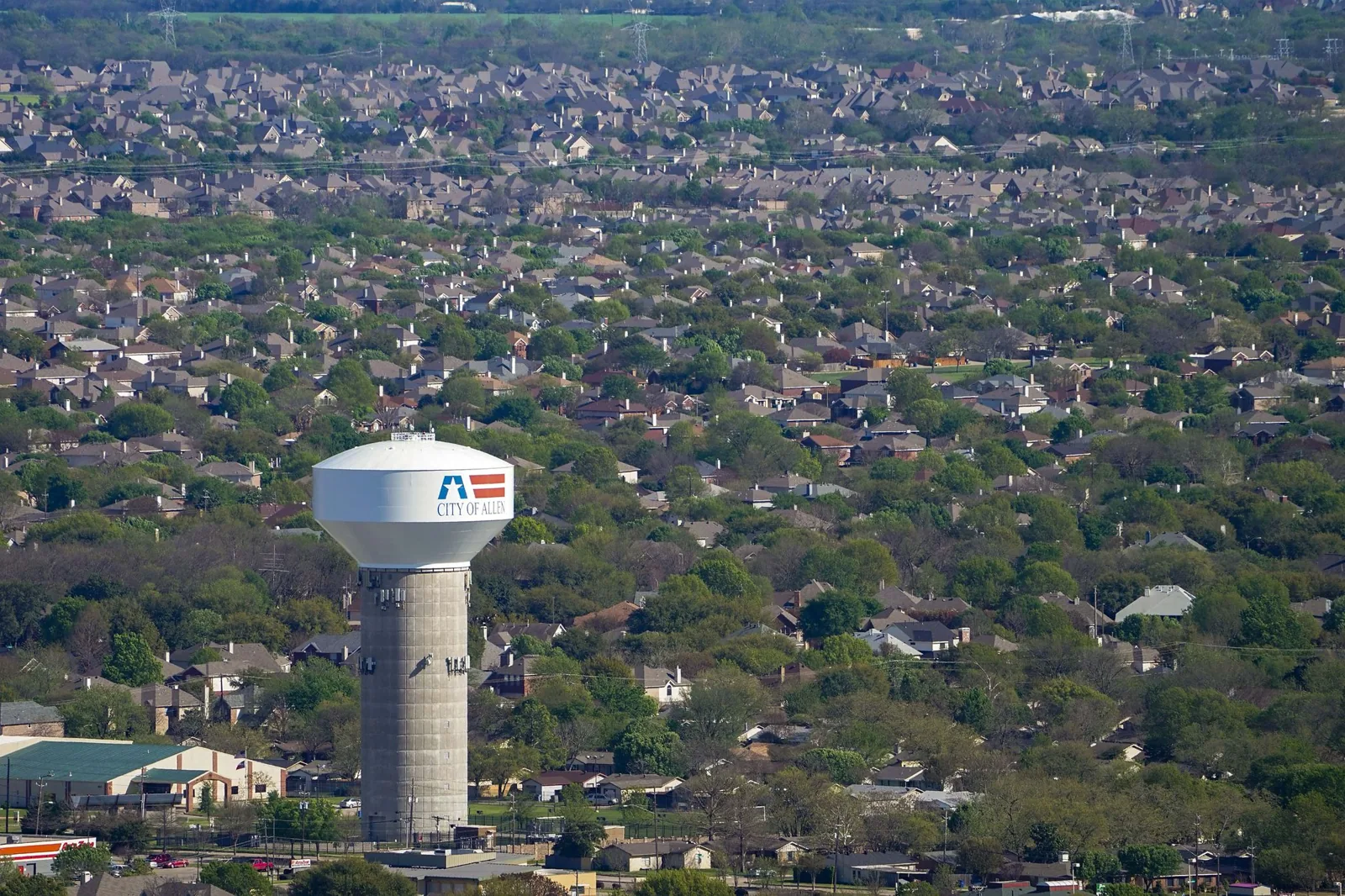
Allen's Watters Creek district includes Class A office buildings alongside retail, hotel, and meeting uses. At 121 Tech Park, office, industrial, and technology users share a commercial district with access to US 75 and SH 121. We inspect each assembly and operating area before setting the access window and work sequence. The property contact confirms entrances, delivery timing, staging, lift access, and routes below the work. We keep temporary protection distinct from the permanent repair decision.
Compare choices using inspected evidence
A useful proposal separates visible repair quantities from test-dependent work. A split seam may support a local repair; suspected wet insulation needs an approved opening before removal is described as confirmed. If a broader option is under review, claim documentation can organize dated photos and service history when requested. Each option should identify its work limit, assumptions, exclusions, access needs, and possible changes so a facility director can compare choices on equal terms.
North Texas spring brings its highest severe-thunderstorm frequency; summer heat adds prolonged exposure for membranes and metal details. After a reported storm, we inspect the roof and record any visible change at the building before recommending repair. We check the actual roof, document edges, seams, penetrations, and drainage by zone, and distinguish observed impact from older wear. Any area not accessed remains an open item rather than an assumed finding.
Carry the service record forward
After work, retain the roof map, photos, materials, approvals, areas reached, completed details, and follow-up due. A preventive maintenance program can track drains, seams, flashing, and repairs by roof zone. For owners with multiple Allen properties, a city service visit can be routed with a Watters Creek property while preserving separate site records. Share the building, concern, access window, plans, and repair history to identify the right first step.
Commercial Roofing Questions
What should I send before scheduling?
Provide the building, reported condition, access window, available roof plans, and service history. We will identify the right inspection or repair step.
Can an active leak be addressed before replacement is decided?
Yes. We can assess safe access and temporary protection, then document a measured repair or the test needed to evaluate concealed conditions.
How does phased reroofing protect an occupied building?
The sequence defines roof zones, daily exposure, dry-in, and the person who releases the next area. The property contact confirms tenant routes and work hours.
What belongs in the service closeout?
Keep the property, date, areas inspected, photos, materials, work limits, approvals, and remaining items together.