Commercial Built-Up Roofing in Allen, TX
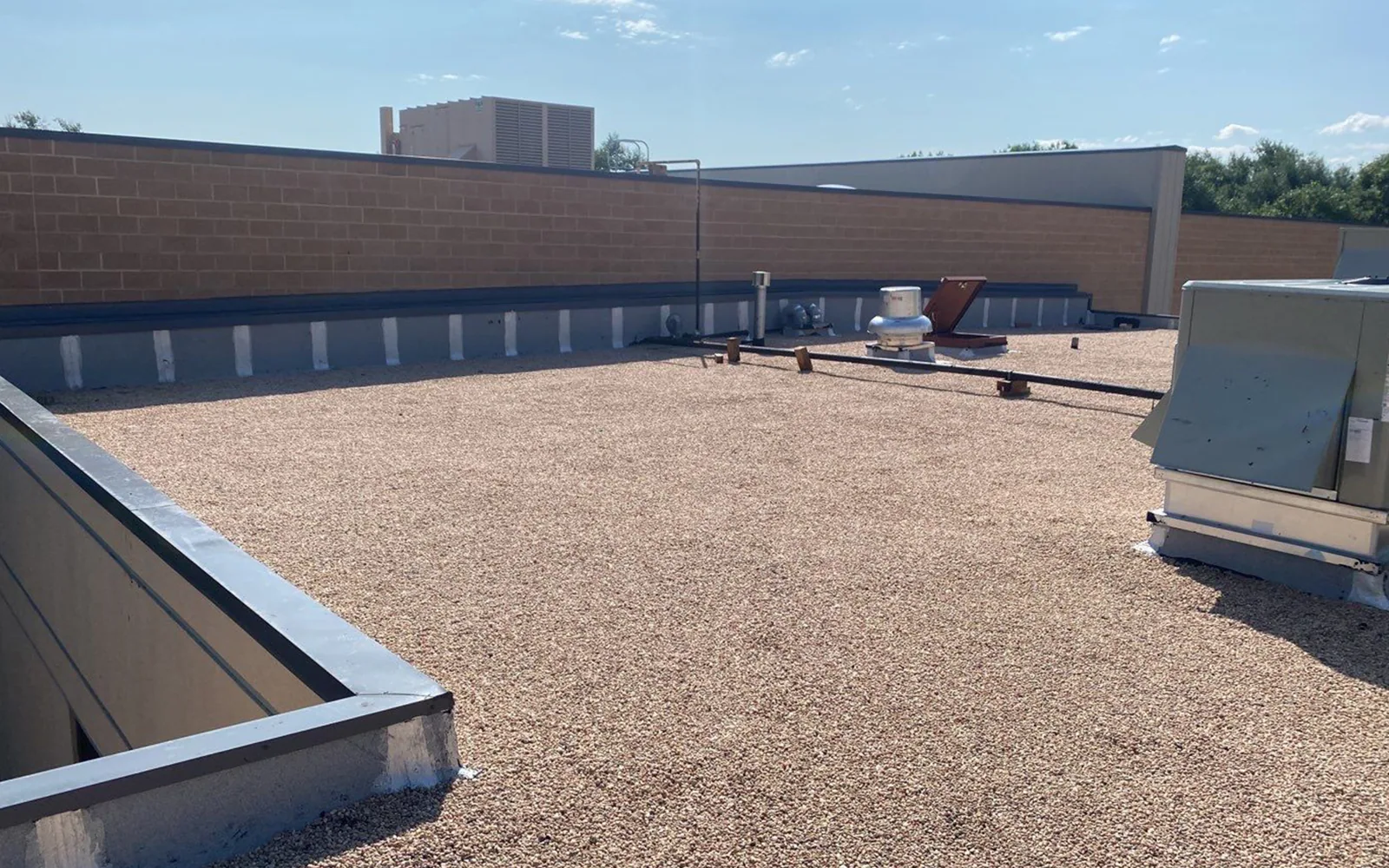
A built-up roof forms its waterproofing from multiple reinforcing plies embedded in bitumen, often finished with aggregate or a mineral-surfaced cap. In Allen, that layered assembly must handle high summer heat, heavy rain, rooftop access, and spring storm exposure. We inspect the surfacing, plies, insulation, drains, and perimeter before recommending a repair or replacement. What looks like loose gravel may be part of the designed surface, while exposed asphalt or a split lap can signal a condition to repair. Office buildings near Watters Creek and industrial properties at 121 Tech Park have different access and equipment demands. For commercial built-up roofing in Allen, we can map the roof layers and identify the work needed.
Read the plies beneath the surface
Built-up roofing is assembled on the roof from base sheets, reinforcing felts, asphalt or an approved cold-applied adhesive, and a cap or surfacing layer. The number and type of plies depend on the specified system. Asphalt bonds the layers and seals overlaps; the surfacing protects the exposed bitumen from weather and foot traffic. We inspect for exposed asphalt, displaced aggregate, blistering, ridges, open laps, and repairs that no longer bond to the surrounding roof.
Granules or gravel can make it difficult to see the cap sheet. We clear small inspection areas carefully and check how firmly aggregate is embedded. A roof may have multiple surfacings or prior overlays, so we identify the construction before applying new material. A modified bitumen assembly uses factory-made sheets and a different ply construction; EPDM roofing is a single-ply alternative. Matching the existing roof type is the first step in selecting a repair that will bond.
Find concealed moisture and weak areas
Water can travel between plies before it reaches the deck or ceiling. We compare interior reports with roof slope, drains, penetrations, and lap directions, then examine suspected areas for soft spots, blisters, splits, or deteriorated surfacing. A blister may be associated with trapped moisture or loss of adhesion, but its appearance alone does not establish the cause. We test or open suspect areas when the repair decision depends on what lies below.
Wet insulation can reduce thermal performance and keep the assembly unstable. A surface patch will not dry concealed material. If moisture is found, we mark the affected boundary, remove damaged layers within the scope, and inspect the exposed substrate before rebuilding. A roof inspection can record the wider condition, and an infrared moisture survey may help target verification. Any test has limits; selective openings may be needed to confirm the roof's condition.
Select surfacing and application method
Built-up systems may use hot asphalt, cold adhesive, mechanically attached base sheets, or combinations specified for the roof. Hot asphalt is heated and applied between plies, while aggregate surfacing must be dry and embedded as intended. Installation methods affect fumes, fire controls, access, and weather limits. We use the process required by the selected system and building, with protection controls appropriate to the work area. A torch is not a default method for built-up roofing.
Aggregate can reduce direct exposure of bitumen and protect the surface, but it adds weight and can conceal damage. Mineral cap sheets provide a different finish and need correctly formed laps and flashings. The surfacing choice depends on the roof design, deck, maintenance needs, and any existing layer. Dallas-Fort Worth summer weather affects asphalt temperature, safe work periods, and material handling. Before installation, we coordinate stored materials, kettles or equipment, occupied areas, and a secure stopping point for each shift. Each ply must be set into a continuous adhesive bed or hot asphalt at the specified application rate. Voids, cold laps, or uneven coverage can weaken the bond and shorten the life of an otherwise sound surface. The completed roof should be checked for proper surfacing, lap coverage, and flashings before materials are removed from the site.
Keep runoff clear of the roof system
Built-up roofing still depends on water leaving the roof. We inspect drain bowls, strainers, scuppers, overflow points, and low areas for debris or surfacing that restricts flow. A blocked outlet keeps water on top of the cap sheet and can reveal a low spot or damaged drain flashing. Ponding may result from settlement, compressed insulation, or a blocked outlet; the cause determines the remedy.
At drains, each ply must be integrated with the bowl and clamping ring. At parapets and curbs, flashing ties the field plies into vertical surfaces. Perimeter metal should be secured so wind does not lift or displace the assembly. A drainage review can address outlets, and loose edge details should be corrected to secure the roof boundary. If water is entering at an equipment curb, the flashing or support connection may need a separate correction.
Repair from sound material outward
We remove loose aggregate and unsound roofing to reach a stable, dry layer. The patch may rebuild multiple plies, restore surfacing, and reflash a nearby drain or curb. Repair boundaries extend to material that can accept a bond, not just the visible crack. If a roof has multiple overlays, we check how they are attached and whether new asphalt or adhesive is compatible. A repair scope also notes any section that requires testing before the patch can be closed.
Repeated leaks, widespread blisters, saturated insulation, or deteriorated deck can point to replacement rather than a series of patches. The choice depends on the affected area, remaining serviceable assembly, maintenance history, and expected disruption. A focused repair can address an isolated defect, while a replacement review compares tear-off, insulation, drainage changes, and work phasing. We explain which parts of the existing roof remain and what uncertainty still needs investigation.
Track the roof after restoration
Routine checks should note aggregate displacement, exposed asphalt, open laps, blisters, clogged drains, loose metal, and damage from rooftop service. Walk paths should be defined, because heavy equipment and repeated foot traffic can disturb surfacing. If a coating is considered, the roof needs to be clean, dry, and compatible; a coating is not a substitute for replacing wet felts or failed plies.
Allen's heat, humidity, and regional spring storms give building teams reason to revisit the roof after major weather and equipment work. A planned roof visit can track outlets and transition details, and a roof condition report can retain photos and repair boundaries. Keep the roof assembly record with service invoices so future crews know whether they are inspecting built-up plies, modified bitumen, or a later overlay. That distinction affects repair material and how the surface can be safely opened.
Commercial Roofing Questions
How many layers does a built-up roof have?
The specified assembly determines the number and type of plies. We inspect the existing construction rather than infer its layers from the surface alone.
Is the gravel on the roof supposed to be there?
It may be the designed surfacing. We check whether aggregate is embedded and whether the cap sheet or bitumen is exposed beneath it.
Can you repair a blister in a built-up roof?
Yes, after checking the cause and layers below it. If moisture or broad adhesion failure is present, the repair may extend beyond the blister.
Does built-up roofing always use hot asphalt?
No. Some systems use cold adhesives or mechanical attachment in parts of the assembly. The selected product and design set the application method.
When should a built-up roof be replaced?
Widespread wet insulation, failing plies, repeated leaks, or deteriorated deck can make replacement more suitable than continuing localized patches.