Commercial Roof Asset Management in Allen, TX
A portfolio record is useful only when a facility director can connect a roof finding to a building, a decision, and a next action. Allen properties can range from the offices, retail, hotel, and meeting uses at Watters Creek to the flexible industrial and technology space near US 75 and SH 121 at 121 Tech Park. Their assemblies and access requirements are different. We help owners maintain roof asset records that preserve those differences while showing where inspection, repair, and renewal work belongs.
Start with a building-level roof register
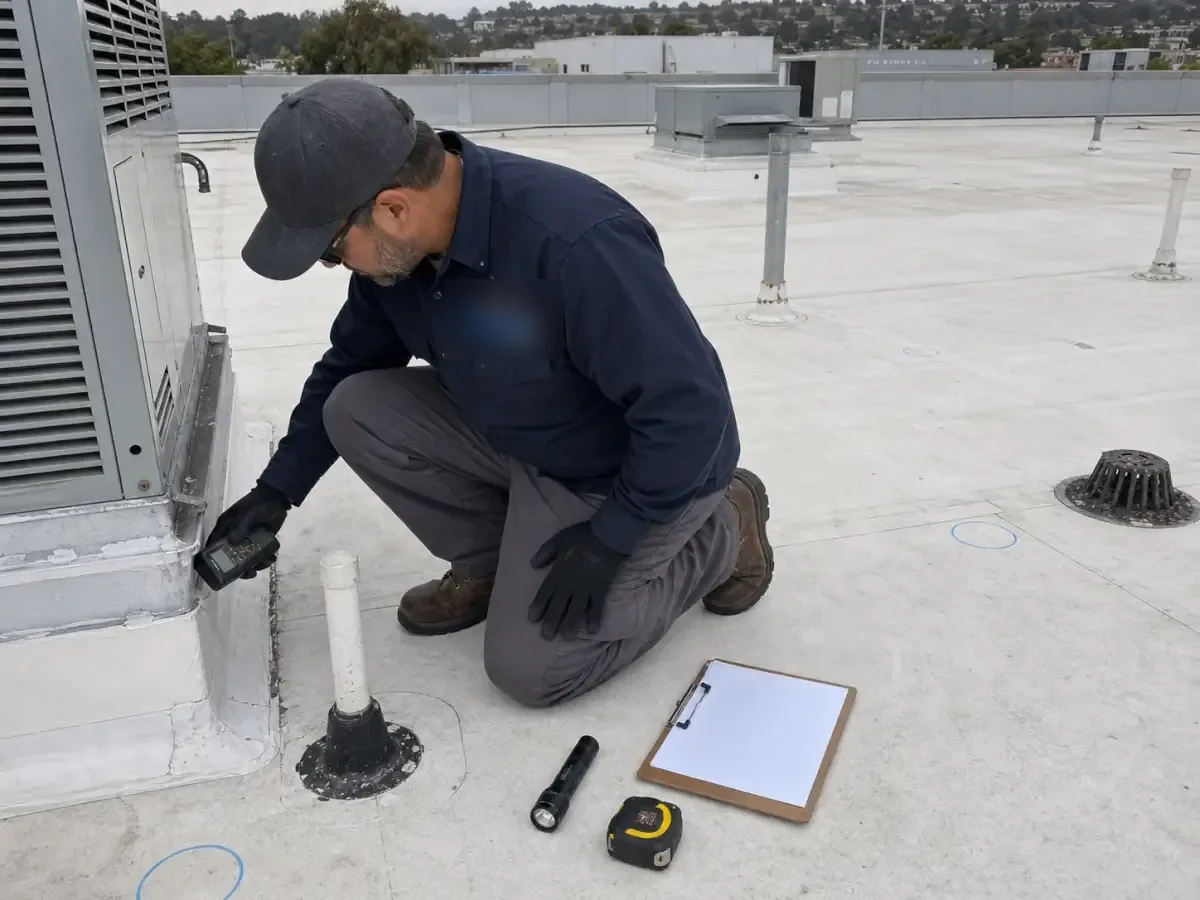
Each record begins with the property identifier, roof zones, known system type, last inspection, open service items, and documents already available. We do not fill an unknown roof type from the tenant or building name. A walk-through records visible membranes, metal panels, drainage, penetrations, edge conditions, and access limits. Where a roof cannot be safely reached or a concealed layer remains unverified, that limit stays visible in the register. This gives staff a dependable starting point without turning a gap in documentation into a condition claim. A roof condition report can hold the photographs and findings that support each entry.
Separate condition from urgency
An active opening over an occupied area needs a different response from coating wear with no reported water entry. We classify findings by observable condition, consequence, and next decision. The record can distinguish active water, suspected moisture, repair completed, monitoring, and further testing, with a date and responsible contact attached. The labels help a property team compare calls across buildings without ranking every roof by age alone. A roof survey can establish a more complete baseline when the available information is sparse. The commercial roof inspection checks the actual assembly before the register assigns a repair or replacement path.
Connect work orders with roof history
A maintenance ticket often begins with a tenant description such as a stain or drip. Asset records become more useful when the ticket keeps the interior location, date, weather report, roof zone, inspection note, and repair outcome together. The ceiling stain is a clue, not proof of the entry point. We map the observation to drains, seams, curbs, and earlier patches, then record what was confirmed and what still needs testing. When roof work is complete, closeout should identify materials used, repair limits, photographs, and any follow-up date. A maintenance visit should add its own service date and observations rather than overwrite the original inspection. That history helps a facilities team see whether a recurring call follows a repaired seam, a drain blockage, or a separate penetration. If a roof zone remains under observation, define what will trigger another visit and who will review it. A preventive maintenance visit can update the record after drains, penetrations, and edges are checked. A warranty record can be linked to the same roof history without replacing the field findings.
Keep Allen properties distinct
Watters Creek combines office, retail, lodging, and meeting functions across a broader district, while 121 Tech Park includes office, industrial, and technology uses. Those facts help a manager plan access and record structure; they do not establish the membrane or condition on a particular building. A commercial roof register should identify each property and separate additions or roof zones when their systems differ. The Allen service area spans buildings with different operations, tenant contacts, equipment, and hours. Asset records preserve those distinctions while still allowing owners to view open work across the portfolio.
Make unresolved items visible
A record should not mark a roof complete merely because one leak was patched. The entry can state whether adjacent insulation was tested, whether a drain remains restricted, whether a penetration is scheduled for replacement, and what observation would close the item. If access was limited, show which zones were not inspected and why. For Allen properties, hot summer conditions and spring storms make clear dates and follow-up notes especially helpful, but a regional weather report does not establish damage at a specific roof. Field photos and service records keep the condition tied to what was actually seen. Use multi-site roof planning when several properties need a consistent review cadence.
Use the record to set the next capital decision
Owners can compare active repairs, recurring failures, and deferred testing against their budget cycle. We document whether a recommendation rests on a visible defect, moisture survey, test opening, or a concealed area that needs further review. A roof with repeated seam failures may need broader evaluation; a separate building with an isolated flashing repair should not inherit that recommendation. A roof capital plan can convert those findings into a sequence of near-term and future decisions. Cost and timing depend on system, access, material, removal, deck condition, equipment, and work hours, so the record should preserve assumptions alongside the estimate. When bids arrive, compare their repair limits and exclusions against the same condition record. A proposal that covers a different roof area or assumes dry insulation cannot be compared by its headline amount alone. Asset files should retain the approved scope, change decisions, and final closeout so a future budget review can distinguish projected work from completed work. This reduces the chance that a deferred item disappears when ownership or facility staff change.
Keep the register useful through staff changes
When a facility contact changes, the next person needs the roof map, open conditions, prior repairs, warranty documents, and follow-up dates in one place. We can review the register with the property team and identify entries that need a current inspection before a decision is made. A multi-building portfolio may share a reporting format, but each roof needs its own evidence and work history. For example, a building near the Allen Central Business District does not inherit the condition of a roof in the mixed-use Watters Creek district. Clear records help the next manager carry a verified finding forward rather than repeat an inspection without context.
A contact list belongs beside, not inside, the roof condition itself. Record who can approve roof access, who receives an active-leak call, and who confirms a completed repair. Keep lease or tenant responsibilities in their own records unless the owner has confirmed a specific assignment. This makes the register usable during an urgent call without confusing a contact handoff with a technical conclusion. If an inspection identifies wet insulation or a failed detail, carry that finding forward with its date and test method. A later manager can see whether the scope was approved, completed, or deferred and what evidence would change the next decision. At turnover, a short review of unresolved items is more useful than transferring a folder without explaining which findings still need action.
Commercial Roofing Questions
What belongs in a commercial roof asset record?
Keep the building and roof-zone identifiers, system when confirmed, inspection findings, photos, repairs, open tests, warranty documents, and next review date together.
Can a portfolio use one condition scale?
Yes, if the labels describe observable conditions and keep each building's evidence separate. A common format should make comparison easier without treating unlike assemblies as equivalent.
How should we record a roof that was not fully inspected?
Mark the zones not reached, explain the access limit, and state what inspection or test would complete the record. Do not mark the whole roof as inspected.
Will the register decide which roof to replace?
It supports that decision with dated findings, recurring repairs, moisture results, and remaining questions. The owner still compares the scope, timing, and capital priorities.
Can new repairs be added to existing roof records?
Yes. Closeout photos, materials, repair boundaries, and remaining follow-up items can be attached to the building's roof history.