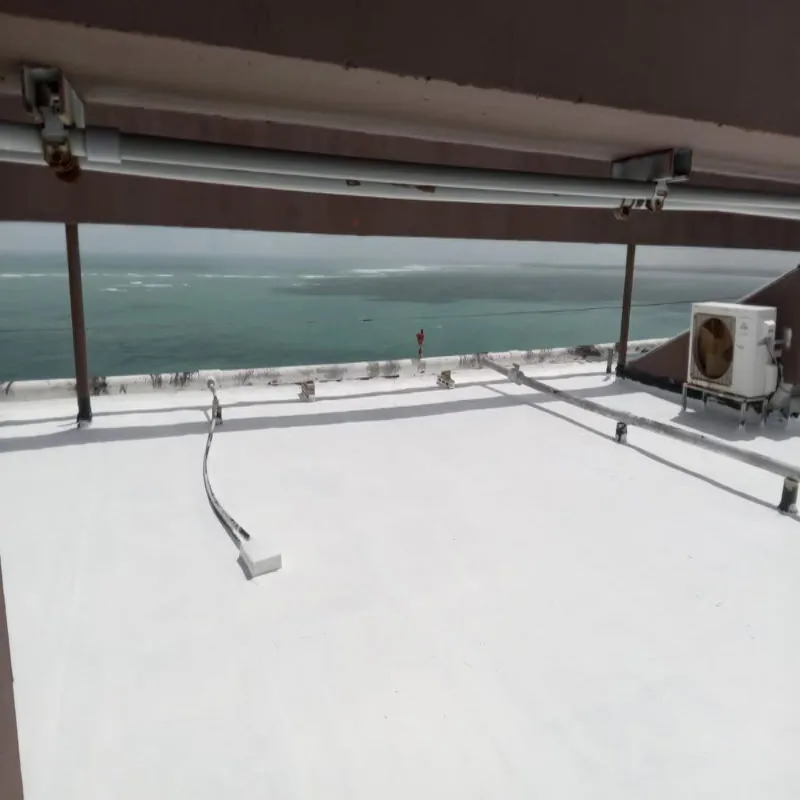
Commercial TPO Roofing in Allen, TX
TPO is a heat-welded single-ply membrane used on many low-slope commercial roofs. In Allen, the system must handle long hot summers, rooftop traffic, and spring storms that can bring hail and damaging wind. We begin with the deck, insulation, attachment design, drainage, and edge conditions, then specify a membrane assembly that fits those demands. A white surface is common, but color does not compensate for weak seams or wet insulation. Facilities near Watters Creek and 121 Tech Park also need details that work around equipment and service paths. For commercial TPO roofing in Allen, we can inspect an existing roof or plan a new installation.
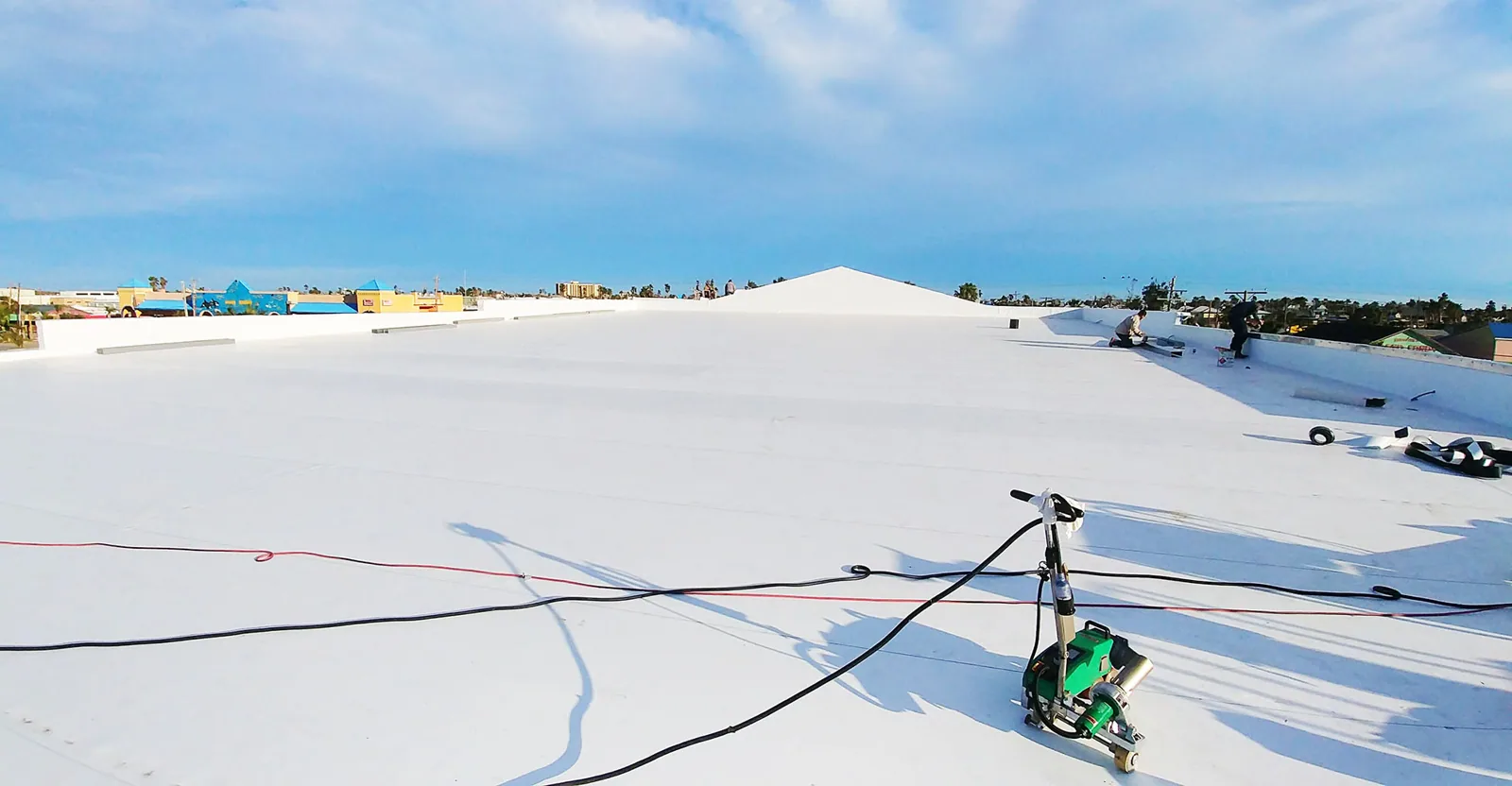
Build the TPO assembly from the deck up
A TPO roof includes more than the exposed sheet. The complete assembly may have a structural deck, air or vapor control layers, insulation, a cover board, membrane, fasteners or adhesive, and perimeter terminations. The right arrangement depends on the deck, existing roof layers, building use, and project requirements. We review what is present before proposing a recover or replacement so the new membrane does not conceal a wet or unstable substrate.
Insulation and cover-board joints should be planned to limit gaps and support the membrane. Attachment may be mechanically fastened, adhered, or part of an approved assembly. Fastener layout and edge details have to match the design for the building and wind exposure. Where insulation is damaged, insulation replacement may be included before the new sheet is installed. If the existing roof is suitable for an overlay, a TPO recover is evaluated for added height, trapped moisture, and existing attachment. When comparing systems, PVC membrane and EPDM rubber membrane have different seam methods, material properties, and compatibility needs.
Verify welds, laps, and transitions
TPO seams are joined with hot air, and weld quality depends on membrane condition, temperature, speed, pressure, and operator technique. A strong weld forms a continuous bond through the lap. We probe seams after cooling and check corners, patches, curb wraps, and end laps, where geometry can complicate the weld. Dirt, moisture, wrinkles, or incompatible repair material can interfere with adhesion and need to be corrected before welding.
Field seams are only one part of the water barrier. The membrane must connect cleanly at drains, penetrations, walls, expansion joints, and edge metal. We look for fishmouths, open laps, punctures, shrinkage, and separation at terminations during service calls. A roof inspection records the seam pattern and details, while a TPO repair uses compatible material and preparation for the existing membrane. If several areas have failed, we map them before comparing repair with restoration or a new roof.
Design for Allen heat and storm exposure
Hot roof surfaces and thermal cycling affect membrane movement, fasteners, flashings, and exposed sealants. Dallas-Fort Worth summer weather can make installation timing and crew safety important, while spring storms can test seams, perimeter attachments, and rooftop accessories. A TPO membrane must be selected and installed as part of a tested roof assembly with attachment appropriate to the building. Wind resistance comes from the complete system and its edge details, not from the membrane sheet alone.
Hail damage depends on the membrane, cover board, substrate, and impact conditions. After a reported storm, we inspect the membrane, edge details, and rooftop accessories and document the conditions observed on the roof. Drainage must remain clear because standing water can stress details and expose workmanship issues. A storm review can check the membrane, edges, and penetrations; a drainage inspection can address outlets as part of the same project. Allen has adopted the 2021 International Building Code and International Energy Conservation Code; confirm current amendments and permit requirements during design.
Finish drains, curbs, and roof edges
At a roof drain, the membrane is cut and secured into the bowl beneath a clamping ring or compatible detail. The drain must be set to the finished roof level so water reaches it without a raised edge. At curbs, TPO flashing wraps the base and terminates above the field membrane. The corners require careful forming or prefabricated accessories compatible with the system. A curb that moves or sits in a ponding area may need more than new flashing.
Perimeters and parapets see wind pressure and movement, so fastening and termination details need to match the roof design. We check metal attachment, membrane terminations, coping, and wall transitions. Rooftop equipment can interrupt the sheet and create pathways where service trades cross or work. The unit and support design should be coordinated with its flashing connection. Where metal and membrane meet, the edge detail must keep the assembly continuous around the perimeter.
Control the installation conditions
Before TPO work begins, the roof area must be clean, dry, and suitable for the selected attachment method. We remove unsound material, repair the substrate, and install insulation or cover board where specified. Membrane rolls are positioned to limit wrinkles and align seams with the approved layout. Hot-air welders are set for the sheet and weather conditions, and test welds can help confirm settings before full production. The crew checks welds as work proceeds rather than waiting until the roof is complete.
Temperature, humidity, wind, and precipitation affect how adhesives cure and whether a roof area can be made secure. We sequence tear-off and installation so the building remains protected at the end of each shift. Rooftop access and equipment service are coordinated with the facility manager, especially on occupied office or industrial roofs around Allen. If hidden wet insulation or deteriorated deck appears during removal, we document it and agree on the added scope before covering the area. Schedule and cost depend on access, tear-off volume, substrate repairs, penetrations, perimeter work, and the protection required to keep the facility dry during construction.
Keep seams and details serviceable
After installation, inspections should look for punctures, open welds, loose termination metal, damaged walkway pads, clogged drains, and flashing disturbed by equipment service. TPO can be repaired, but preparation and patch material need to be compatible with the membrane's age and condition. Dirt, oxidation, coatings, or previous repairs can affect how a patch bonds. We identify the membrane and repair history before cutting or welding.
Allen's heat and spring storm exposure give facility teams reason to track roof conditions, especially after trades access the roof. Regular maintenance can check drains, seams, curbs, and edges on a planned schedule. Keep the system data and repair history with the building records so future crews can confirm membrane type and past work before opening a seam. A roof condition report records photographs, repair areas, and deferred items for a portfolio. If a white surface is part of a broader heat-management plan, compare reflectivity with assembly condition, insulation, and building operation.
Commercial Roofing Questions
How are TPO seams sealed?
Installers heat-weld overlapping sheets, then inspect the cooled weld for a continuous bond. Temperature, speed, surface condition, and pressure all affect the result.
Can a TPO roof be repaired after years in service?
Often. We check membrane condition, prior repairs, seam integrity, and substrate before selecting a compatible patch or flashing method.
Is every white membrane a TPO roof?
No. Several roof materials can appear white. We identify the existing system before recommending repair or overlay materials.
Does a TPO roof need a cover board?
The assembly design determines that. Deck type, attachment, insulation, impact needs, and project requirements affect the specified layers.
Can TPO be installed over an existing roof?
A recover may be possible when the existing assembly is dry, stable, and suitable for added layers. We verify attachment, height, and details first.