Commercial Cool Roof Installation in Allen, TX
Dallas-Fort Worth summer heat can leave a low-slope roof exposed to strong sun for long hours, but a reflective finish only helps when the full assembly is in suitable condition. We evaluate the existing membrane, insulation, drainage, and access pattern before proposing a cool-roof installation. A reflective surface can reduce solar absorption at the roof, while building energy use also depends on insulation, HVAC, occupancy, and controls. The right design begins with those roof conditions, not a savings estimate. Offices at Watters Creek and technology or industrial buildings around 121 Tech Park have different equipment and traffic demands. Request a commercial cool-roof review in Allen before choosing a coating or membrane system. If replacement is already planned, adding insulation can address thermal transfer without a later tear-off.
Set the goal for the roof
Cool-roof projects may target lower surface temperatures, a specific appearance, membrane renewal, or a new assembly with a reflective top layer. The owner should identify which goal matters and what evidence will measure it. Reflectance and thermal emittance describe surface properties, but they do not by themselves predict a building's utility use. Existing insulation, air leakage, rooftop equipment, HVAC efficiency, roof orientation, and internal heat loads all affect performance. We explain what the selected roof can do and where a separate energy analysis is needed.
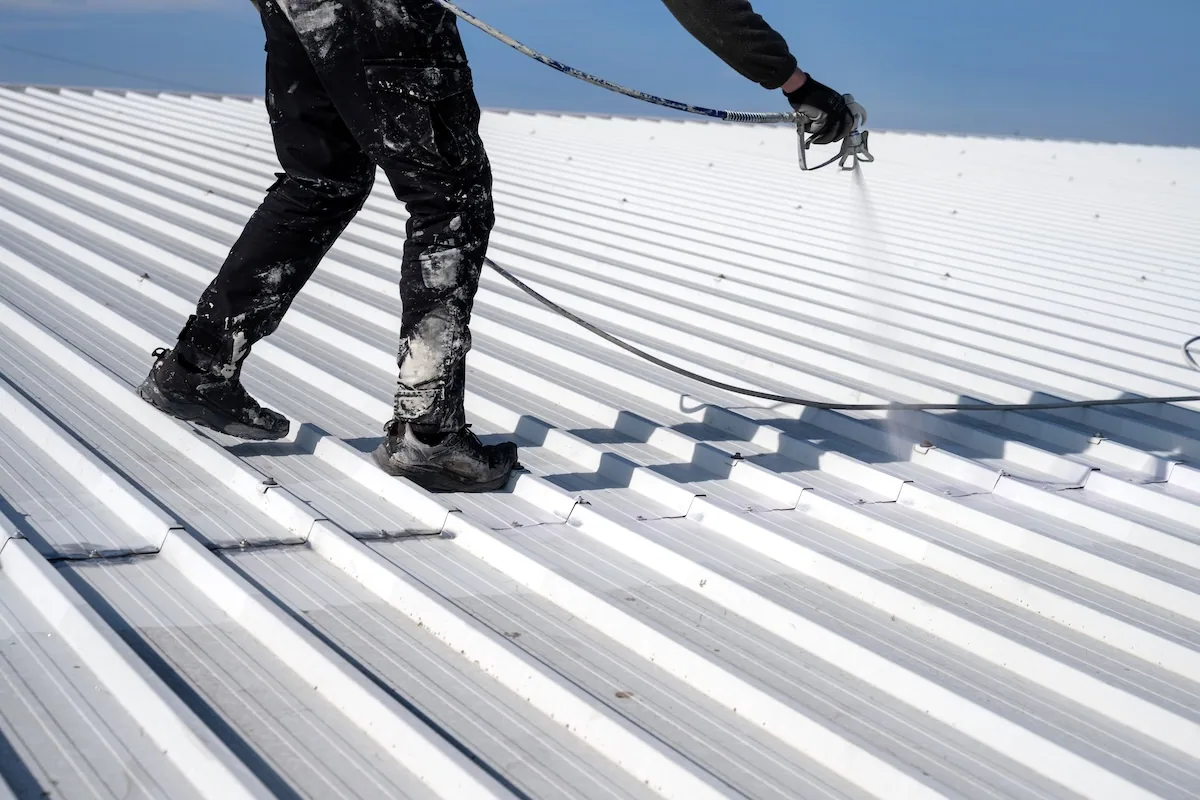
Color and surface finish can affect reflectance, but compatibility with the roof material remains essential. A reflective coating may be considered over a suitable existing membrane or metal panel; a damaged, wet, or poorly attached roof needs repair or replacement first. The application has to cover the planned surface at the product's specified thickness and include details, curbs, and transitions. A coating restoration evaluation can determine whether an existing assembly is suitable, while reflective membrane options may fit a replacement project.
Verify the surface under the finish
A reflective top layer cannot correct wet insulation, failed seams, loose edge metal, or poor drainage. We inspect the substrate, attachment, seams, penetrations, perimeter, and drains. If testing suggests moisture below the membrane, we verify suspect areas before deciding whether material must be removed. Applying a finish over unstable layers can leave the underlying defect active and make later repairs harder. The proposal identifies repairs that must be completed before the reflective system is installed.
Roof traffic and rooftop equipment can wear a surface even when most of the field remains intact. Walk pads, service paths, curbs, and equipment supports should be included in the design where needed. A commercial roof inspection can document current conditions, and a roof insulation review may be necessary if the assembly needs replacement or added thermal resistance. Allen facilities near Watters Creek and 121 Tech Park include office, industrial, and technology uses, so the survey also records access routes and equipment zones that affect surface selection.
Choose a reflective assembly
The system may be a reflective single-ply membrane, a compatible coating, or a metal roof finish. Each option has its own substrate, seam, flashing, and maintenance requirements. We confirm the existing roof material and check whether a new layer can bond or attach as designed. A coating over metal must accommodate panel movement and fasteners. A membrane replacement needs secure seams, compatible accessories, and finished edges. A system name or color should not substitute for reviewing those construction details.
We also check whether the roof is within the manufacturer's application limits and whether local permit requirements affect the work. Allen lists the 2021 International Building Code and Energy Conservation Code among its adopted codes, while project reviews should confirm current amendments. If an overlay would raise the roof surface, drains, curbs, and parapets may need modification. For metal panels, a standing-seam system may be considered when panel condition and support are suitable. For a coating design, silicone roofing has different performance characteristics and compatibility requirements from other reflective finishes.
Design for heat and storm exposure
North Texas summers are hot and humid, while spring storms across the Dallas-Fort Worth region can bring hail, high winds, and heavy rain. Heat cycles move metal and stress exposed sealants; storms test seams, curbs, drains, and roof edges. A reflective finish does not replace secure attachment or storm resistance. We inspect perimeter details and wind-exposed transitions, then select a system suited to the existing deck and roof conditions.
Hail resistance depends on the assembly and exposed components, not on roof color alone. Equipment screens, skylights, vents, and metal accessories should be reviewed as part of the project. Drainage remains important because reflective materials can still deteriorate under persistent ponding. An edge-metal review can identify perimeter repairs, while a drainage assessment addresses outlets before installation. After a severe weather event, the roof should be checked for damage separately from surface aging.
Prepare, apply, and inspect
Installation starts with surface cleaning and removal of loose or incompatible material. Repairs and detail work are completed before the field system goes down. Temperature, humidity, dew point, wind, and precipitation affect installation and cure. The crew follows product requirements for primer, attachment, seam treatment, and coverage, while protecting drains and adjacent surfaces. We sequence the work to limit exposure of the building and avoid trapping moisture under a new layer.
Quality checks include seams, terminations, penetrations, edges, thickness or coverage where applicable, and areas that need another pass. We document weather conditions that affect the work and identify any section withheld from application. Rooftop unit service and foot traffic are coordinated while the finish cures. A facility representative should know when access resumes and which cleaning or maintenance practices are compatible with the selected system. If a defect appears during application, we correct it before extending the next layer across the area.
Track condition after installation
After the project, the record should identify the roof system, surface areas treated, repairs performed, and any maintenance conditions that remain. If an owner wants to evaluate energy performance, compare utility use with weather and operating hours, and involve an energy professional where appropriate. A before-and-after surface temperature reading under different sun or wind conditions is not a complete measure of savings. We separate roof installation records from building energy claims so the result stays useful to the facility team.
Allen's hot season makes rooftop access and HVAC service coordination important after installation. Maintenance should check drain flow, seams, edges, equipment paths, and any coating wear or puncture. A roof maintenance program can record condition changes. For a portfolio across Watters Creek and 121 Tech Park, measure each building separately because assembly, use, insulation, and equipment loads differ.
Commercial Roofing Questions
Will a cool roof lower our utility bills?
A reflective surface can reduce solar absorption, but building savings depend on insulation, HVAC, occupancy, controls, and the starting roof. A project-specific energy analysis is needed to estimate results.
Can a reflective coating go on any roof?
No. The substrate must be compatible, dry enough, attached, and prepared. We inspect seams, drains, and prior coatings before recommending an application.
Does a white roof prevent hail damage?
Color alone does not determine hail resistance. The membrane, cover board, substrate, and exposed accessories all affect how the roof responds to impact.
Can we keep operating during installation?
Often, with work areas, access, rooftop equipment, and cure restrictions coordinated. The schedule depends on the roof layout and product conditions.
How do you compare cool-roof options?
We compare compatibility, assembly condition, drainage, detail work, installation limits, and maintenance needs. Reflectance is one factor in the decision.
