Commercial Storm Damage Roof Repair in Allen, TX
After a North Texas storm, a roof can look intact from the parking lot while lifted edge metal or a puncture around a rooftop unit lets water in. In Allen, spring thunderstorms can bring hail, damaging wind, heavy rain, and, regionally, tornadoes. We inspect the roof system and the parts that hold it together, then separate storm-related damage from older wear. That distinction matters when you are protecting occupied offices, retail space, or industrial operations near Watters Creek and 121 Tech Park. The next step is a repair scope tied to visible conditions at the building. For a commercial property in Allen, we can arrange a prompt roof assessment and document what needs attention.
Stop water at the entry point
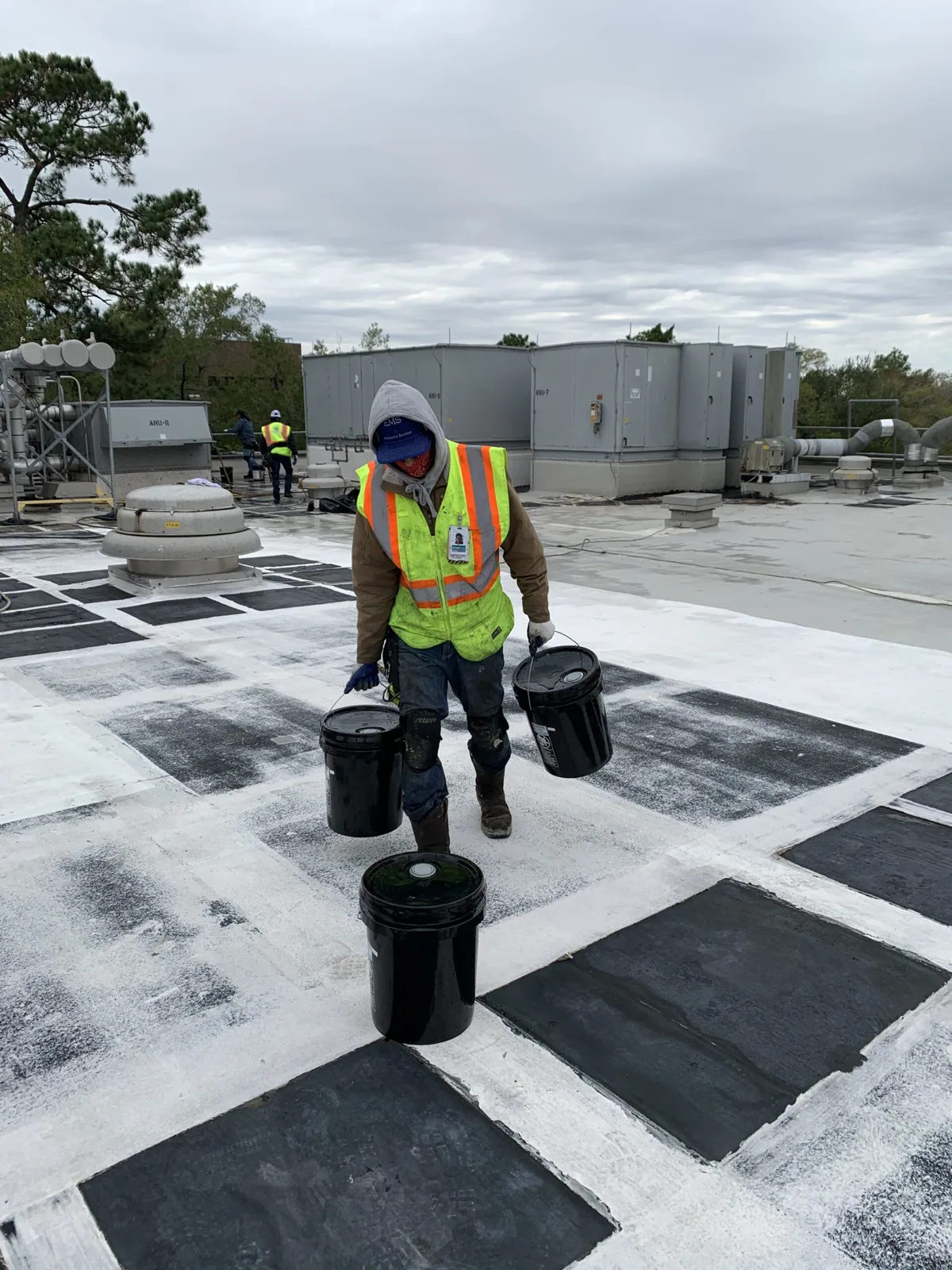
Water inside the building calls for immediate protection, but the ceiling stain rarely identifies the roof defect by itself. Water can travel along insulation, deck flutes, framing, or conduit before it appears indoors. We first note active leaks and protect sensitive areas when access allows. On the roof, we trace likely paths from wet interior locations toward seams, penetrations, curbs, drains, skylights, and wall transitions. The purpose is to stop additional damage without covering evidence or disturbing a roof section that needs a closer inspection.
If a storm has opened the roof, temporary measures can limit exposure while permanent repairs are planned. We check whether water is still entering, whether electrical or production areas need isolation, and whether the damaged roof area can be reached safely. The facility contact helps coordinate interior access, equipment shutdowns, and tenant notifications. A commercial emergency response is appropriate when active water or an exposed assembly cannot wait for routine scheduling. We document the temporary protection separately so the permanent repair remains clear.
Inspect the parts wind and hail reach
Wind pressure changes at corners, perimeters, and roof-height transitions. Those are places where edge metal, fasteners, seams, and flashing can loosen or pull away. A membrane may remain attached across most of the field while a small opening develops at a parapet or curb. Hail can bruise or split membranes, damage metal accessories, crack plastic components, and leave marks that require closer evaluation. We inspect both the obvious impact area and nearby transitions because a damaged detail can direct water beneath an otherwise intact field surface.
Roof-mounted equipment adds edges and penetrations that move differently from the surrounding membrane. We check flashing around curbs, conduit supports, exhausts, and equipment rails, including signs of impact or strain. Drains, scuppers, and overflow paths also need attention because debris can slow runoff after heavy rain. A drainage repair scope can be necessary when the storm moved debris, damaged an outlet, or exposed a preexisting restriction. Allen properties around Watters Creek and 121 Tech Park serve different tenants, so the access and interior consequences of a leak depend on the building's use.
Separate storm damage from prior wear
A roof assessment records conditions before repairs begin. We photograph the affected surface, measure or map the area when useful, and note whether each condition appears consistent with impact, wind movement, aging, or an earlier repair. A dent in metal does not establish a leak, and a leak found after a storm does not prove that the storm caused every defect. We look for torn membrane, displaced flashing, fresh openings, loose edge components, wet insulation, and water paths that connect the exterior condition to the interior report.
When the damage pattern is difficult to read from the surface, closer inspection may be appropriate. A hands-on commercial roof inspection can check seams and details. Aerial photos may help document inaccessible roof areas. Infrared or other moisture testing can help identify wet insulation, but it does not replace physical confirmation of a suspected defect. We explain what each method can establish and what remains uncertain, so the owner can choose the right next step without paying for a study that does not answer the question.
Match repairs to the damaged assembly
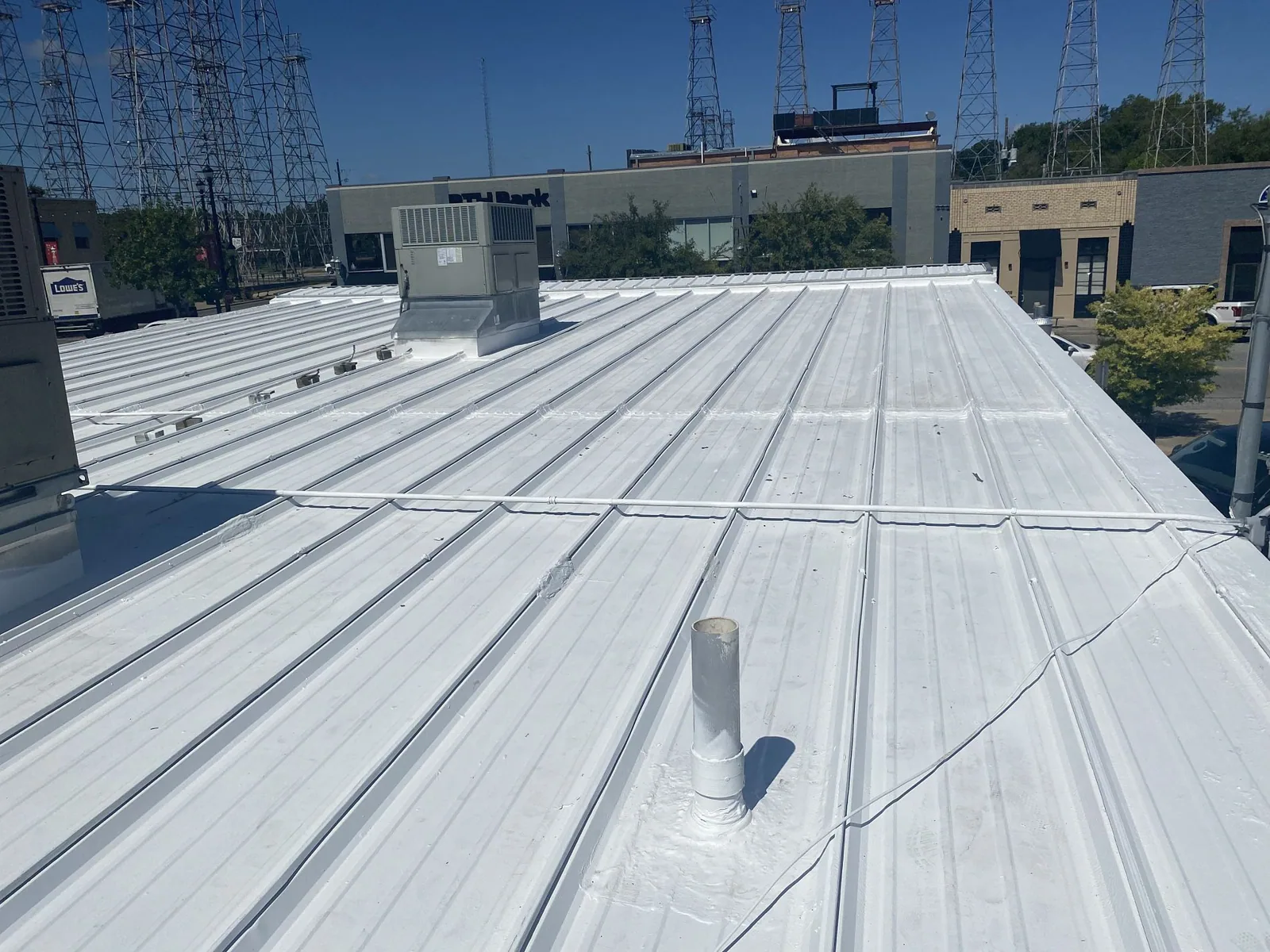
The repair method follows the roof that is present. A single-ply membrane may need a compatible patch, seam repair, or new flashing. Metal roofing may need a panel, fastener, closure, or transition detail corrected. Built-up and modified bitumen assemblies have different repair layers and surface conditions. We identify the material before selecting adhesives, primers, reinforcement, or replacement components. If the roof has multiple repairs or old coatings, we test compatibility where needed instead of assuming a new material will bond to the existing surface.
The written scope identifies the affected locations, the repair boundaries, and any wet or damaged material that must be removed. It also calls out conditions that are separate from the immediate storm repair, such as an obstructed drain or deteriorated curb flashing. Where the edge has shifted, perimeter metal repairs may be as important as the membrane patch. Where damage is isolated, a focused repair may preserve serviceable roof area; when damage extends broadly through the assembly, we compare the repair with a replacement plan.
Build a useful damage record
When an insurance claim is being considered, useful documentation begins with a dated record of the observed conditions. We can provide photographs, roof-area descriptions, inspection findings, and a repair scope that distinguishes temporary protection from permanent work. The record should identify what we observed and what we could not confirm. We tie the roof record to photographed conditions at the property. The carrier and property owner make any policy decision.
Preserve interior photos, dates, maintenance records, prior repair invoices, and communications about the first leak. These details can help compare current conditions with the roof's earlier state. Our claim documentation support can organize roofing observations without promising coverage or directing the insurer's decision. If you manage several buildings across Allen and nearby Collin County communities, the same inspection format helps keep locations distinct while recording each roof on its own evidence.
Protect the building after the storm
Once the immediate repair is complete, the roof still needs a follow-up check after the next heavy rain or after temporary protection comes off. We verify that repaired areas remain bonded or mechanically secure, that drains and overflows are clear, and that no interior symptoms have returned. If the roof contains saturated insulation or hidden damage, a surface patch will not resolve the full assembly problem. We identify remaining work and set an order based on active water, risk to building use, and exposure to further weather.
Allen's heat and humidity can stress exposed membranes and sealants between storm events, while spring storms can test the same details again. A scheduled maintenance inspection can record seams, perimeter conditions, drains, and rooftop equipment before small changes become interior damage. For organizations with several assets, photo-based condition reports keep repairs, deferred items, and follow-up dates in one decision record. The result is a repair history that informs the next maintenance or capital choice rather than a file of disconnected emergency calls.
Commercial Roofing Questions
Does a hail mark mean the roof needs replacement?
No. We check the material, location, depth, and effect of each impact. The recommendation may be a repair, monitoring, or broader work if the assembly is damaged.
Can you inspect while the weather is still active?
We act when roof access is safe. If wind, lightning, or standing water makes access unsafe, we can coordinate interior protection and return when conditions allow.
What should we save for an insurance review?
Keep dated interior and exterior photos, the first report of water, maintenance records, and prior invoices. We can add roof photographs and a condition-based repair scope.
Will you provide a temporary repair first?
When a safe temporary measure can limit exposure, we document it and explain how long it is intended to serve before permanent work.
Can a storm cause a leak far from the visible damage?
Yes. Water may travel through insulation or along the deck before appearing indoors. We trace the path and compare it with roof details and interior evidence.