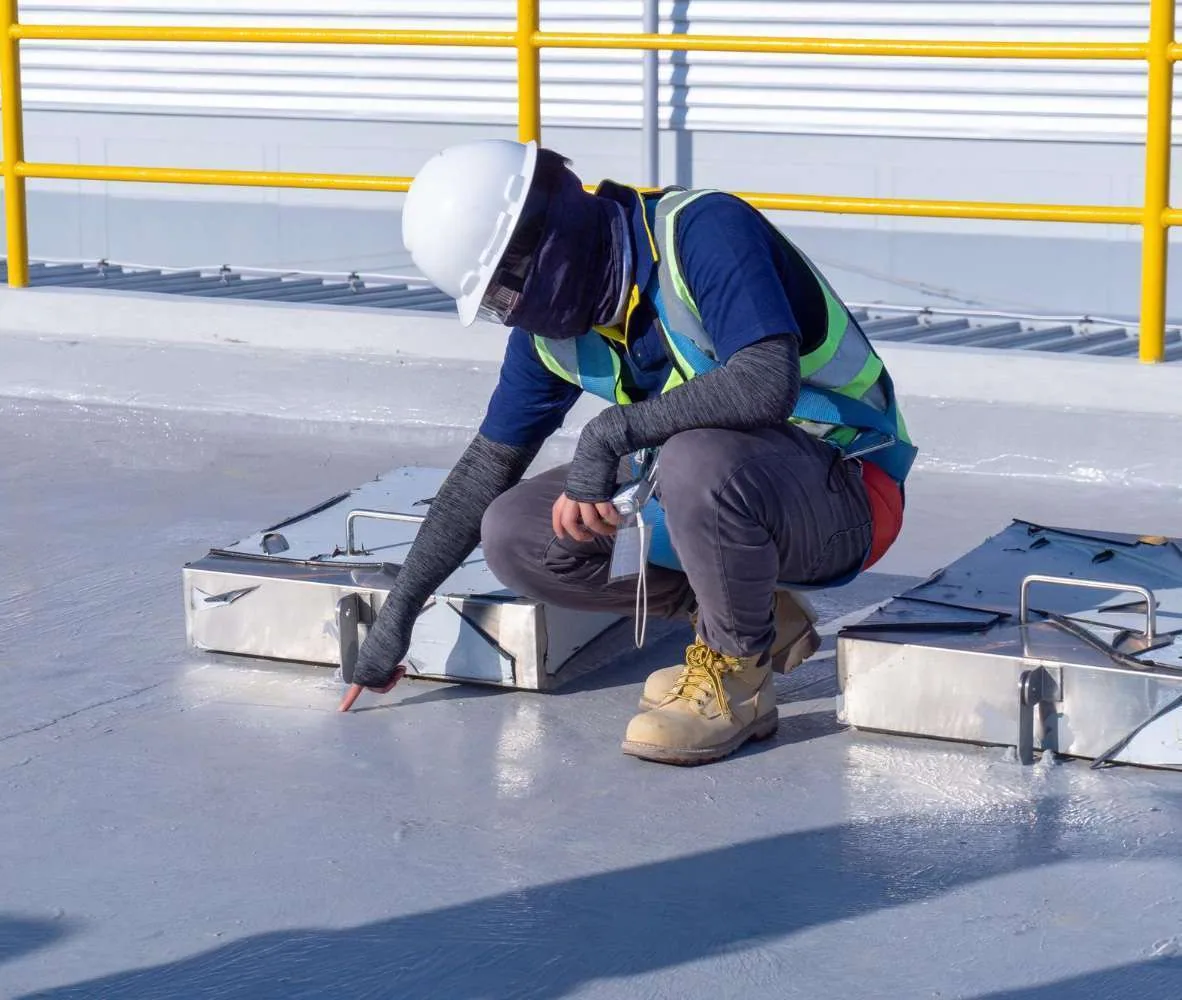
Commercial Rooftop Equipment Curb and Support Repair in Allen, TX
A curb can look sound from the ground while its roof flashing has split under equipment vibration. Dallas-Fort Worth's hot summers and spring storms put movement, water, and wind pressure on rooftop transitions. We inspect the curb, supporting frame, membrane tie-in, fasteners, and runoff around each unit before planning a repair. The roof serves the equipment, but the equipment also changes how the roof must be detailed and accessed. That is true for offices near Watters Creek as well as technology and industrial properties at 121 Tech Park. Request commercial rooftop curb service in Allen when water appears near a unit or a support has shifted.
Inspect the curb and its flashing
We look for membrane separation, open corners, failed sealant, loose counterflashing, corroded fasteners, and evidence of water at the curb base. Vibration can fatigue a flashing connection; thermal movement can pull on a membrane at the same point. Equipment service may leave foot traffic, tools, or temporary penetrations around the unit. We ask about recent mechanical work and compare it with roof records so the likely disturbance area is not overlooked.
The repair method depends on the roof system and curb geometry. A single-ply membrane, built-up assembly, or metal roof needs a compatible flashing detail. We do not assume that one sealant suits every substrate or that a surface bead will hold a loose connection. The scope identifies the curb face, corners, and membrane tie-in involved. A penetration flashing inspection can also review nearby pipes, conduits, or skylights when several openings share the same roof area. If the roof surface itself is deteriorated, membrane repair may be needed beyond the curb perimeter.
Check how the unit is carried
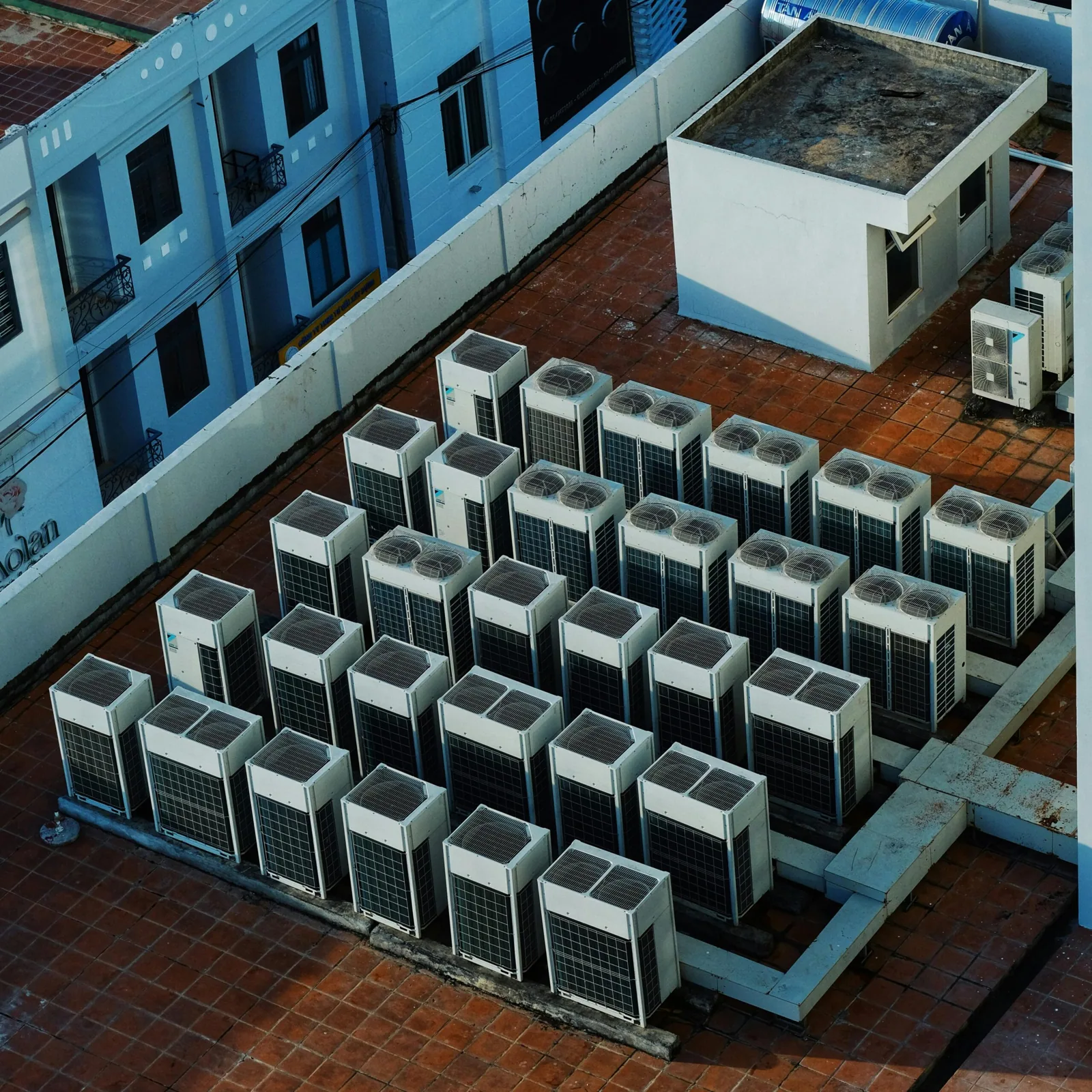
Rooftop equipment rests on curbs, rails, sleepers, pipe supports, or structural frames. The roofer can inspect visible roof interfaces and attachment conditions, but the equipment's structural adequacy may require review by a qualified engineer or mechanical contractor. We note corrosion, movement, broken supports, loose flashings, and points where the load bears near a seam or drain. The repair scope separates roofing work from structural and mechanical work so each trade understands its responsibility.
Changing a curb or relocating a unit may affect duct connections, wiring, piping, roof openings, and building operations. Before lifting or shifting equipment, the facility team coordinates with its mechanical provider and confirms system shutdown needs. We protect the open roof area and rebuild flashing after the unit is reset. If the work adds a new opening, the deck and membrane detail must be coordinated before the cut. A roof assembly review can help identify insulation and cover-board requirements around a new curb, especially when existing material is wet or compressed.
Keep water away from equipment bases
Water can collect behind a curb, at a low point, or around a crowded equipment cluster. We check the slope and drain path around each base, then note whether debris, conduit, or a support blocks runoff. A curb installed across the flow line may create a recurring ponding area. Adding sealant to that curb will not correct the drainage layout. If the area holds water, we identify whether the cause is a blocked outlet, local settlement, or a design condition requiring broader review.
Equipment condensate lines need a proper discharge plan so water does not drain onto seams or remain beside the curb. We coordinate with the mechanical contractor when the line or unit needs adjustment. Internal drains and scuppers nearby should remain clear, and overflow paths must not be obstructed by support framing. A drainage inspection can address the outlet if the water path is part of the same repair. For Allen buildings in mixed-use Watters Creek or industrial 121 Tech Park settings, the effect of a leak may differ based on what lies beneath the equipment area.
Coordinate access and rooftop service
Roofing work around operating equipment requires a short, clear coordination plan. We need safe roof access, the unit's service status, any required shutdown, and a contact who can authorize entry to the area below. Some facilities have controls, laboratory spaces, data rooms, or production equipment that should not be exposed to dust or water. The property team can also identify walkways, fall-protection systems, and roof zones that are not intended for foot traffic.
Where unit lifting is needed, scheduling includes the lift plan, weather conditions, and protection for the opening. Equipment is not disconnected or adjusted as part of roofing work unless the scope explicitly includes that responsibility. We document who will remove or reset the unit, which party reconnects it, and how the completed curb is inspected. A phased occupied-building plan can help when several curbs or roof areas need work without closing the entire facility. Clear sequencing reduces the chance that a completed flashing detail is disturbed by later mechanical service.
Review curbs after severe weather
Spring thunderstorms across the Dallas-Fort Worth region can bring hail and damaging winds. After an event, inspect curb corners, metal caps, support bases, and flashing for displacement, impact, or new openings. Wind may move a loose cover, while hail can damage exposed accessories. We compare observations with pre-event maintenance records when available and photograph the affected units individually. Weather context does not by itself establish damage at a specific building.
If water is entering, we can arrange prompt temporary protection when roof access is safe. Permanent repair may require waiting for dry conditions or a replacement component. A storm damage assessment can document related roof conditions, and emergency service can address an active opening. We record any item outside the roofing scope, such as a damaged condenser or electrical connection, so the building team can route it to the right trade.
Keep equipment and roof records aligned
Closeout identifies each curb or support repaired, the roof system, the flashing materials, and any opening or access work. Photographs show the curb corners and surrounding roof field after completion. We note if the equipment was lifted, who handled reconnection, and whether another contractor must inspect the unit. Any structural concern or drainage issue left unresolved is listed separately.
A record for each unit helps Allen facility teams compare recurring water reports with mechanical service activity. If vibration, condensate discharge, or service traffic returns, the prior photos show where the roof connection was rebuilt. A roof condition report can organize unit locations and follow-up items across a property. Periodic roof maintenance can check exposed flashing, drains, and support attachment after equipment service or weather exposure. The roofing and mechanical records should reference the same curb so later repairs do not begin with conflicting assumptions.
Commercial Roofing Questions
Can you repair a leaking curb without moving the unit?
Often. We inspect access, curb condition, and the flashing detail first. If the base is hidden or damaged, lifting or mechanical work may be needed.
Who disconnects the rooftop unit during a curb replacement?
The mechanical contractor generally handles equipment disconnect and reconnection unless the project scope assigns it differently. We coordinate responsibilities before lifting.
Does a roof curb repair include structural support?
Roofing flashing and visible interface repairs can be included. Load capacity or structural changes require appropriate engineering or mechanical review.
Why is water ponding around the equipment?
A blocked drain, low roof area, curb placement, or condensate discharge can contribute. We trace the source before deciding whether flashing or drainage work is needed.
Can you inspect a curb after a storm?
Yes. We check flashing, corners, caps, and nearby membrane for impact or movement, then document what needs repair or further evaluation.