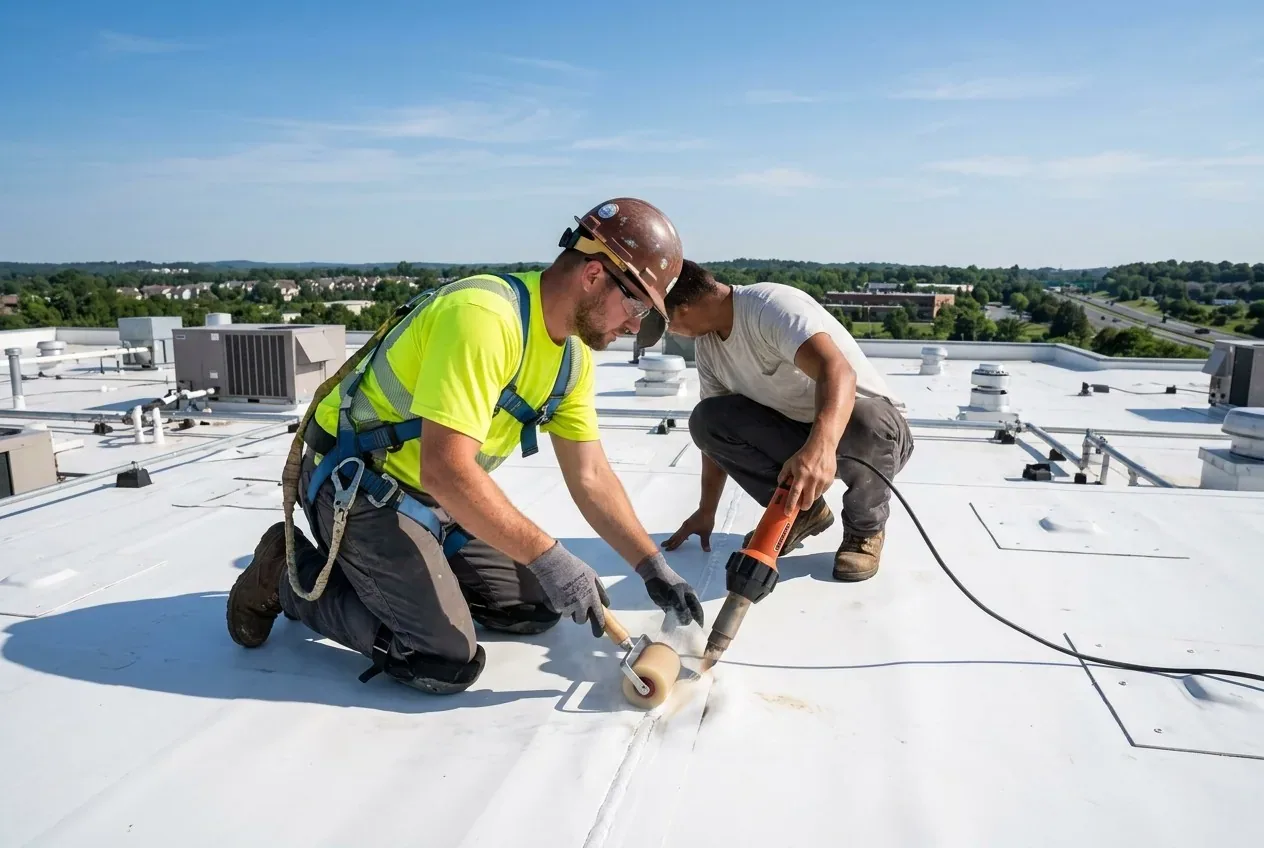
Commercial Roof Coating Restoration in Allen, TX
A roof coating can renew a suitable roof surface, but it cannot make a wet or unstable assembly sound. The decision in Allen begins with the existing membrane, moisture below it, attachment, drainage, and any prior coating. We inspect the surface and test uncertain areas before recommending restoration. If the roof qualifies, the scope addresses cleaning, repairs, primer where needed, and the coating system suited to that substrate. Properties around Watters Creek and 121 Tech Park have different uses and service conditions, so we confirm the roof that is actually installed before choosing materials. For a commercial roof in Allen, restoration should be compared with repair, recover, and replacement using documented conditions rather than surface appearance alone. Large low-slope roofs can hold heat after sunset, so condition and ventilation matter.
Confirm the roof can be restored
Coating is considered when the existing roof remains attached, dry enough, and structurally suitable to accept another surface system. We inspect for wet insulation, open seams, punctures, loose flashings, ponding, surface contamination, and failed repairs. Moisture testing may be needed before work is priced. A coating over trapped water can leave the underlying defect in place, while loose material can prevent proper adhesion. We identify areas that need removal or repair before any coating is applied.
Existing materials matter. Aged membrane, metal panels, modified bitumen, or a previous coating each need a compatible preparation and application method. We check whether the surface is clean, whether prior coatings are bonded, and whether details at drains, curbs, and wall transitions can be rebuilt. A representative adhesion test can help verify preparation and compatibility. If the substrate varies across the roof, the plan may divide it into areas requiring different treatment. A moisture survey or condition inspection can help establish whether restoration remains a viable scope.
Repair the details before coating
A coating forms a new surface, but it does not bridge every failed seam or correct a bad transition by itself. We repair open laps, flashing separations, fasteners, penetrations, curbs, drains, and perimeter edges before applying the field coating. The work scope describes which details receive new flashing or reinforcement, where wet material will be removed, and how the finished system terminates at walls and edges. These repairs create a continuous base for the coating and prevent the surface layer from hiding active defects.
Drainage remains part of the design. Ponding water may persist if a roof has settled, a drain is blocked, or slope is insufficient. The coating system must be suitable for the actual conditions, and the drainage cause may need separate correction. We document low spots and outlets, then explain whether the restoration scope resolves them or whether additional work is required. Consider drain and perimeter condition during the coating evaluation because those details define the system boundary.
Account for Allen's heat and storms
North Texas summers bring sustained heat and strong sun, while spring storms can bring hail and damaging winds across the Dallas-Fort Worth region. A reflective coating may reduce solar absorption at the roof surface, but the benefit depends on the assembly, color, condition, and installed system. We explain the expected function without assigning an unsupported energy-savings figure. Coating choice should also account for foot traffic, rooftop equipment, and the maintenance the building can support.
Storm impacts still need direct inspection. Hail can damage accessories or puncture a membrane, while wind can stress edges and raised transitions. A coating cannot restore a loose edge or repair wet insulation concealed below the field. We document visible damage, distinguish it from general aging, and repair defects before restoration proceeds. If a roof has recent exposure, a storm-damage assessment can establish which conditions need attention first. Allen's office and industrial properties may have rooftop units, walk paths, and service traffic that change how the finished surface should be protected.
Prepare and apply the system
Surface preparation often determines whether a coating bonds. We remove dirt, chalk, loose granules, oil, or debris as the substrate requires, then allow cleaned or repaired areas to dry. Primers and reinforcement are used where the system design calls for them. Temperature, humidity, dew point, and precipitation affect application and cure, so work is scheduled around product requirements and local conditions. We confirm that the roof is ready before applying material to the field.
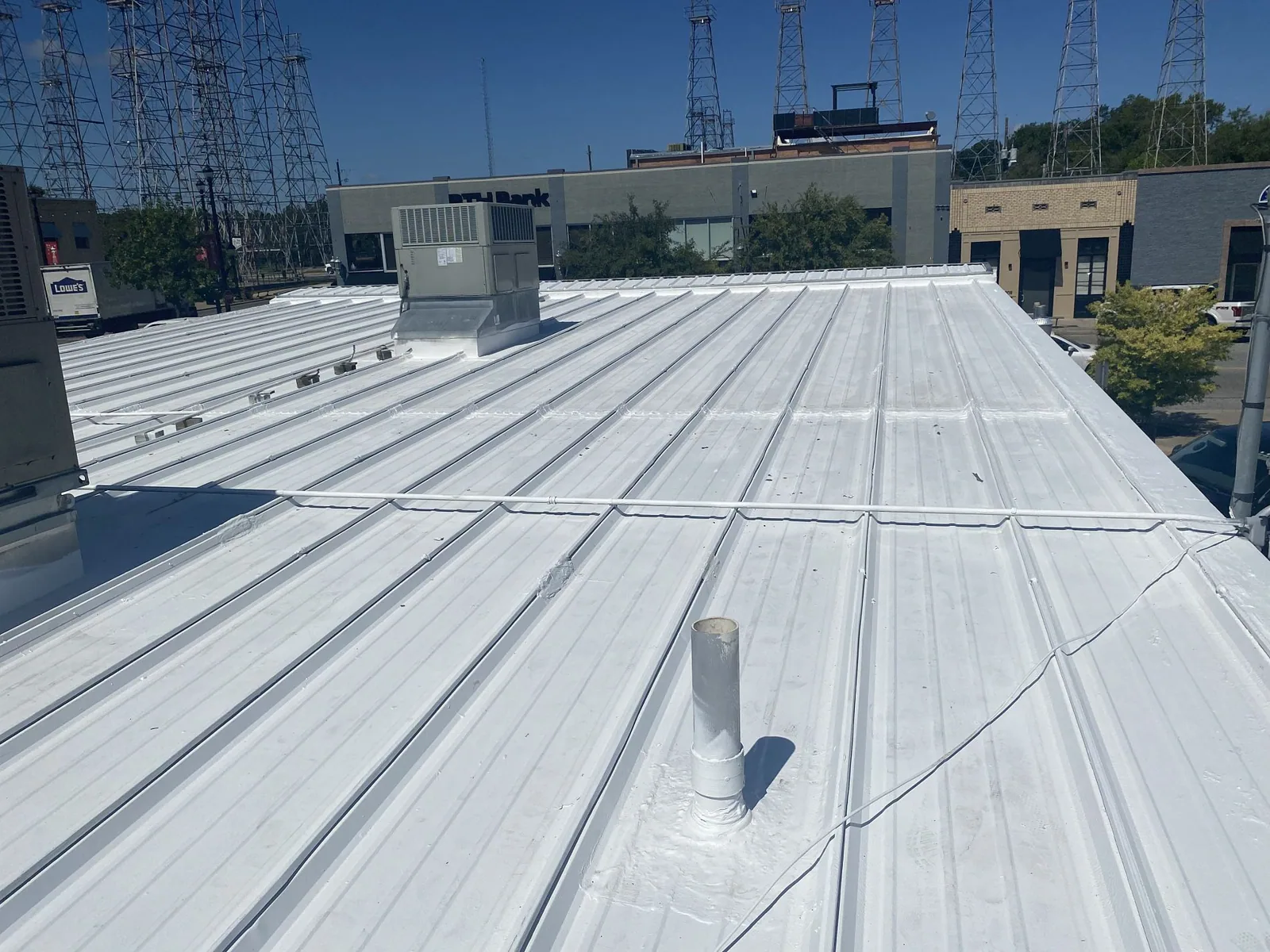
Application thickness and coverage are specified for the selected system and substrate. We check details, seams, edges, and penetrations as work advances, then record completed areas and any locations that need another pass. Equipment and access paths may need protection while the coating cures. The crew coordinates rooftop unit service and pedestrian traffic with the facility contact so fresh work is not damaged. If the existing roof is a suitable metal assembly, a coating may form part of its renewal plan; review silicone roof coating options based on exposure and compatibility.
Compare restoration with replacement
Restoration may be a practical choice when the roof and deck remain sound and repairable, but it is not a universal substitute for replacement. Widespread moisture, unstable attachment, deck problems, incompatible layers, or failing perimeter conditions can make a coating unsuitable. We explain the findings that support restoration and the ones that would change the recommendation. The comparison includes repairs needed before coating, expected maintenance, roof access, and any areas that remain outside the restoration boundary.
Allen's adopted construction codes and current local amendments should be checked against the project scope. Changes to roof height or assembly can affect permits and edge details. For an assembly that qualifies, compare restoration with a recover; where the deck or insulation is not suitable, consider replacement. The facility director receives a clear scope so the decision can be placed in the maintenance and capital schedule.
Record the restored surface
Closeout notes the existing roof type, preparation performed, repairs made, areas coated, and details reinforced. Photographs show drains, curbs, seams, penetrations, edges, and transitions at the completed surface. We identify any uncoated section and any remaining condition that needs monitoring. The facility team should know what cleaning products, roof traffic, and service practices are compatible with the system after it cures.
For Allen portfolios that include offices, retail, technology, and industrial properties, a consistent record makes the restoration comparable with other roof work without confusing unlike assemblies. Track areas with foot traffic or frequent equipment access so later maintenance can inspect them. A roof condition report can organize the work record, and scheduled maintenance can check drains, seams, and edges after weather exposure. The record helps distinguish normal surface aging from a new failure that needs repair.
Commercial Roofing Questions
Can every commercial roof be coated?
No. Moisture, attachment, surface condition, existing materials, and drainage determine whether the roof can accept a coating system.
Will a coating stop a roof leak?
Only when the entry defect and affected assembly are corrected first. Wet insulation, open details, and poor drainage need their own scope.
Does roof coating lower energy use?
A reflective surface can reduce solar absorption, but building results depend on insulation, HVAC, roof condition, coating, and operating patterns. We do not assign savings without project-specific data.
How do you know the coating will adhere?
We examine the substrate, prepare it as required, and may use an adhesion test. Prior coatings and surface contamination can change the preparation plan.
How long before the roof can be walked on?
The cure window depends on the product, thickness, temperature, humidity, and weather. We set access restrictions for the actual application conditions.