Restaurant Roofing in Allen, TX
Restaurant roof work has to fit around kitchens, service doors, deliveries, and hours when dining rooms are full. Exhaust hoods and rooftop units create penetrations that can age differently from the main membrane. Allen's commercial districts include Watters Creek's restaurants and meeting uses, along with retail areas near Stacy Road and Allen Premium Outlets. We inspect the roof and operating constraints before planning restaurant roofing in Allen.
Schedule above service, not through it
Management identifies opening and closing times, food deliveries, waste pickup, patio use, and the path employees take between kitchen and service areas. Material deliveries and lift placement should stay clear of the guest entrance and loading route. Work near a dining room may need a quieter period; work above a kitchen can require a different sequence because exhaust and refrigeration equipment remain in service. We agree on a contact for schedule changes before the crew mobilizes.
A phased plan can help when the restaurant remains open, if weather, access, and roof tie-ins support the sequence. The work area is marked, interior protection is set where needed, and each shift ends with a weather-tight surface. An occupied-building roofing plan can define those limits. When a full closure is planned, we still coordinate with deliveries, fire access, and the date equipment can return to normal use.
Inspect hood exhaust and grease exposure
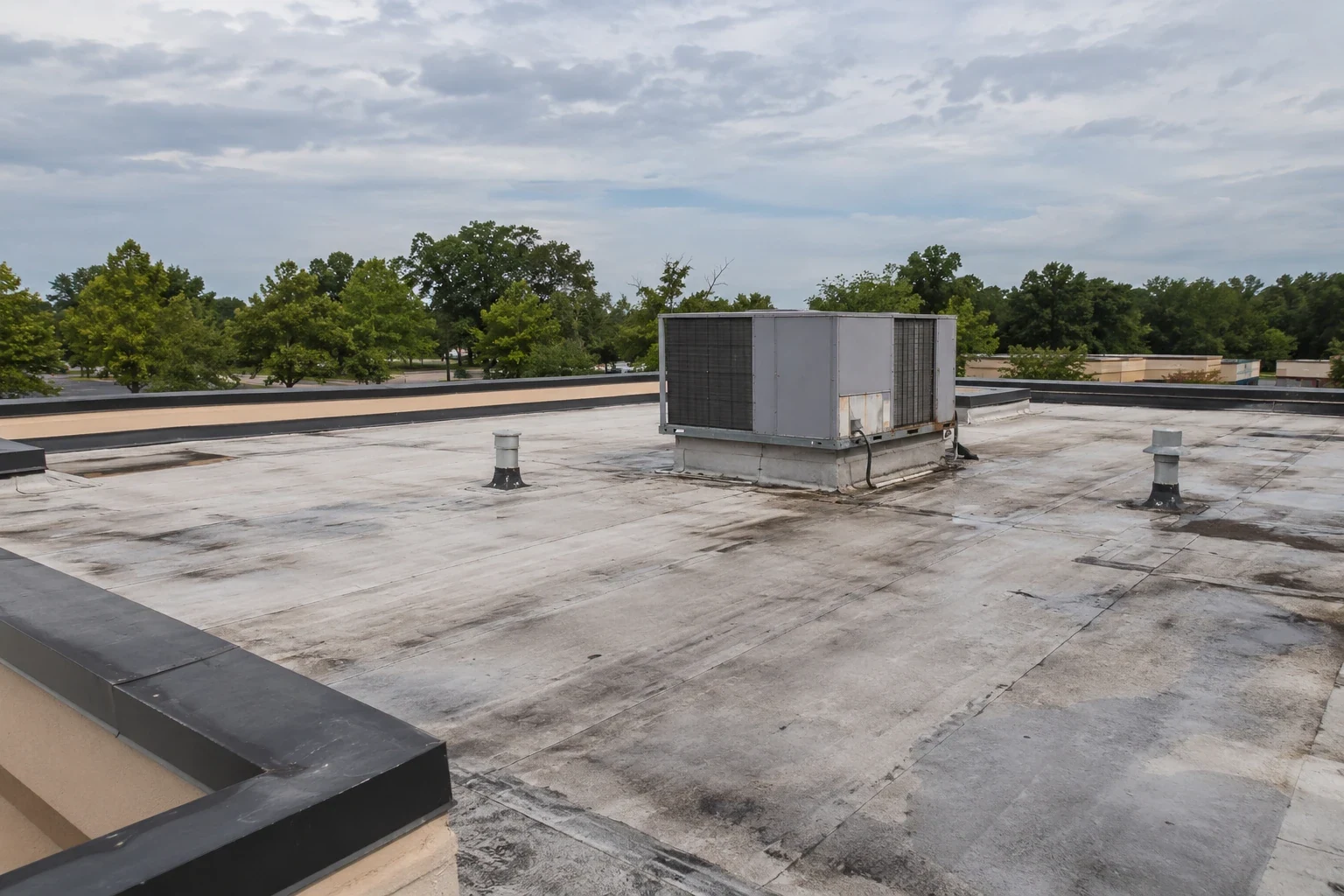
Cooking exhaust can deposit grease near the discharge point and expose the surrounding roof surface to residue, heat, and service traffic. A repair material will not bond reliably unless the substrate is properly prepared. We inspect the hood curb, nearby seams, flashing, and membrane condition, and note whether the equipment vendor needs access during the work. The scope should state who cleans the area and when it is safe to close the detail.
Over time, rooftop exhaust units may be replaced or moved. A new curb can interrupt the roof assembly, while an abandoned opening can collect water if it is only capped at the surface. We coordinate equipment placement with the mechanical contractor before restoring membrane and flashing. A curb and support repair also preserves access for future service. The maintenance plan should include the roof condition after hood cleaning or a major kitchen equipment project.
Follow water from the ceiling to the roof
A ceiling mark above a dining area may follow a deck flute from a roof defect over the kitchen or a rooftop unit. We compare the timing of the leak with rain, equipment operation, and previous repairs. Interior staff can identify affected seating, food prep, storage, or electrical areas; we use those observations to focus the roof review. The entry point is confirmed through roof conditions, not assumed from the place where water appeared.
We check field seams, curbs, drains, scuppers, skylights, penetrations, edge metal, and repair patches. A roof inspection maps findings by zone and records what is visible. Testing or a controlled opening can confirm concealed wet insulation. If the issue is a blocked outlet or low spot rather than a puncture, a ponding-water evaluation identifies a different correction than a membrane patch.
Keep runoff away from doors and patios
On hot Dallas-Fort Worth afternoons, temperatures may top 100°F; moist air also affects roof maintenance conditions. Heat affects membranes and sealants; storm rain tests drains, scuppers, and the discharge route. A blocked gutter over an entrance can send water to a sidewalk or patio just as customers arrive. We inspect outlets and roof flow paths, then note any ponding or overflow condition that affects an occupied area below.
Spring severe thunderstorms in Dallas-Fort Worth can include hail and damaging winds, although regional patterns do not establish damage at a specific restaurant. After a reported event, we photograph actual roof conditions and check for displaced edges, open seams, punctures, and interior water reports. A hail damage inspection separates observations from pre-existing wear and identifies any repair needed before the next service period.
Match repair materials to a greasy roof area
Restaurant additions may combine TPO, PVC, EPDM, built-up roofing, modified bitumen, and metal. We identify the installed system and its surface condition before selecting a patch or new membrane. Grease contamination, old coating, and dust influence preparation. A compatible repair must restore the membrane and flashing around the exhaust, not simply cover the visible residue. We record any assembly layers that remain unknown until an opening is made.
When damage is isolated and the surrounding assembly is sound, a repair may be appropriate. Wider moisture, repeated leaks, failed attachment, or deck deterioration can shift the decision to replacement. A recover is considered only when existing layers and code conditions permit it. For a food store with refrigeration and receiving needs, grocery store roofing presents different equipment and product constraints. A broader retail property can also use a shopping center roof plan for tenant and storefront coordination.
Document repair limits and next maintenance
The work proposal should define the affected roof zone, equipment access, surface preparation, materials, daily closeout, and interior protection. It also identifies which conditions are confirmed and which would require a test opening. This matters when a restaurant is balancing roof work with refrigeration, hood service, and the season's operating calendar. Cost and duration depend on those details along with material removal, deck condition, staging, and the amount of moisture found.
A roof condition report keeps photos, repair locations, and follow-up recommendations available to property and restaurant managers. Scheduled maintenance checks drains, grease-adjacent surfaces, curbs, and previous repairs. After kitchen equipment work, the manager can verify that contractors restored disturbed flashing and left service paths clear. Those records help separate normal upkeep from a new roof defect and give the next repair team a useful starting point.
Restaurants should keep roof access rules with the equipment maintenance file so exhaust contractors and refrigeration technicians know which paths are approved. A short closeout note can state whether a curb was disturbed, a roof opening was made, or a flashing detail needs a follow-up visit. This record makes it easier to identify a new condition after a service call without blaming an unrelated repair. It also helps a property manager coordinate multiple restaurant suites when the roof membrane is shared.
Where a leak affects an occupied room, the manager should identify the temporary measure and the expected permanent correction. A bucket or ceiling protection controls an interior symptom; it does not identify the roof entry point. We document the inspection result, repair material, and any limit to the work performed. If testing reveals more wet material than expected, the expanded work area is reviewed before removal continues.
Commercial Roofing Questions
Can roof repairs be done while we are serving guests?
A phased job may be possible if staging, noise, access, and weather protection are coordinated. We set work hours and affected areas with restaurant and property contacts before opening the roof.
Does grease affect the roof repair?
Grease can affect surface preparation and material adhesion near an exhaust discharge. We inspect the substrate and set the preparation and flashing scope before applying a repair.
What if water appears only during rain?
That timing helps narrow the diagnosis. We compare the report with roof slope, drains, seams, and nearby equipment before choosing the repair point.
Do kitchen exhaust replacements need a roofer?
A curb or penetration change affects the roof assembly. We coordinate the final equipment location and restore the membrane and flashing around the completed installation.
When should a restaurant replace its roof?
Widespread wet insulation, recurring leaks, failed attachment, or deteriorated deck may support replacement. The recommendation follows observed conditions and any needed test openings.