Grocery Store Roofing in Allen, TX
A roof leak in a grocery store can reach refrigerated cases, dry goods, food-preparation areas, and customer aisles before the source is known. The building needs a roof plan that keeps operations, inventory, and access in view. Allen's retail destinations include Twin Creeks Village, Watters Creek, and the Allen Premium Outlets area, each part of a broader mix of commercial uses. We assess the property and map grocery store roofing in Allen by roof zone and interior risk.
Protect food areas and store circulation
Store management identifies receiving periods, food-preparation areas, refrigeration equipment, customer entrances, and aisles that cannot be blocked. We coordinate material staging and lift routes away from deliveries and public paths. When a roof opening is above product or equipment, the plan states what protection is used below and who confirms that the area can return to service. A daily closeout identifies the roof section sealed and any interior monitoring still required.
Work can be divided around the store schedule when the roof and weather allow it. A quiet period may suit noisy removal, while a different shift keeps the receiving dock clear. The property contact should identify which decisions belong to store operations and which belong to ownership. For an open facility, an occupied-building reroof sequence assigns clear work zones, dry-in points, and communication before a section is opened.
Trace moisture near coolers and food rooms
Water over a refrigerated aisle can come from a roof seam, a curb, a drain, or condensation associated with the interior environment. We compare the leak timing with rainfall, refrigeration operation, and maintenance records. The stain may be several feet from the entry point if water moves along the deck or insulation. Staff can protect affected merchandise while the roof inspection determines whether a membrane defect or an indoor moisture condition is involved.
We inspect field seams, flashing, roof drains, scuppers, equipment supports, skylights, perimeter metal, and previous patches. A commercial roof inspection records findings and areas where testing could confirm hidden moisture. If insulation is wet, we define how much must be removed and whether the deck needs repair. The repair plan should distinguish protecting stock from correcting the roof, since one action does not replace the other.
Coordinate rooftop refrigeration and exhaust
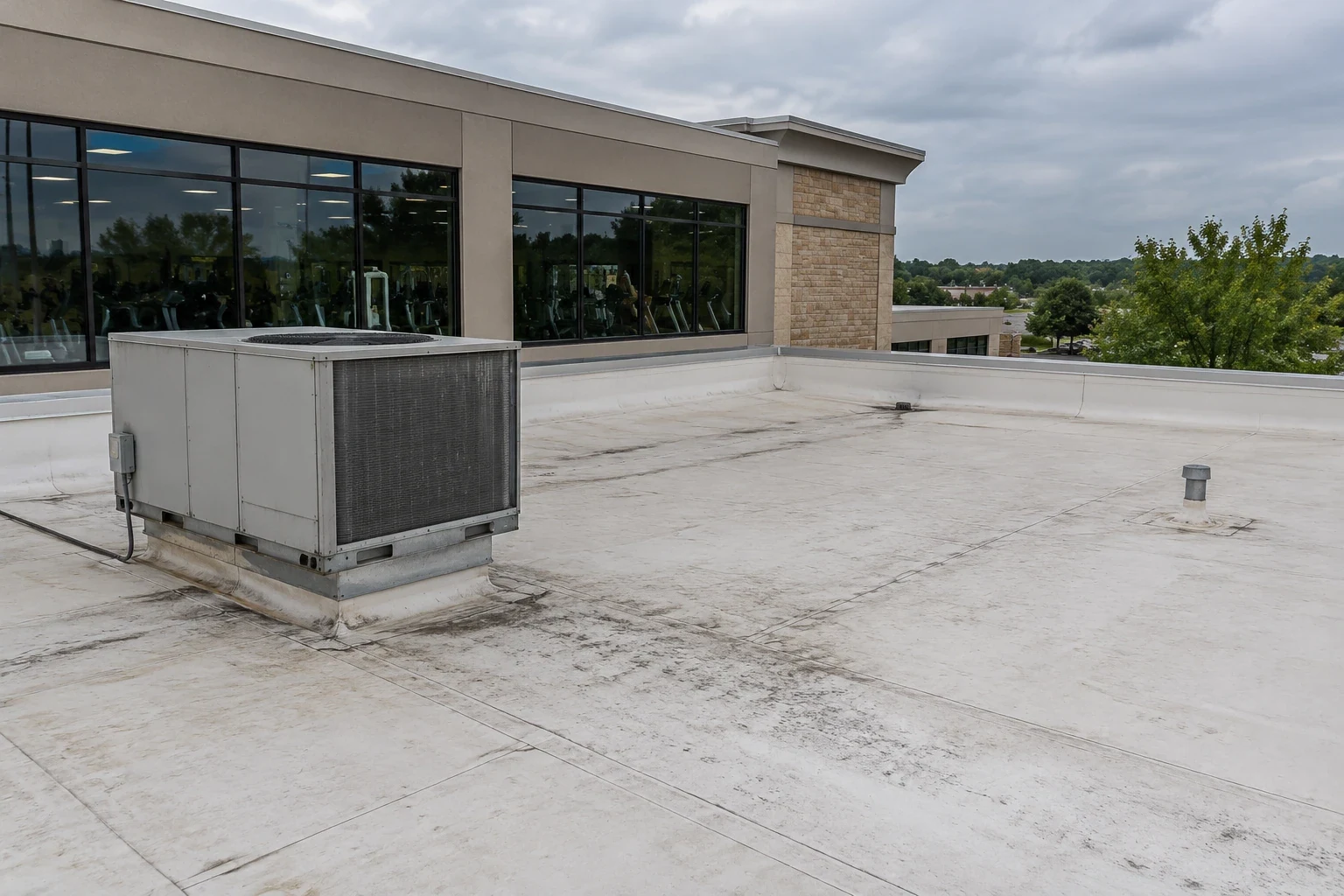
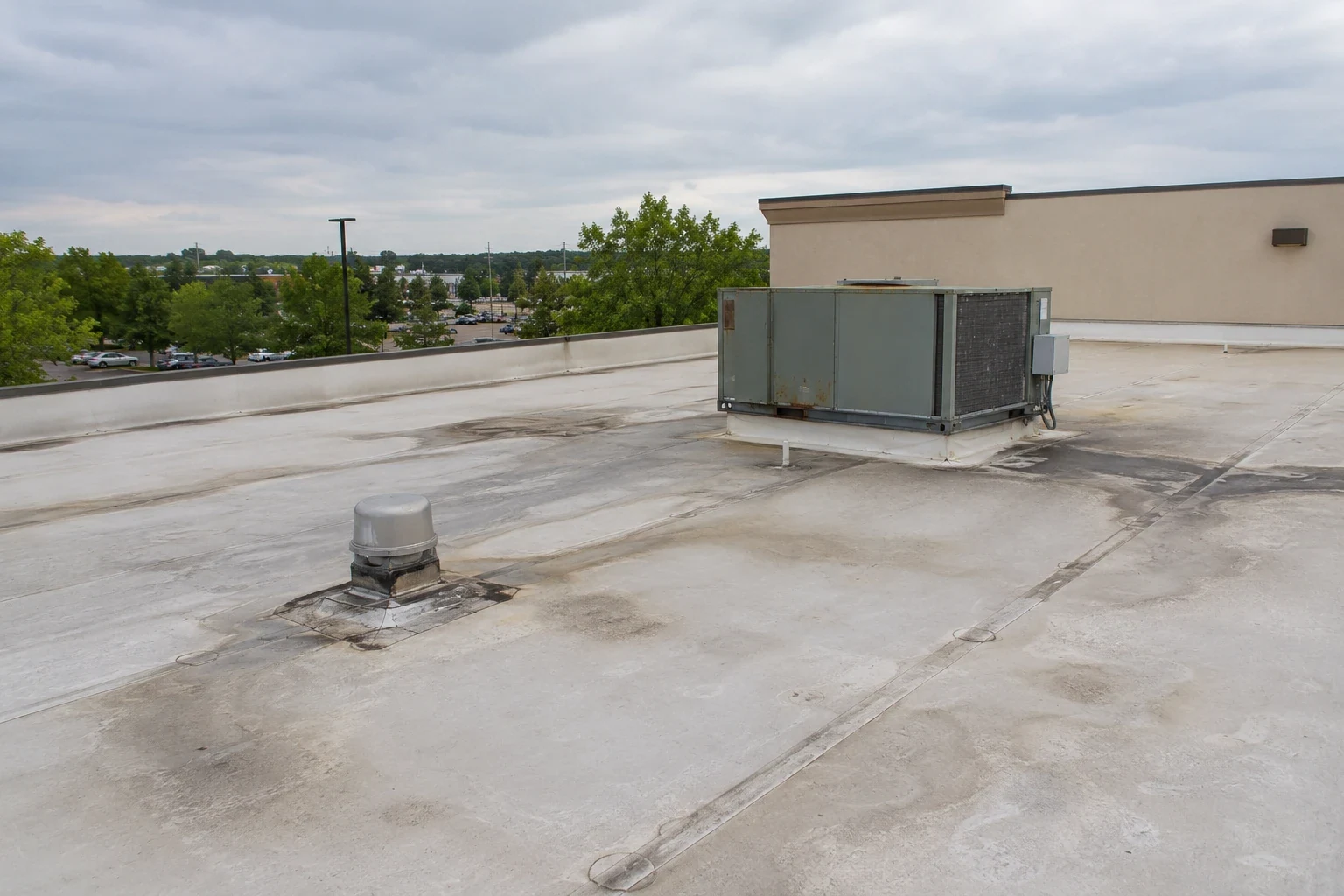
Grocery roofs can carry refrigeration condensers, exhaust equipment, electrical conduits, and lines serving cases and prep areas. The roof team needs the equipment layout and access restrictions before work around those systems. We examine curbs, supports, flashing, and service paths, and coordinate any planned unit move before sealing the assembly. A curb that has been altered without roof restoration can become a recurring entry point.
Rooftop traffic should follow designated walk paths so service calls do not puncture or scuff the membrane. Drains behind screens and equipment need a clear inspection path. A curb and support repair can restore flashing while preserving service clearance. Restaurants may have grease exhaust and different customer access needs, so a separate restaurant roof plan handles those conditions rather than treating every food business alike.
Maintain drainage through heat and storms
DFW summers regularly bring days at or above 100°F, and Gulf moisture keeps humidity high. Heat ages exposed roof materials; convective rain tests drains and low points. We inspect scuppers, outlets, overflow paths, and the area around rooftop equipment, where debris can restrict flow. When standing water appears, the assessment checks whether a drain is blocked or a persistent roof depression needs further review.
Spring is the region's strongest severe-thunderstorm season, with hail and damaging winds possible across Dallas-Fort Worth. That pattern does not establish damage to an individual grocery store. After a reported storm, we inspect actual seams, edge metal, curbs, and roof penetrations, then record interior reports by area. A hail damage review can document observed impact and identify whether a test opening or repair is appropriate.
Match the repair to the installed system
Grocery roofs may combine single-ply membranes, asphaltic systems, and metal sections, sometimes with additions that use a different assembly from the main store. We identify the assembly before choosing a patch, coating, recover, or replacement. Membrane condition, surface preparation, attachment, insulation, and curb details all affect compatibility. A new layer does not correct saturated insulation or a failing deck, and a sealant placed on the wrong material can make future repairs harder.
Localized damage may support a repair if surrounding material is sound. Broad moisture, repeated leaks, failing attachment, or deteriorating deck can justify a larger scope. Recovery depends on existing layers, attachment, height, drainage, and code requirements. Tear-off exposes hidden conditions but needs a detailed debris and interior protection plan. We describe each option and its effect on the store so the owner can compare cost, disruption, and expected service planning without relying on an unsupported age rule.
Keep repairs visible in the store plan
A useful roof record connects leak calls, affected aisles, product or equipment protection, roof zones, photos, and completed work. We can produce a roof condition report that lists urgent repairs, testing needs, and follow-up items. That gives store and property teams a shared reference when the next leak call comes in or equipment service changes a curb.
Project timing depends on store hours, receiving routes, refrigeration access, roof layers, hidden moisture, staging, and the weather window. The proposal should identify work limits, daily dry-in, material delivery, debris removal, and any condition that would change scope after an opening. A shopping center roof plan may coordinate several tenants, while scheduled roof maintenance checks drains and flashing between larger projects. These records help the manager plan work before the next busy operating period.
The manager can also note store changes that affect the roof: new coolers, exhaust equipment, advertising signs, or a revised delivery route. When a contractor services a unit, a short report about roof access and any disturbed flashing helps keep the repair history current. A change in tenant or refrigeration vendor should not erase the location of an earlier leak. We tie the observations to a roof zone and operating area so maintenance teams can compare the next inspection with the last one.
After an opening, the closeout record states whether insulation or deck material was replaced and whether an area remains under observation. If the actual condition differs from what the surface inspection suggested, the owner receives the revised work boundary before broader removal proceeds. That lets operations decide whether to protect stock in an adjacent section or adjust the store schedule. Clear documentation reduces the chance that a temporary repair gets treated as the permanent correction.
Commercial Roofing Questions
Can we keep the store open during roof work?
A phased plan can keep unaffected areas operating when access, staging, noise, and weather protection are coordinated. Store staff identify customer and receiving routes before work is scheduled.
How should staff handle a leak above food or refrigeration?
Store staff protect the affected area and merchandise under their procedures while we inspect the roof and trace the water path. Temporary interior measures and permanent roof repair are tracked separately.
Can refrigeration equipment remain in service?
The roof scope is coordinated with the refrigeration contact so access and any shutdown are approved. Equipment movement, curb work, and flashing restoration need a shared sequence.
What if water appears only when the coolers are running?
That timing is useful evidence. We compare it with weather and inspect both the interior conditions and roof assembly before deciding whether the issue is condensation or water entry.
When is replacement preferable to repeated patches?
Widespread wet insulation, recurring seam problems, failing attachment, or deck deterioration can make a broader project more practical. The recommendation follows mapped conditions and any testing results.