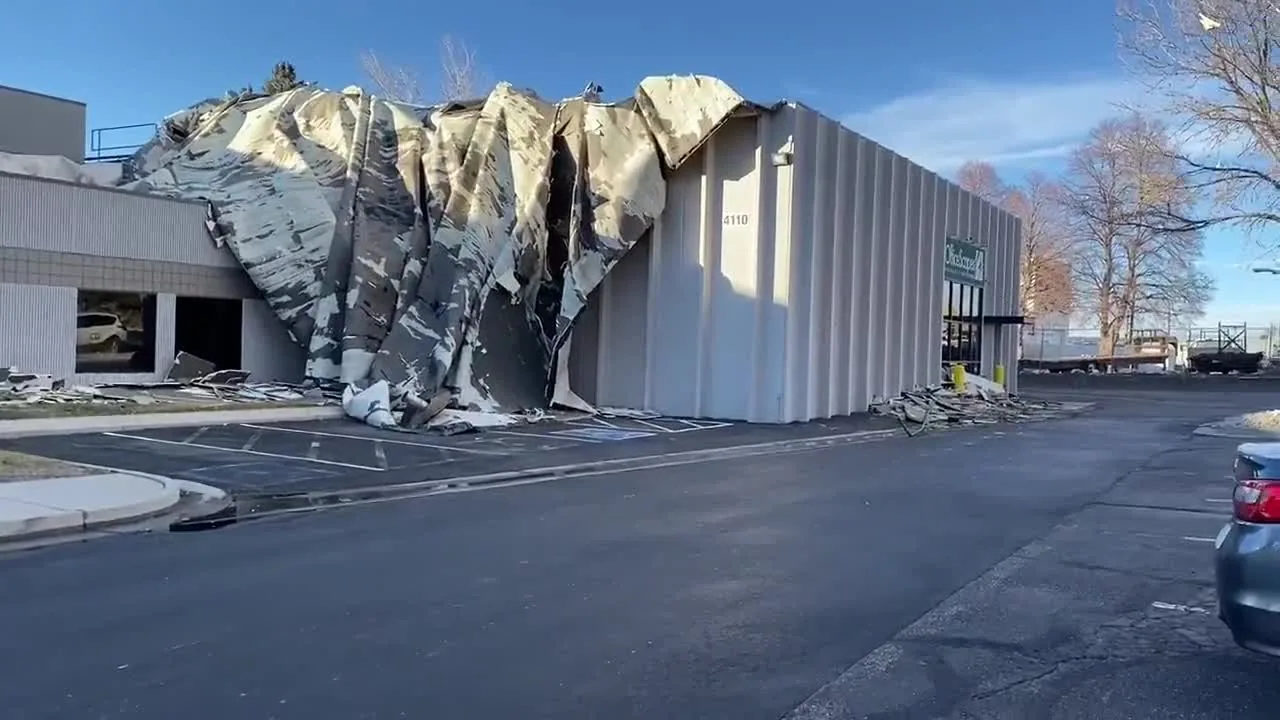
Hail Damage Roof Repair in Allen, TX
Hail marks on a roof need an inspection before they become a repair scope. In the Dallas-Fort Worth region, spring is the most active severe-thunderstorm period, and large hail occurs across the metroplex, though not at every property each year. Allen's Watters Creek and 121 Tech Park have different commercial buildings and roof systems. We document hail-related roof conditions in Allen at the property rather than inferring damage from the regional forecast.
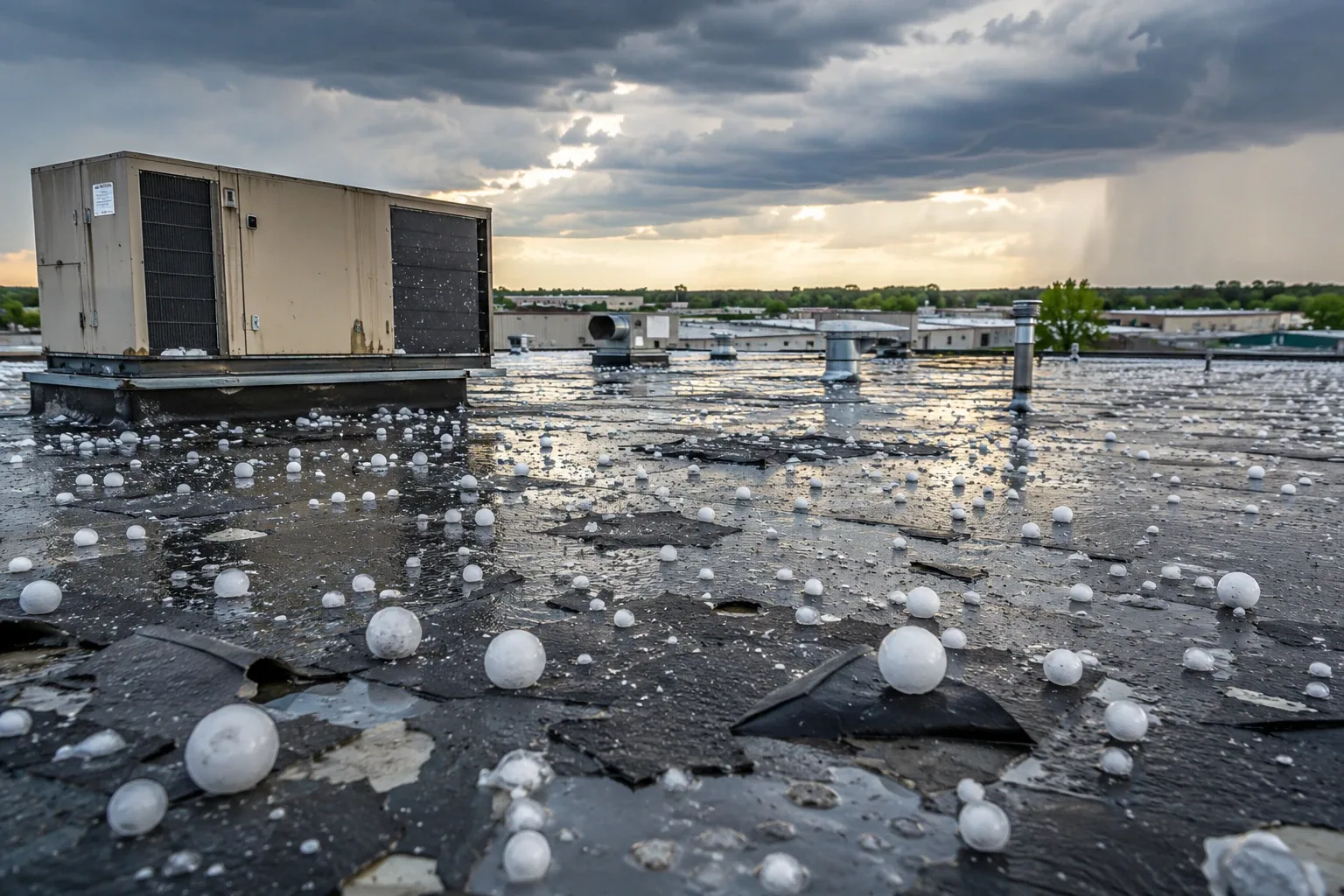
Protect active leaks while conditions are documented
If a reported hail event is followed by water inside, the first step is to identify active exposure and protect the area below. We inspect the roof for openings, punctures, displaced edges, damage around equipment, and water entry. Temporary protection is recorded separately from permanent repairs. The facility contact coordinates access to occupied rooms and any inventory or equipment at risk.
Not every mark means the membrane has failed. We photograph the roof surface and surrounding details and note which conditions are visible, which may need testing, and what areas could not be reached. An storm damage assessment can organize that information. Where water is active, temporary protection may be needed before a full repair plan is ready.
Inspect the membrane, edges, and rooftop equipment
Hail impact can affect membranes, metal panels, coping, skylights, rooftop units, and penetrations. We review the field surface and perimeter, including seams, flashing, vents, curbs, fasteners, and drains. A close-up photo without a roof location can be difficult to interpret, so the record ties each image to a roof zone and notes nearby details.
For metal panels, we note dents at seams and ribs separately from damage to fasteners, closures, or coating. Impact on a skylight or rooftop unit also needs to be tied to its own component, since a roof membrane repair will not correct a cracked cover or damaged equipment housing. We record the panel or membrane type, approximate zone, adjacent details, and whether the mark changes the surface or opens a path for water. That level of detail lets the facilities contact route each item to the right trade and avoid bundling unrelated observations into a single repair line.
Some systems show marks without a puncture; others may have split seams, fractured coating, damaged metal, or displaced accessories. A commercial roof inspection checks the assembly and identifies testing or openings needed to confirm hidden moisture. We distinguish impact observations from existing wear and earlier patches. The report states what was inspected, what remains uncertain, and any access limit.
Separate hail observations from wind conditions
Severe storms can produce hail, damaging wind, heavy rain, or several conditions together. A roof inspection should describe each visible issue separately. Dented equipment, punctured membrane, loose edge metal, and open flashing are different observations with different repair details. The storm report is context; it does not prove that each condition on a specific roof came from that event.
We compare current findings with prior maintenance and repair notes where available. If a displaced edge accompanies impact marks, a wind damage review can document attachment and perimeter details. If a property reports broader structural or envelope effects, a tornado damage inspection can map those conditions. The roof record keeps cause uncertain when the available evidence does not establish it.
Repair with materials that match the roof
Repair selection depends on membrane type, surface condition, attachment, and whether the substrate is dry and sound. TPO, PVC, EPDM, modified bitumen, built-up roofing, and metal require different preparation and patch systems. A coating may conceal a mark but will not replace damaged insulation, repair a failed seam, or restore a loose panel. We identify the assembly before choosing a material.
If impact opened the roof, the scope should include removal of damaged material and restoration of seams, flashing, and adjacent layers. Where wet insulation extends beyond the surface mark, testing can establish the replacement limit. A roof damage documentation service can organize photos and repair details for the property owner's review; the insurer determines coverage. The work estimate states what is confirmed and what remains dependent on opening the assembly.
Use North Texas storm context carefully
Spring thunderstorms are the main severe-weather season in Dallas-Fort Worth, and hail can occur across the region. A nearby report does not confirm that a specific Allen building was struck. We inspect the actual roof, document visible impact, and compare it with prior records. If a property was not accessible during the first visit, the report identifies which areas still need review.
Timing matters when a site is occupied. A morning receiving window, vehicle traffic, or scheduled mechanical service can limit lift access and the area that can be isolated. We coordinate roof access and any temporary interior protection with the designated facility contact, then leave a clear record of sections not reached. If a later visit is needed, those limits remain visible rather than being mistaken for inspected areas.
After hail, water can enter through a puncture or an existing weak detail. We check seams, penetrations, drains, and perimeter transitions around any observed marks. A membrane puncture repair can address an opening, while a separate flashing repair addresses a failed transition. This keeps the proposed work tied to the specific defect rather than using one broad storm label for different roof conditions.
Compare a patch with broader renewal
A localized impact area may be repaired if surrounding material remains serviceable. Multiple failures, widespread moisture, poor attachment, or deck damage can support a larger scope. We map the confirmed area, identify test zones, and explain whether recovery or tear-off should be evaluated. A recover depends on existing layers, moisture, roof height, attachment, drainage, and current code requirements.
Cost and timing vary with system type, number of openings, material access, deck work, and temporary protection. The proposal defines where damaged material is removed and how the roof ties back to existing sections. An inspection report can preserve photos and follow-up items. For a warehouse or retail portfolio, each building receives its own evidence; a hail report at one location is not a conclusion about the other roofs.
Keep the post-storm condition record
Record the storm date reported by the owner, inspection date, roof zones accessed, visible impacts, interior reports, temporary measures, and completed work. A warehouse roof assessment may use different access and inventory controls than an office or retail property. The findings should still be tied to the site and observed assembly.
After repair, photos show the material installed and the tie-in to adjacent roof sections. The report notes any remaining test area or condition that needs monitoring. Facility teams can compare the same locations after a later weather event and update the maintenance file. Clear closeout helps separate a permanent repair from a temporary patch and keeps the inspection useful to future property managers.
Commercial Roofing Questions
Does hail always damage a commercial roof?
No. The effect depends on the roof system and the actual impact. We inspect the property and document visible conditions rather than assuming damage from a regional report.
What should I photograph after a hailstorm?
Capture the roof area and a wider view that identifies its location, along with interior reports and any active leak. A roofing inspection can map details and test areas.
Can hail damage be repaired without replacing the roof?
Localized damage can often be scoped as a repair when surrounding material remains sound. Widespread moisture, repeated failures, or deck damage may change the recommendation.
How do you tell hail damage from normal wear?
We compare observed marks with seams, equipment, prior repairs, material condition, and available history. The report describes evidence and uncertainty without assigning an unsupported cause.
Should I patch a leak before the full inspection?
Active openings may need temporary protection to limit interior exposure. We document that measure and inspect the roof before defining permanent repairs.