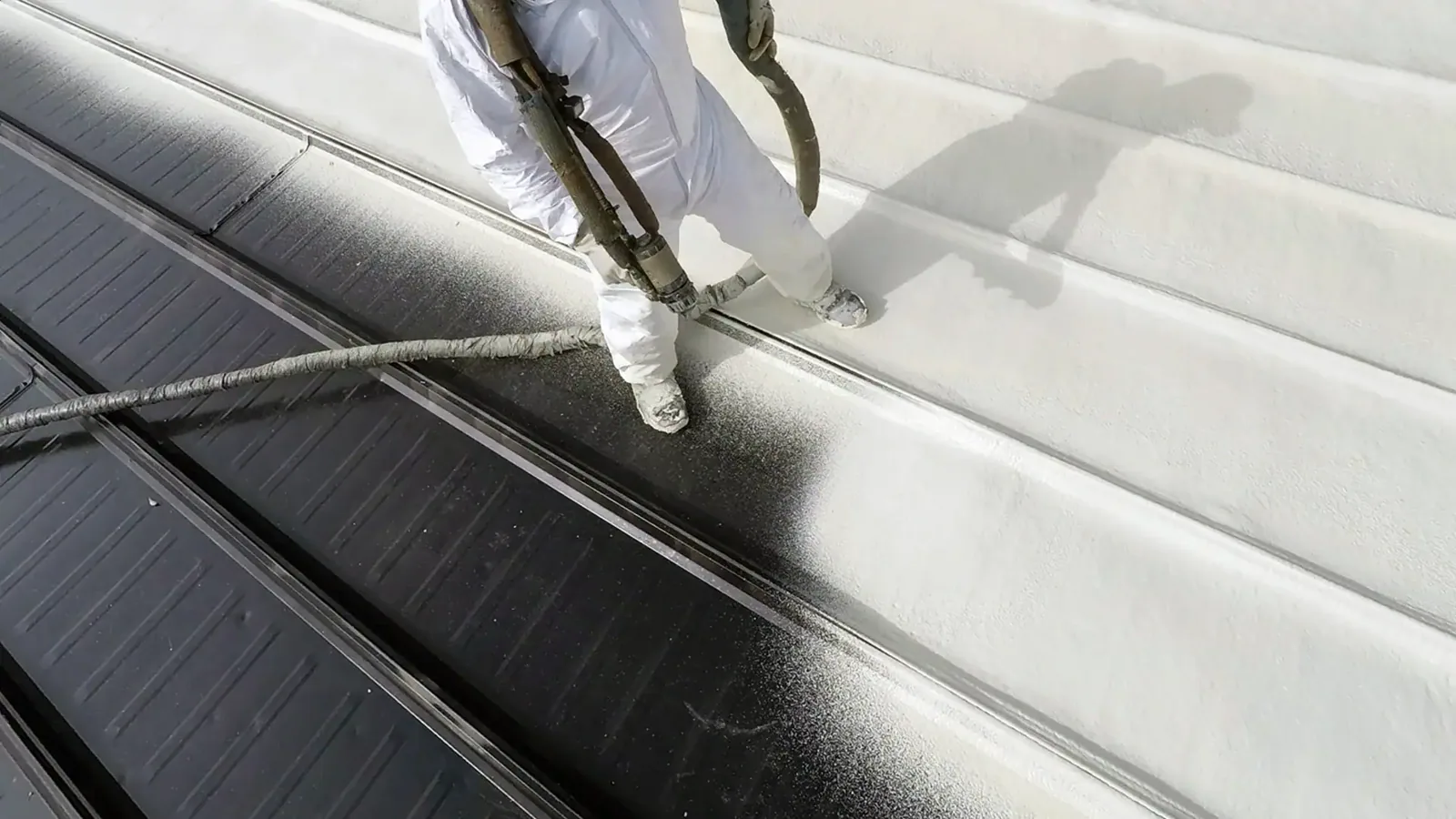
Commercial Silicone Roof Coatings in Allen, TX
Silicone roof coating can renew a sound existing roof surface and protect it from weather, but it cannot repair wet insulation or unstable layers beneath it. In Allen, heat, humidity, spring storms, and periodic ponding all factor into the coating decision. We inspect the substrate, seams, drains, penetrations, and prior coatings before deciding whether silicone is suitable. Offices around Watters Creek and industrial properties at 121 Tech Park also differ in roof access and equipment traffic. For commercial silicone roof coating in Allen, we begin with the roof condition, not the pail color or advertised coverage.
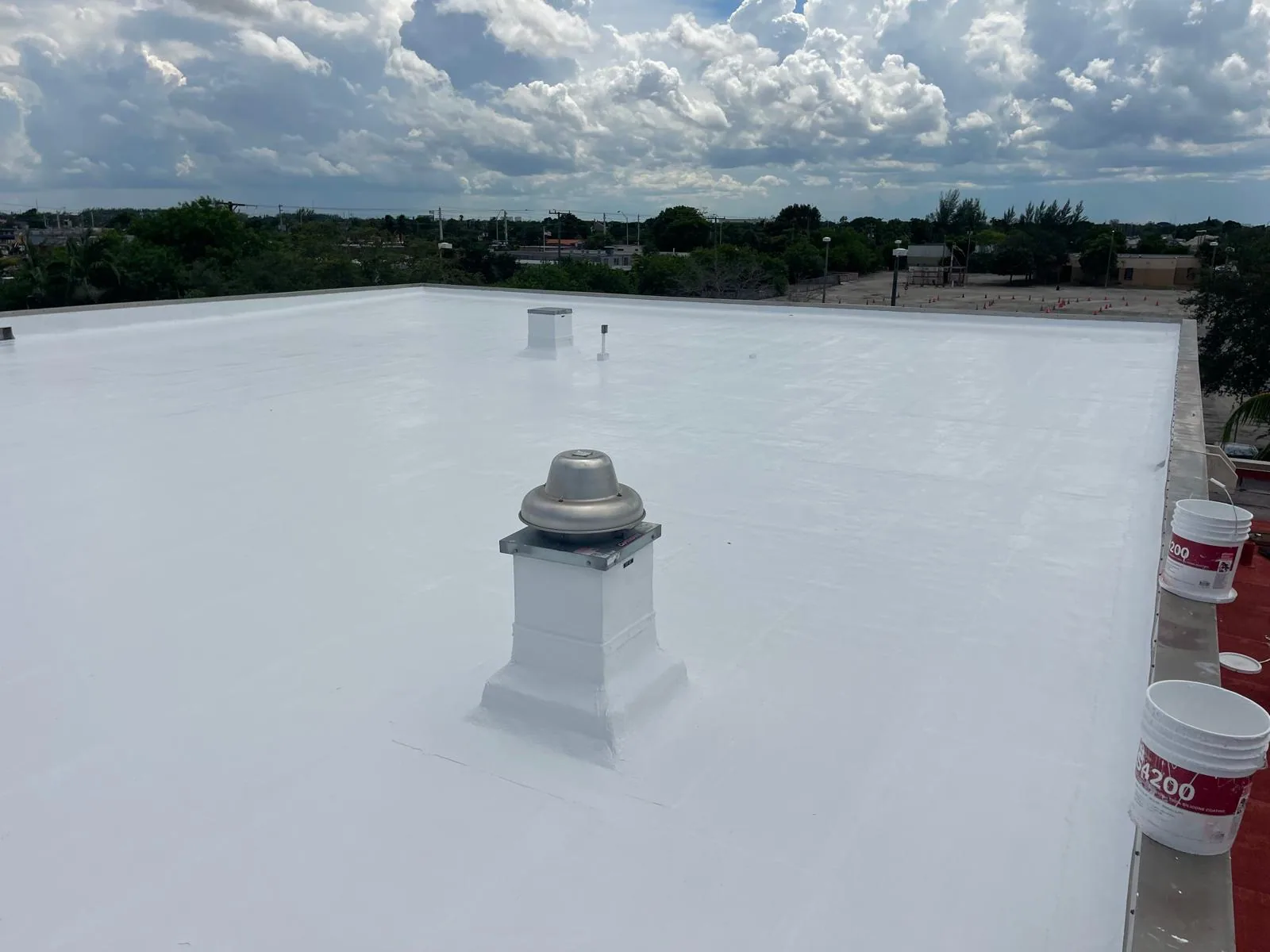
Confirm the existing roof can accept a coating
A coating bonds only as well as the surface beneath it. We check whether the membrane or metal is attached, dry, clean, and compatible with the selected silicone system. Loose coating, oxidized metal, exposed asphalt, wet insulation, open seams, and failed flashing each need attention before application. A coating layer can cover an existing defect without correcting it, making the source harder to find later. We test adhesion on representative areas and verify preparation requirements for the actual substrate.
Existing coatings matter. Silicone, acrylic, asphaltic, and polyurethane products do not all bond to each other without cleaning, primers, or a separation layer. We identify what is already on the roof and review product data before estimating a recoat. A roof coating evaluation can assess a weathered surface, while a commercial roof inspection maps seams, penetrations, edges, and drainage. If a building has unresolved leaks or hidden moisture, those areas need investigation before the silicone goes down.
Review ponding and drainage together
Some silicone products are specified for roof surfaces that experience ponding, but that does not remove the need to investigate persistent water. Long-standing water can reveal a blocked outlet, low insulation, structural deflection, or poor slope. We document the ponding area and check the drain bowl, scuppers, overflows, and nearby transitions. A coating should not be used to conceal a drainage defect that can be corrected as part of the project.
At a roof drain, the coating system needs compatible reinforcement or flashing at the bowl and clamping ring. At a parapet, curb, or penetration, a durable detail keeps water from reaching the substrate. We record whether a coating is continuous at edges and upstands, and whether access allows the surface to be inspected after installation. A drainage review can address a restricted outlet, and a roof repair can correct an active membrane opening before coating. Allen's heavy summer rains and spring storms make overflow paths and outlet access part of a sound coating plan.
Match silicone to the roof's material
Silicone formulations and application limits vary. A metal roof, modified bitumen surface, single-ply membrane, and spray-foam roof each need a compatible preparation and system detail. The coating plan may call for cleaning, primer, fabric reinforcement, sealant, or a base layer at seams and penetrations. We identify where reinforcement is specified and what coverage or thickness the system requires. A reflective silicone finish can reduce solar absorption at the roof surface, while the building's energy use still depends on insulation and operation.
For an SPF roof, the coating also protects the exposed foam from ultraviolet exposure. The foam itself must be dry and sound before recoating. A spray-foam roof review can examine the foam profile, coating wear, and areas that need replacement. An acrylic coating system may fit a dry roof surface that does not experience ponding, depending on product data and substrate condition. We compare the system criteria with actual roof conditions rather than treating different chemistries as equivalent.
Prepare the roof before application
Surface preparation is a major part of a coating project. We remove dirt, dust, chalk, grease, loose granules, and unsound coating using methods suited to the substrate. The roof needs to dry before application, and repairs at seams, fasteners, curbs, drains, and wall transitions should be completed first. Adhesion tests help confirm whether the existing roof can accept the coating. If a test fails, the scope may change to include a primer or different system.
Allen's hot weather affects roof surface temperature and crew safety. Humidity, dew point, wind, and forecast rain can also restrict application or cure. We plan around product limits and avoid applying over damp surfaces or when water may reach an uncured coating. HVAC intakes and sensitive equipment are protected as needed. The facility contact should know how roof access, exhaust, and work zones will be managed while coating is applied. If moisture or weak material is found during preparation, it is documented before being covered.
Apply the specified coverage
Coating thickness, coverage, and reinforcement layout follow the selected product's system specification. We measure and monitor application so the installed film meets the design. Field areas, drains, penetrations, curbs, seams, and parapets receive the specified number of coats and detail work. Spray or roller application depends on roof conditions, surface profile, access, and product requirements. A uniform appearance alone does not prove the coating has the required thickness.
Work is sequenced to protect the building and keep completed areas from damage. Rooftop equipment service and foot traffic are restricted during cure. Moisture-cure products have defined rain exposure limits, so follow the published cure window before restoring roof traffic. Allen office and industrial facilities around Watters Creek and 121 Tech Park may require staged access, tenant notice, and air-intake controls. Cost and timing depend on surface preparation, repairs, coating thickness, reinforcement, roof geometry, and weather windows. We document any area excluded from coating and explain why it needs a separate repair or replacement decision.
Plan recoating and inspection
Silicone coating can retain dirt, and roof traffic or equipment work can puncture or abrade the finish. Maintenance should inspect seams, flashing, drains, scuppers, curbs, and high-traffic paths. Clean the surface using methods approved for the system and repair damage with compatible material. If a new layer is planned, confirm adhesion and product compatibility rather than applying additional coating over an unknown surface. Some systems require a new primer or reinforced detail at the interface between old and new coating; the product instructions define the preparation.
Allen's summer sun and spring storm exposure make periodic roof checks useful, especially where water ponds or trades have been on the roof. A maintenance inspection can record coating condition, and a roof condition report preserves photos and repair limits for the facility record. Keep product data, adhesion-test results, application notes, and repair history together so future work can select compatible materials and avoid an unnecessary tear-off.
Commercial Roofing Questions
Can silicone coating go over a wet roof?
No. Wet insulation and unstable layers should be investigated and repaired first. Coating over moisture leaves the underlying condition unresolved.
Is silicone suitable where water ponds?
Some silicone systems can tolerate ponding, but the roof still needs inspection. The source of standing water, substrate condition, and product limits guide the decision.
Can silicone be applied over an older coating?
Sometimes, after the existing chemistry and adhesion are checked. Surface cleaning, testing, or a primer may be necessary before recoating.
Will a silicone coating stop every roof leak?
No. Active openings, failed flashing, and wet materials need repair. A coating is a surface system, not a substitute for correcting defects.
How do you check the installed coating?
We inspect coverage, thickness, details, and repaired areas against the specified system. The record should identify any area that was excluded or needs follow-up.