Fitness Center Roofing in Allen, TX
A fitness center roof protects areas that operate from early classes into evening training. Exercise floors, locker rooms, pools, childcare rooms, and offices can have different occupancy and ventilation needs. Allen's commercial mix includes the office and meeting district at Watters Creek and the industrial and technology uses near 121 Tech Park, where building operations vary by tenant and schedule. We plan fitness center roofing in Allen around the roof condition and the activity below.
Plan work around classes and member access
Management identifies peak hours, class schedules, member entrances, childcare areas, and equipment that must remain available. A lift or delivery truck may affect parking even when roof work is over a distant room. We coordinate staging and temporary barriers with the site contact, then identify which entrances or activities may need a short adjustment. Any interior inspection is arranged before staff enter a changing area or occupied room.
Work can be phased by roof section when the assembly, weather, and tie-ins support it. The sequence states the work window, daily closeout, and any area that remains restricted. An occupied-building reroof plan can keep unaffected parts of the center accessible. If a class area or pool room sits below an opening, the facility contact identifies the protection and ventilation conditions that need to be maintained.
Check ventilation, pool rooms, and roof equipment
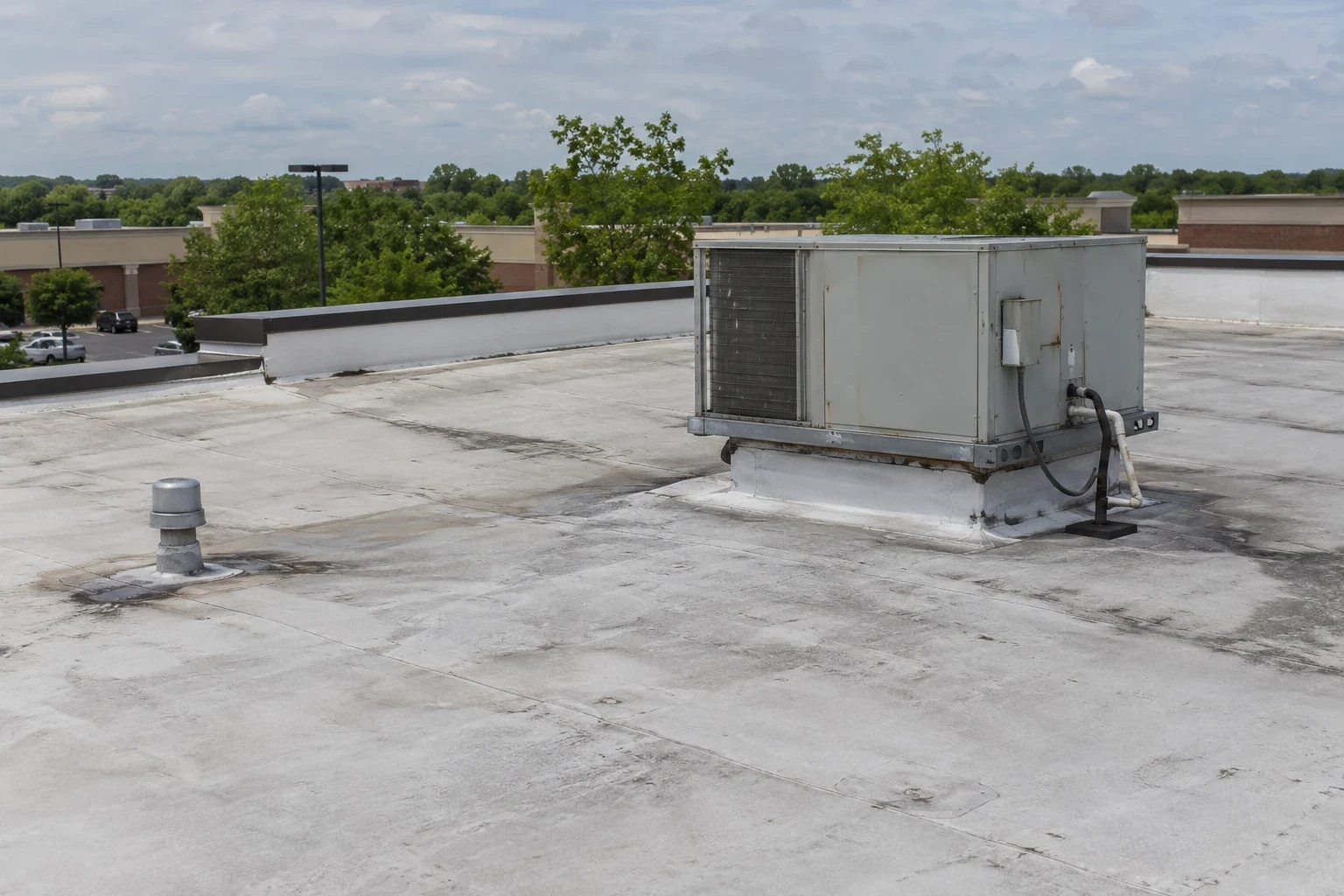
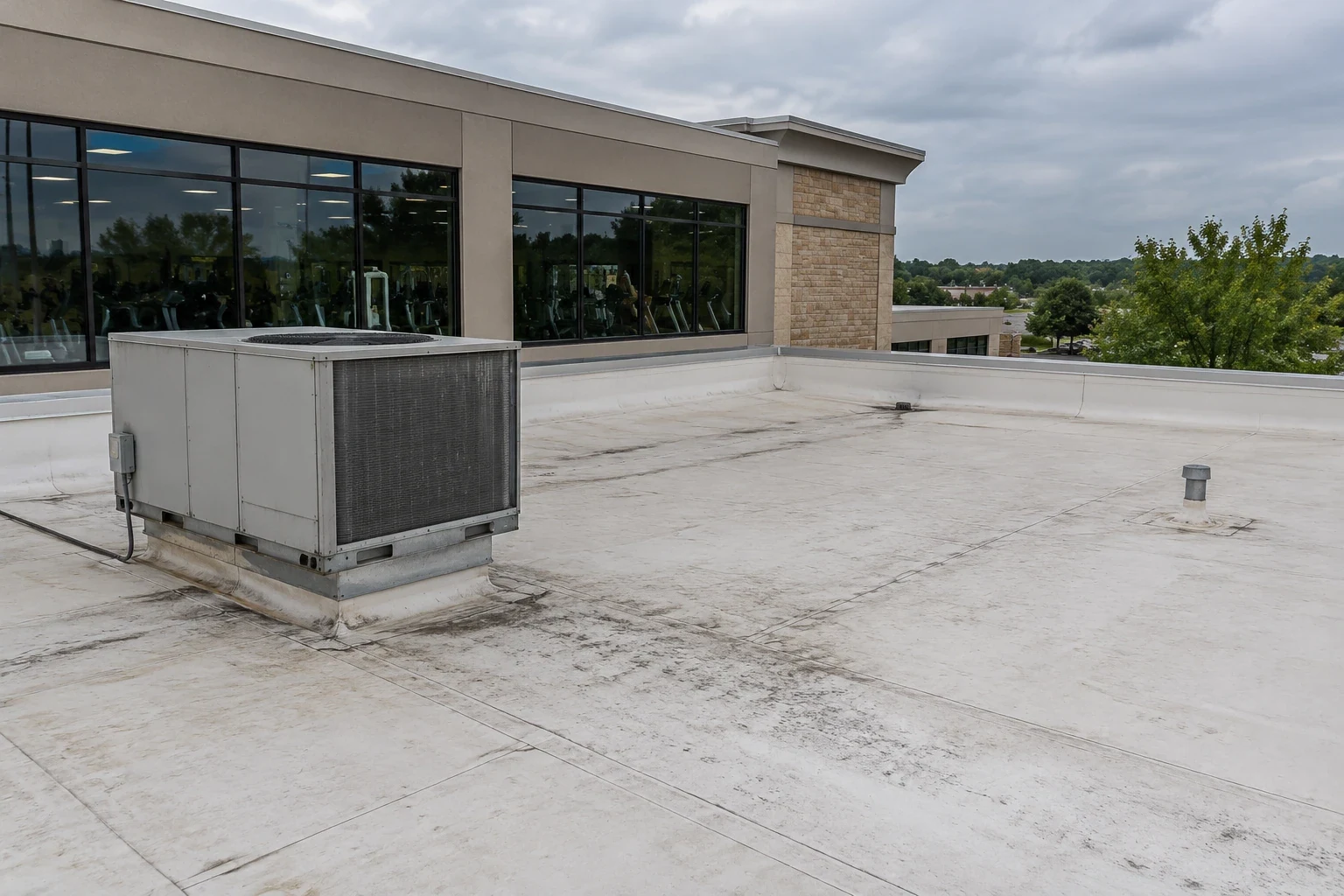
Fitness facilities may have rooftop HVAC, exhaust fans, pool dehumidification equipment, and electrical supports. Those systems affect roof penetrations and require technician access. We inspect curbs, flashing, service routes, and the membrane around each unit. If equipment is scheduled for replacement, the new location should be set before roofing details are installed. Moving a unit without restoring the curb can leave a path for water.
Interior humidity near a pool or shower area can also make condensation part of the diagnosis. We compare the timing of moisture reports with weather, ventilation, and roof conditions before selecting a repair. A curb and penetration scope addresses roof restoration around equipment. A large gym in a school building has related clear-span and activity considerations, while apartment roofing deals with different resident access needs.
Trace leaks above exercise and locker areas
A ceiling leak over a cardio area may originate at a drain, curb, skylight, seam, or parapet elsewhere. Water can travel through insulation or along the deck before appearing inside. We map the reported room and compare it with roof slope, equipment, prior repair notes, and the weather when the leak occurred. Staff can move equipment or close a station while the source is confirmed, rather than assuming the visible ceiling mark is the roof opening.
Inspection covers seams, flashings, drains, roof edges, skylights, and visible deck changes. A commercial roof inspection can document conditions by area and identify whether testing could confirm wet material. We record which surfaces were inspected and what remains concealed. That distinction helps management compare a small repair with a broader replacement without closing the entire facility based on one report.
Manage runoff after heat and storms
Dallas-Fort Worth summers can exceed 100°F, and Gulf moisture keeps humidity high across North Texas. Heat affects exposed membranes, sealants, and metal transitions, while humid air and interior pools may influence condensation investigations. We check drains and scuppers around equipment screens and confirm runoff has a clear path away from entrances and rooftop units. A coating will not correct standing water or wet insulation concealed below the membrane. If rooftop screens shed leaves or service debris, inspect the inlet and overflow route together so a clear strainer does not hide a restriction downstream.
Spring thunderstorms are the region's busiest severe-weather period, and hail or damaging winds can affect exposed roof details. After a reported storm, we photograph marks, loose edge metal, open seams, curbs, and interior reports at the facility. A wind-damage inspection can separate visible impact from prior wear and identify areas that need testing or immediate protection.
Choose a repair that matches the roof
Fitness centers can have single-ply membranes, built-up roofing, modified bitumen, metal canopies, or a combination across additions. We identify the installed assembly and surface condition before choosing materials. A patch must be compatible with the membrane and prepared surface. If previous coatings or repairs hide the original system, a test area or opening may be needed before specifying broader work.
Localized flashing or seam trouble may be repaired when adjacent material remains serviceable. Widespread moisture, repeated failures, poor attachment, or a deteriorated deck can support replacement. Recovery is considered only when the existing assembly is dry, secure, and compatible with the proposed system and code. Tear-off reveals more of the assembly but requires a schedule for noise, debris, and interior protection. The recommendation states which areas are confirmed and what remains to be verified.
Keep equipment work and roof history together
Roof records should connect class or room reports, photos, equipment changes, repairs, and drain checks by roof zone. We can provide a roof condition report that separates urgent items from work to monitor. The facilities contact can attach HVAC service notes so a future inspection can identify whether a new leak appeared near a disturbed curb.
Project cost and timing depend on roof layers, unit density, access, opening size, interior protection, and available work windows. The scope should define member routes, room restrictions, daily closeout, and the conditions that could change after a test opening. Scheduled roof maintenance keeps drains, seams, and equipment transitions in the facility plan. A closeout note identifies restored areas and any follow-up that needs to be scheduled before a busy class season.
Before material removal, we confirm where members, staff, and equipment can move while the roof section is closed. A weight room, pool, or studio may need a different protection plan, and a fitness center with childcare may have a separate quiet and access requirement. The manager identifies which spaces can be temporarily relocated and who communicates changes to members. Those decisions belong in the project schedule rather than being improvised after the lift arrives.
When an opening reveals more moisture or deck damage than the surface inspection showed, we document the difference and present the next work boundary for review. The facility can decide whether to extend the repair, isolate that area, or schedule a later phase. We update the closeout with the installed material and the condition that remains under observation. That record helps staff plan the next maintenance visit and explain any temporary restriction to members through the usual facility communication channels before work begins and note the contact responsible for each affected area of the operating fitness facility overall.
Commercial Roofing Questions
Can the fitness center stay open during roof work?
A phased project may keep unaffected areas in use if access, noise, weather protection, and safety routes are coordinated with facility staff.
What if a leak affects the pool or locker room?
We coordinate access and protection with the manager, then inspect the roof and compare the report with humidity and ventilation conditions. The source is confirmed before permanent repair.
Do rooftop HVAC changes need roof coordination?
Yes. A unit move changes the curb, flashing, and service route. We coordinate the final placement and restore the roof assembly around the equipment.
How do you handle noise around classes?
Management shares the class schedule and quiet periods, and the work plan places noisy removal in an approved window where possible.
When should a fitness center roof be replaced?
Widespread moisture, recurring leaks, failing attachment, or deck deterioration can point toward replacement. The recommendation follows the mapped roof condition and any needed testing.