Apartment Roofing in Allen, TX
Apartment roof work affects people who may have no choice about what happens above their unit. A leak, rooftop repair, or temporary closure of a shared amenity needs clear notice and a controlled sequence. Allen's commercial areas include Twin Creeks Village and the Stacy Road corridor, alongside office and mixed-use districts such as Watters Creek. The building plan, roof type, and resident access all matter when we arrange apartment roofing in Allen.
Give residents clear notice by building area
Property staff identify occupied units, entries, parking, balconies, shared rooms, and quiet hours before staging begins. Residents need to know whether workers will access a roof hatch, use a lift, or pass through a controlled common area. Notices should name the affected building or side and give a time window for noise or access limits. We coordinate with management on the contact for a leak, interior access, and schedule changes.
Work can be broken into roof sections to avoid opening a large area above occupied units at once. Each phase has a clear daily finish point, temporary protection, and a route for materials and debris. An occupied-building reroof plan can help preserve entry and egress while work proceeds. The manager can identify residents who need advance notice of lift placement or a temporary change near a balcony, parking stall, or community room.
Trace water across units and roof zones
A ceiling leak in an upper-floor unit may originate near a drain, parapet, roof penetration, or seam above a different room. Water can travel between deck flutes and appear at a wall or light fixture away from the entry point. We compare the resident report with roof layout, weather timing, previous repairs, and the interior path. The property staff coordinates unit access; our roof record uses the building and roof section needed for follow-up.
Inspection checks membrane seams, flashing, penetrations, scuppers, drains, edge metal, skylights, and prior patches. A roof inspection documents visible conditions and identifies whether testing could confirm wet insulation. The report separates what is verified from what remains hidden. If several units report water after one storm, we still map each observation against the roof before setting one repair boundary for the entire building.
Check balconies, walls, and shared equipment
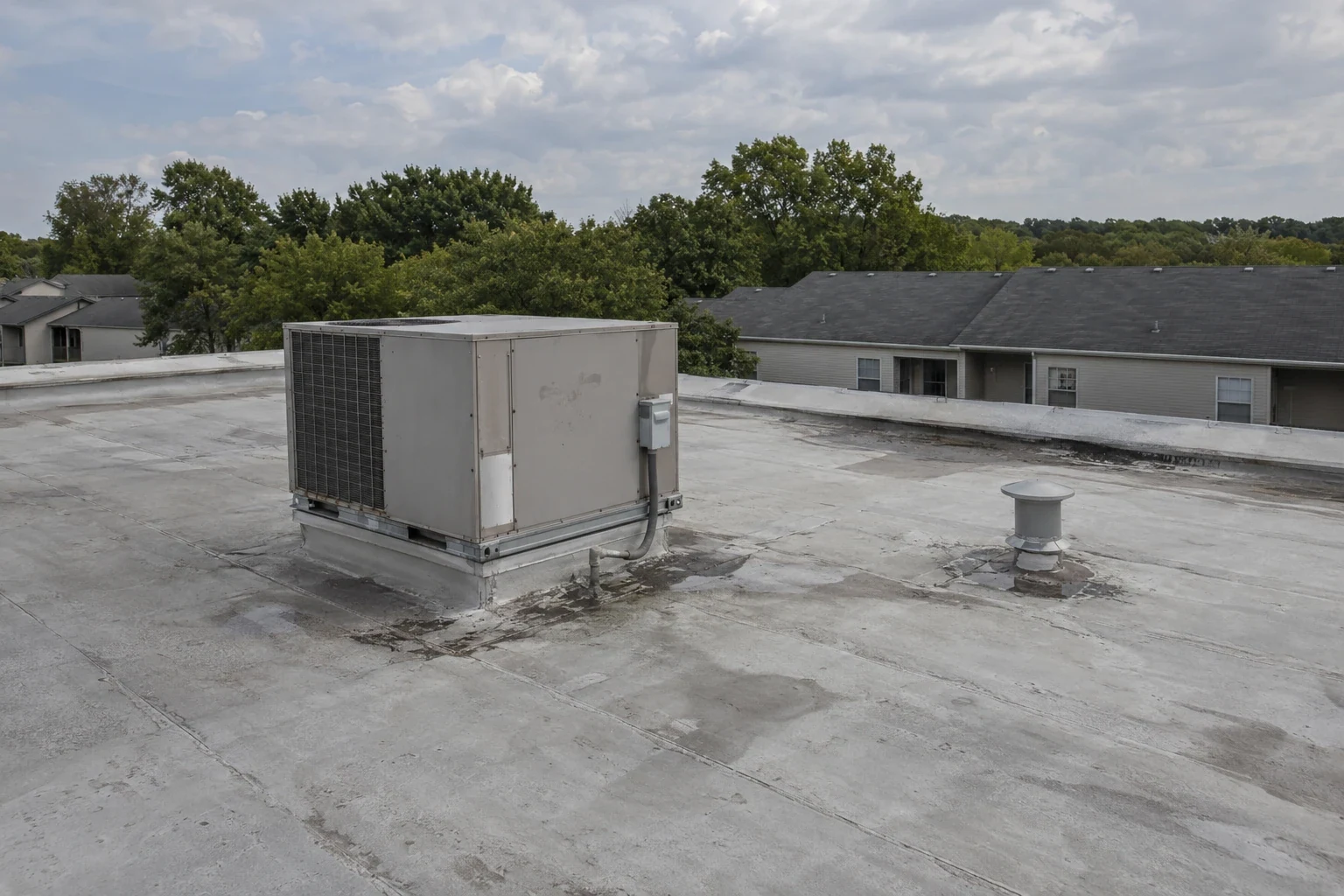
Apartment buildings often have parapets, balconies, shared HVAC, vent stacks, satellite equipment, and rooftop access points. A roof project needs to preserve flashing where the membrane meets walls and equipment curbs. We inspect balcony transitions from the roof side where accessible, check whether outlets drain freely, and identify service routes used by maintenance staff. A loose penetration or blocked drain can affect units that seem far removed from the roof condition.
Residents or outside contractors may install items that affect the roof, including satellite cables, planters, or temporary equipment. Management can identify what is approved and whether any attachment needs to be removed or restored. Mechanical technicians should report disturbed flashing after service. In a senior residential property, access and resident communication may need a different sequence; senior-living roofing addresses those operational differences. Guest turnover and events can narrow a hotel roof work window, so the hotel roof scope should coordinate access, noise, and daily closeout.
Keep drainage working through heat and rain
Dallas-Fort Worth summer days regularly reach or exceed 100°F, while Gulf moisture keeps humidity high. Heat cycles affect exposed membranes and metal details; humidity and downpours make drains and scuppers important. We inspect the flow path around rooftop units, walls, and low points. A roof coating will not correct a blocked outlet or wet insulation below the surface, so the assembly and drainage need to be evaluated first.
Spring thunderstorms can bring hail and damaging wind throughout the metroplex, though that regional risk does not prove that a particular apartment property was hit. Following a reported event, we document actual roof conditions and resident reports by building. If water is active, we coordinate temporary protection and the permanent roof inspection. The property record should note which areas were checked and what remains for testing so managers can direct resident follow-up accurately.
Compare a focused repair with renewal
One failed flashing detail with sound adjacent material may support a localized repair. Widespread wet insulation, repeated leaks, failed attachment, or deck deterioration can justify replacement. We map confirmed damage and areas needing further inspection, then explain the limits of each option. A surface stain alone does not establish how much of the roof must be removed.
Recovery may be possible if the existing assembly is dry, secure, compatible, and within applicable code limits. Tear-off can reveal hidden conditions but requires more debris handling and interior protection. Cost and duration depend on layers, access, material delivery, resident notice, and work hours. A TPO system may fit a roof when the deck, details, and project requirements align; the installed roof type and transitions still determine what can be repaired or retained.
Make the maintenance record useful to managers
A multi-building property benefits from photos tied to building, roof zone, repair, resident report, and equipment work. We can prepare a roof condition report with urgent work, testing needs, and follow-up dates. Managers can use it to explain repair timing and keep a record when tenants or vendors change.
The proposal should state the work boundary, resident notices needed, access plan, daily dry-in, debris route, and the conditions that might change after an opening. A maintenance program can revisit drains, flashing, and previous repairs between larger projects. When apartment roofs sit in a larger portfolio, managers can compare their condition with nearby office or retail buildings without assuming all roofs share the same age or assembly. That makes the next budget decision specific to each building.
For each repair, the record should identify whether insulation was replaced, how the membrane was tied in, and whether the deck condition was confirmed. If an interior finish was affected, property staff can keep that remediation in the unit file while the roof record tracks the exterior source and repair. The two records can share a date and roof-zone reference without copying resident details into a contractor document.
Managers should also track roof access after vendor visits and equipment replacement. A service contractor may walk across the same path each month, while a one-time repair may leave a new curb or flashing detail to monitor. The next maintenance review can check those areas together with drains and perimeter details. This turns service calls into useful history for the building instead of disconnected notes that lose their location and context.
Commercial Roofing Questions
How much notice do residents need before roof work?
Management sets the notice period based on access, noise, staging, and any unit entry. We provide the affected building areas and work window so notices can be specific.
What should a resident report after a leak?
The unit or common area, time observed, weather, and whether water is active help guide inspection. Management can keep personal details separate from the roof condition record.
Can balconies stay open during repairs?
It depends on lift placement, material movement, and the roof section being worked. We identify which balconies or paths may be affected before the phase begins.
How do you know if the leak is from the roof?
We compare the interior report with roof seams, drains, penetrations, walls, and previous repairs. A test opening may be needed when concealed moisture could change the repair.
How do you plan roof work across multiple apartment buildings?
Each building gets a separate roof map and condition record. Work can then be sequenced by urgency, access, resident schedules, and the condition of each assembly.