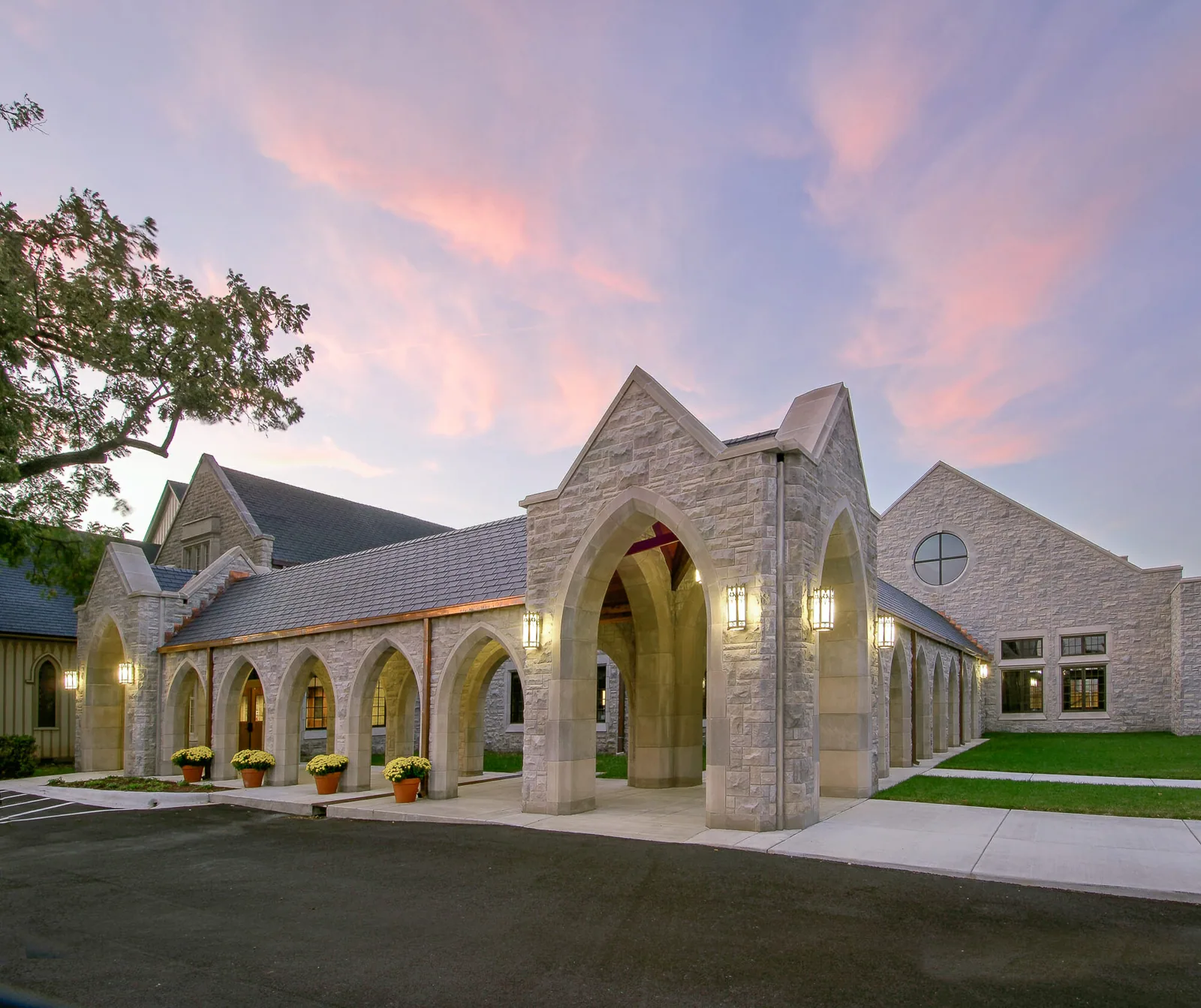
Government Building Roofing in Allen, TX
Public building roof work has to preserve public access while protecting offices, service counters, meeting rooms, and operational areas. Allen Central Business District includes civic, cultural, and historic destinations. Watters Creek has office, retail, lodging, and meeting uses, while the Stacy Road corridor links additional commercial activity. Each public property has its own access controls and procurement process. We inspect the building and plan government building roofing in Allen around the use below and the condition above.
Keep public services accessible
Before staging begins, the facility contact identifies public entrances, security screening, meeting schedules, service counters, parking, and emergency routes. Roof access may require keys, escort, or a restricted work window. Material lifts and debris removal should not block public circulation or accessible paths. We agree on the site contact, hours, notice process, and the method for reporting a change in the daily sequence.
Work may be phased by wing or roof area when the assembly and tie-ins allow it. A public service desk can remain open while a different section is repaired, provided noise, access, and weather protection are controlled. The work plan should show which entrance or parking area is affected and when it reopens. An occupied-building reroof sequence can divide work into defined zones and establish a secure end-of-shift condition.
Document conditions by public use
A leak above a records room, council chamber, public counter, or staff office has different operational effects. The building contact identifies the affected area, timing, and any access restriction needed for interior inspection. Water may travel along the deck or around a penetration before appearing inside, so the ceiling location is not automatically the repair location. We compare reports with roof slope, drains, seams, wall transitions, and prior repair notes.
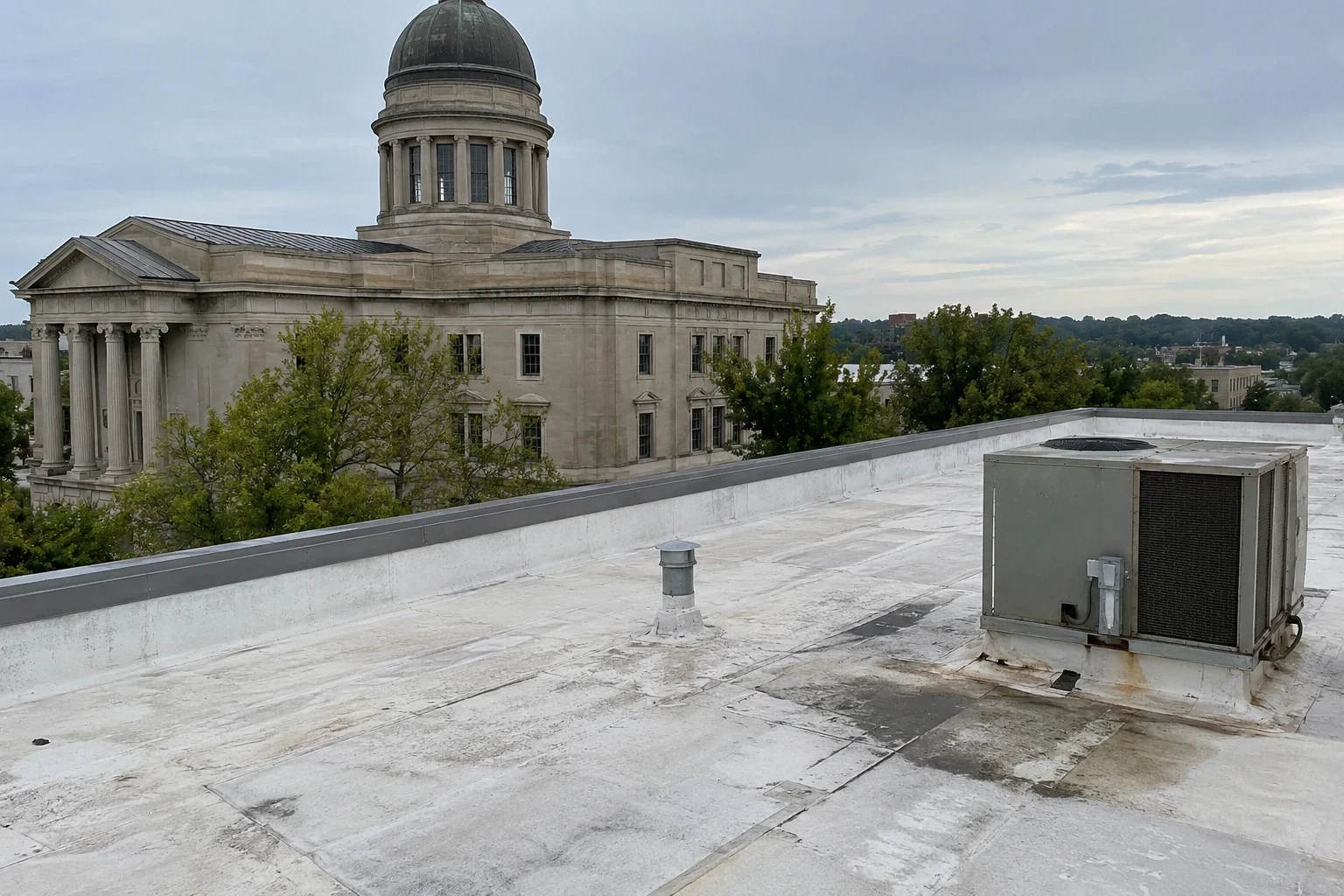
Roof assessment checks the membrane or panels, flashings, curbs, skylights, drains, scuppers, edge metal, and visible deck conditions. A commercial roof inspection records findings by building zone and identifies whether testing could confirm hidden moisture. The report states what was observed and what remains unverified. This gives facilities and procurement teams a defined basis for requesting a repair or evaluating replacement options.
Confirm permit and code requirements for the scope
Allen lists the 2021 International Building Code and 2021 International Energy Conservation Code among its adopted codes. The applicable requirements can depend on project scope and current city amendments. Before work is priced, we identify whether a permit review is needed and account for the requirements that apply to the proposed roof system. A replacement also needs to address deck, insulation, drainage, edge details, and penetrations as one assembly rather than treating the membrane alone as the project. City amendments and permit review can affect the final scope, so the owner should confirm the current requirements for the specific project before setting a bid schedule.
Public procurement may require a defined scope, comparable bids, insurance documentation, schedule, and closeout records. We state material assumptions, removal limits, deck allowances, staging, access controls, and any condition that could change after an opening. That gives the owner a clearer comparison than a broad line item. A roof due diligence survey can support review before a capital project or property decision, with findings grounded in visible conditions and stated limits.
Check roof edges after heat and storms
Dallas-Fort Worth summer heat often reaches or exceeds 100°F, and spring is the most active severe-thunderstorm period across Dallas-Fort Worth. Heat, humidity, wind, hail, and heavy rain create reasons to review exposed seams, edge details, drains, and curbs. Regional storm records do not establish damage at one public property. We document actual conditions at the site and compare them with available repair history before describing the work.
Drainage details matter around parapets, scuppers, and equipment enclosures where debris may collect. We check the path water takes to each outlet and whether overflow routes remain open. After a reported leak, temporary protection can reduce exposure while the roof is assessed. A ponding water review determines whether a blockage or a persistent low point needs attention; those conditions require different corrections.
Choose a compatible repair or renewal
Government buildings may have single-ply membranes, built-up roofing, modified bitumen, metal panels, or additions with different materials. We identify the existing assembly before selecting repair products. Surface condition, past coating, attachment, insulation, and deck condition influence the scope. If wet material is concealed, testing or a controlled opening can confirm the area to remove.
A localized flashing or seam repair may be suitable if surrounding material remains serviceable. Wider saturation, recurring leaks, weak attachment, or deck deterioration can point toward replacement. Recovery is considered only when existing layers are dry and compatible and when local code and height limits allow it. Tear-off adds debris and weather exposure but reveals concealed conditions. A school roof project also coordinates public building access, while hospital roofing adds care and critical equipment constraints that need a separate sequence.
Set up maintenance and project closeout
Closeout records should include photos, completed repair zones, open items, and any condition that needs monitoring. We can prepare a roof condition report to carry those findings into the property file. Facilities staff can record drain checks, contractor access, equipment changes, and leak calls against the same roof map.
Project duration depends on material layers, hidden moisture, deck work, permit timing, access, and public operating hours. The proposal should define who clears the work area, how the site remains secure, and how the roof is left at the end of each shift. Maintenance visits can check drains, seams, and perimeter details between capital projects. A recorded closeout helps the next procurement cycle distinguish completed work from a recommended future phase.
Public owners may also need a record of roof access, safety controls, material staging, disposal, and the person who accepted daily closeout. We identify those procedures before work begins and note any change in the field. If a hidden deck condition affects the original plan, the owner receives the observation and revised scope for review. This supports an accountable decision about whether the additional work is approved or held for a separate project.
After the project, the facility manager can use photographs and location tags to answer questions from procurement, risk, or maintenance staff. Keeping the repair boundary and remaining test areas clear prevents an incomplete observation from turning into a broad condition statement. Scheduled inspections can then revisit open items and update the roof file as the building changes.
Commercial Roofing Questions
Can public services remain open during roofing?
Some work can be phased while services continue, provided access, noise, staging, and weather protection are coordinated. The building contact defines the areas that must remain accessible.
Does a roof replacement need a permit in Allen?
Permit requirements depend on the project scope and current city amendments. We identify the proposed work and coordinate the applicable review before the schedule is set.
What should a public roof bid include?
It should define materials, removal limits, deck assumptions, access, staging, temporary tie-ins, schedule, and conditions that could change after an opening. Clear limits support a fair comparison.
How are leaks in public buildings documented?
We map the affected roof zone, photograph visible conditions, and record the interior report without assuming the ceiling mark is the entry point. The report separates confirmed findings from items needing testing.
When does a public building need a full roof replacement?
Widespread moisture, repeated leaks, poor attachment, or deteriorated decking can support replacement. The recommendation follows mapped conditions and any required testing.