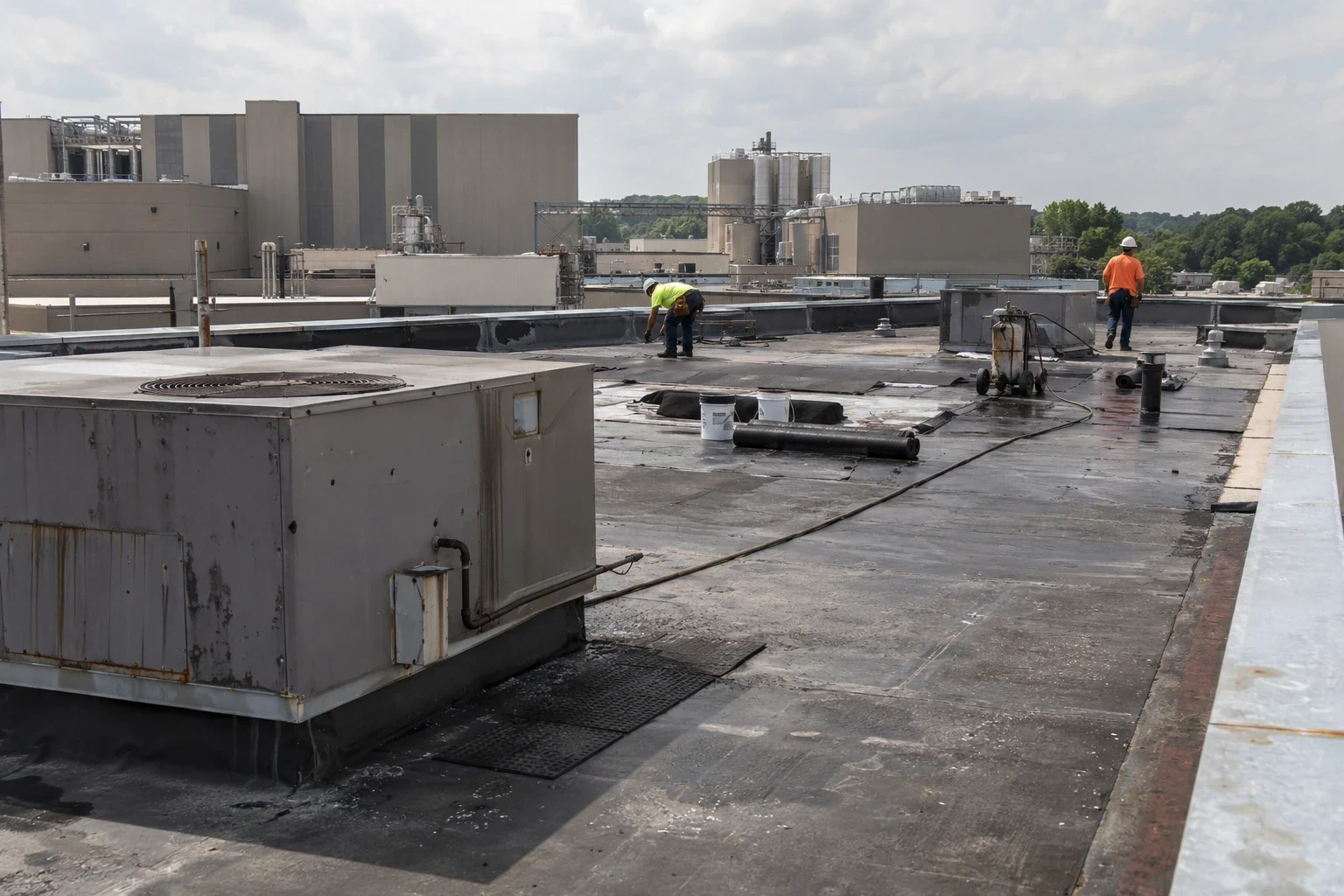
Commercial Roofing for Hospitality Groups in Allen, TX
Hospitality roof work has to fit around guests, events, kitchens, room turnover, and building services. Watters Creek in Allen combines lodging and meeting space with retail and office uses. The Stacy Road corridor and Allen Premium Outlets are separate commercial destinations with different access conditions. A hospitality group may manage hotels, conference venues, restaurants, or event facilities, each with distinct access. We coordinate hospitality roofing in Allen by property, roof assembly, and guest-facing use.
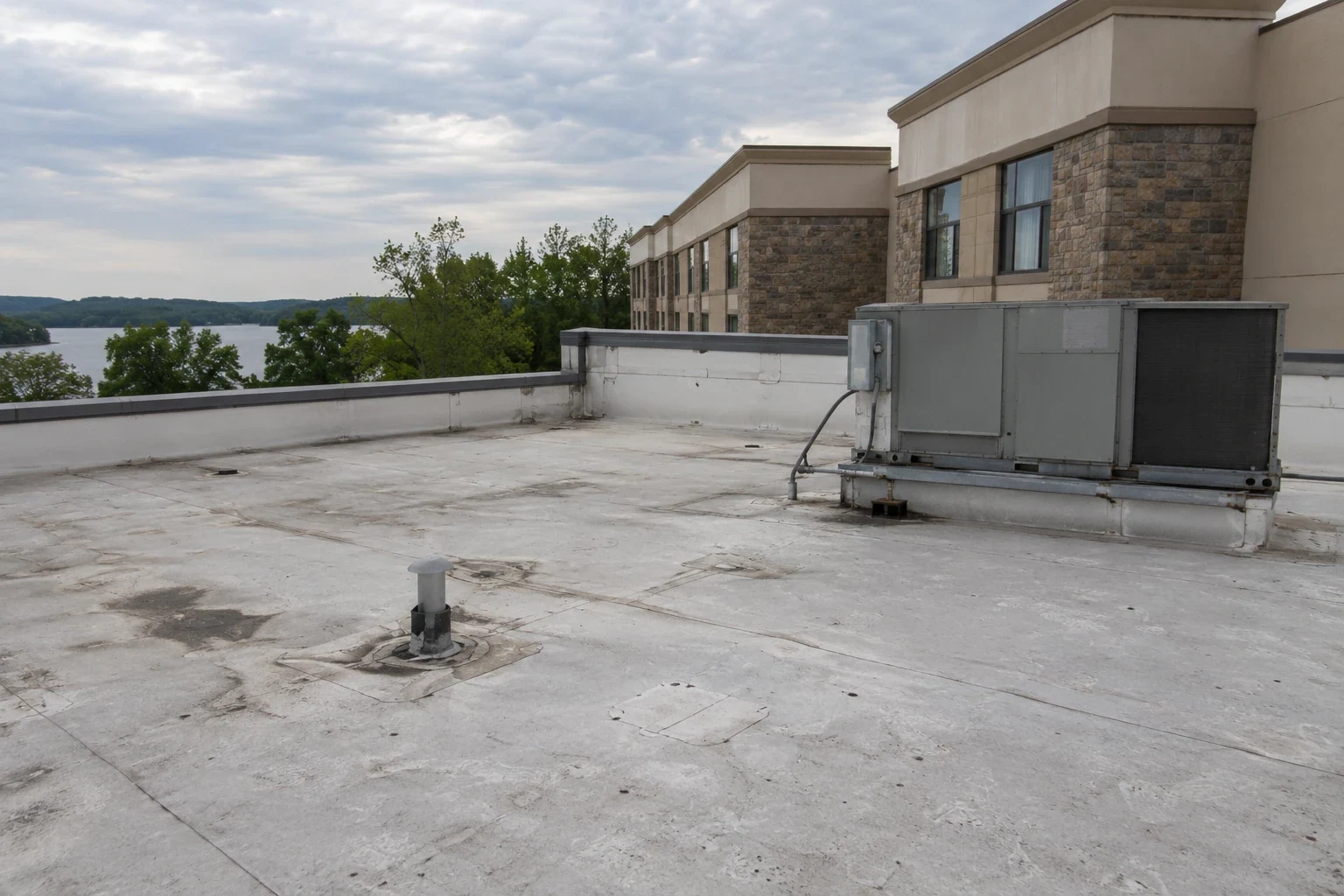
Keep site records consistent and property-specific
For a multi-property operator, a shared roof record can identify system, active water, repairs, equipment changes, access limits, and the next action. Each photo and finding still needs a specific hotel or venue reference. A condition at one property does not establish what is happening at another, even if the buildings use a similar prototype. We state which areas were accessed and what remains concealed.
A multi-site roof program can align inspections and work orders across properties, while preserving site-level findings. Property management teams can coordinate lease and tenant access when a venue shares space. The hospitality director can compare active leaks and renewal needs by operating consequence without treating every roof as the same asset.
Schedule around check-in and event commitments
Hotel staff identify occupied room wings, event bookings, loading windows, check-in peaks, and quiet hours. A material lift or debris route may affect a guest entrance even when the roof work is remote from the lobby. We coordinate staging and access with the property contact and set notices for the affected area. If a room needs an interior inspection, hotel staff arrange access without putting guest information into the roof file.
Roof work can be phased by building or section when tie-ins and weather protection allow. Each shift has a secure closeout point and a contact who can confirm that the affected route has reopened. Hotel roofing addresses room and event schedules, while retail and restaurant chains includes store hours, service, and kitchen equipment. Both benefit from a site-specific plan rather than one regional schedule.
Trace water without confusing guest symptoms with roof cause
Water appearing in a guest room or ballroom may enter through a seam, parapet, drain, skylight, or equipment curb several feet away. We compare the report with slope, roof assembly, previous repairs, and weather timing. The hotel can track the room internally while the roof report names the zone and conditions necessary for follow-up. This preserves useful evidence without adding personal guest details.
Inspection covers membrane or metal, seams, flashing, curbs, penetrations, drains, edge details, and previous patches. A commercial roof inspection maps observations and identifies whether moisture testing could confirm hidden insulation. If a meeting room or kitchen is affected, the operations team may protect that area while the exterior source is confirmed. A stain alone does not define the removal limit.
Coordinate kitchen, HVAC, and service contractors
Hospitality roofs can support kitchen exhaust, refrigeration, air handlers, laundry ventilation, pool equipment, and communications lines. Each curb or penetration needs compatible flashing and an access route for future service. We inspect for residue, worn paths, loose details, and abandoned equipment openings. Before a unit moves, the final location should be agreed by the mechanical and roofing contacts.
Outside vendors can affect the roof while cleaning exhaust, changing HVAC, or installing signage. A closeout note should state whether the membrane or flashing was disturbed. We coordinate staging so work does not block service access or drain outlets. A curb and support repair can restore the roof at equipment transitions; an attached food-service venue may need separate restaurant roof planning around exhaust and meal periods.
Review local storm conditions at each property
Allen and the broader Dallas-Fort Worth region see very hot summer periods, with spring as the peak for severe thunderstorms. Hail, wind, and heavy rain are relevant to roof inspections, but a regional report does not establish damage at a specific hotel or venue. After a reported event, we inspect actual seams, edges, rooftop units, drains, and interior reports at the affected property.
Drainage needs attention after convective rain, especially where screens hide outlets or roof runoff crosses a canopy. We note blocked outlets, ponding, loose perimeter metal, and water near occupied spaces. Active leaks receive temporary protection while a permanent repair is assessed. The location record states which buildings were reviewed and whether follow-up remains, allowing the operator to schedule other sites based on observed need.
Compare repair, recovery, and replacement by venue
Isolated seam or flashing defects may be repaired when surrounding material is serviceable. Repeated leaks, wet insulation, poor attachment, or deck deterioration can support a larger renewal. Recovery depends on existing layers, moisture, attachment, height, drainage, and code requirements. Tear-off reveals concealed conditions but brings material handling, guest protection, and schedule demands. We define the boundary before work begins and state what could change after an opening.
Cost and timing vary with roof type, equipment, access, event calendars, interior protection, and the available work window. The operator can compare the disruption of a weekday closure with a phased plan. A roof condition report prioritizes repairs and testing; scheduled maintenance tracks drains and repairs after the project. This keeps property operations and capital decisions tied to the same documented conditions.
Carry the roof history through management changes
A hospitality group can keep its roof map, repair photos, vendor notes, and next inspection date in the property file. We can identify which sections were repaired and which remain under observation. When a general manager or facilities contractor changes, those records give the new contact a basis for handling a leak without repeating the first inspection.
Before mobilization, the property confirms guest routes, service access, event commitments, equipment service, and the person authorized to approve changes. At closeout, the crew records completed work and any remaining limitation. If ownership manages several venue types, a real estate asset review can carry roof condition into reserve planning while keeping operating concerns visible. The property-level record remains specific to the building.
Before a repair starts, the local team can confirm whether guest routes, banquet setup, housekeeping, kitchen delivery, or pool service changes the work window. We state those constraints in the project sequence and explain who will receive an update if a roof opening reveals more damage. A defined contact allows the operator to coordinate rooms or event space without waiting for a general portfolio approval.
After each shift, the crew records the section closed, temporary protection, and any remaining test or repair. Hotel engineering can verify that rooftop equipment and service paths are available before returning them to routine use. The final report identifies the work performed and the conditions left for follow-up inspection.
Commercial Roofing Questions
Can roof work proceed during a booked event?
The schedule depends on the event area, noise limits, access, staging, and whether the roof can be divided into secure phases. The venue contact confirms restrictions before the sequence is set.
How do you protect guest spaces below the roof?
We map roof zones to rooms and event areas, then coordinate interior protection and access with hotel staff. Guest names or booking information are not needed in the roof record.
What should a hotel do after a roof leak?
Staff should identify the affected area and time, protect the interior under property procedures, and arrange roof inspection. The ceiling symptom alone does not confirm the entry point.
How are multiple hotels prioritized after a storm?
We inspect properties with reported or observed conditions and record findings separately. Regional weather does not prove impact at every property.
When should a hospitality property replace its roof?
Widespread moisture, recurring failures, poor attachment, or deck deterioration may support replacement. The assessment identifies confirmed conditions and any further testing needed.