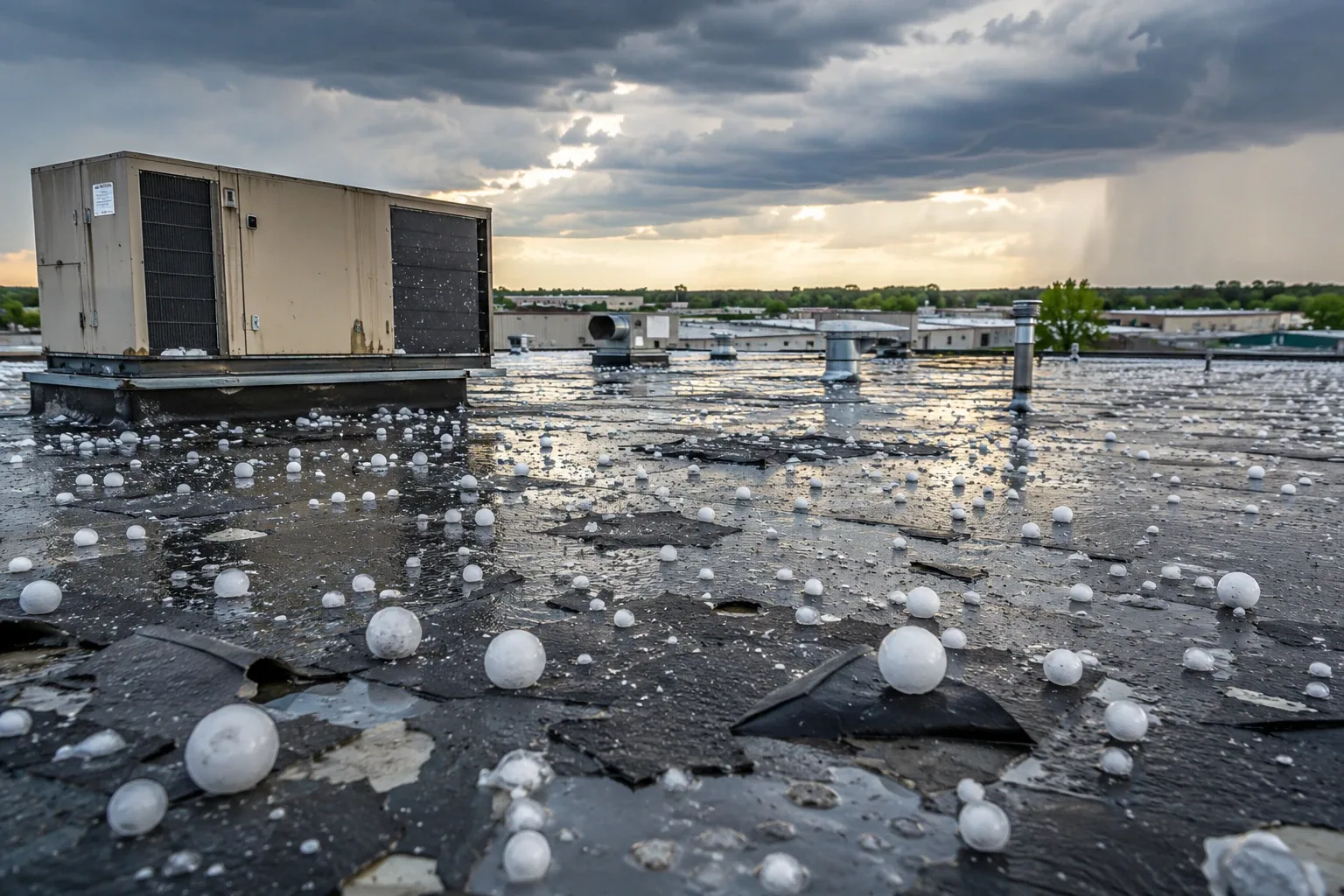
Tornado Damage Roof Repair in Allen, TX
A tornado warning does not establish what happened to an individual roof. After a reported event, the first roof decision is whether access is safe and whether the building needs temporary weather protection. In the Dallas-Fort Worth region, tornadoes, damaging winds, hail, and flooding occur during severe-weather seasons, but impacts vary by property. Allen’s commercial districts range from Watters Creek offices and retail to technology and industrial users near the 121 corridor. We document the actual condition in Allen before setting a permanent repair scope.
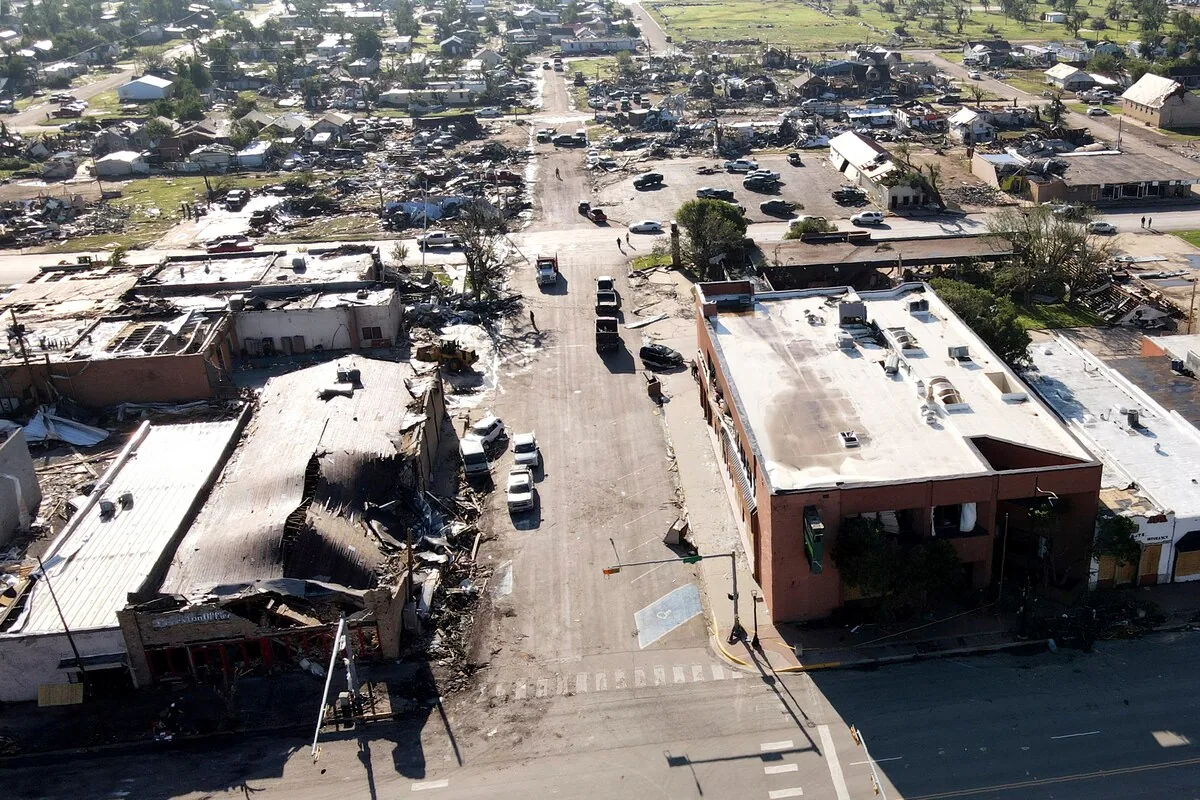
Make access and exposure the first checks
Building officials, emergency responders, and structural professionals determine when affected areas can be entered. We coordinate roof access with the facility contact and keep clear of unstable surfaces, damaged electrical equipment, and falling debris. If the roof is open to weather, temporary protection can limit additional water entry once access is approved. We mark the protected area, note the date and limits, and keep that measure separate from permanent restoration. An emergency roof repair can address immediate exposure while the full assembly remains under review. A safe-access decision controls the inspection sequence, not the desire to cover every visible area at once.
Map displaced edges and openings
Wind can displace edge metal, loosen panels, lift membrane at a perimeter, or open flashing around rooftop equipment. A tornado event may also leave debris that conceals punctures or blocks drains. We inspect the accessible field, edges, corners, curbs, penetrations, and drainage paths, then tie each photo to a roof zone. The map separates open conditions from dents, scuffs, and older wear. At a property with several buildings, each structure receives an individual record. A regional report gives context; it cannot establish which roof component failed or whether the damage came from that event.
The first pass should also record what surrounds a damaged section. Loose coping near a corner, a torn membrane at a curb, and a panel pulled from its support are not interchangeable repairs. We photograph the attachment and the tie-in, check whether the roof remains secure at adjacent edges, and note any debris that prevents a full view. If rooftop units or screens moved, their supports and penetrations need review before the repair closes. That evidence gives the property contact a clear basis for deciding which areas need immediate protection and which can wait for a complete scope.
Check the assembly below the surface
A membrane or metal panel can look intact while insulation or cover board below has taken on water. We compare roof-side observations with reported interior leaks, ceiling conditions, equipment spaces, and prior repair records. Moisture testing or a controlled opening may be needed where water has traveled beyond a visible tear. If deck movement or structural damage is suspected, the appropriate building professional should evaluate it before roofing work proceeds. We identify what was observed, what could not be reached, and what test would resolve the uncertainty. A commercial roof inspection documents condition without turning a limited visual check into a claim about concealed layers.
Separate wind, hail, and water findings
Severe storms can combine wind, hail, heavy rain, and debris impact. The repair record should distinguish a puncture from an open seam, displaced coping, clogged drain, or damaged equipment housing. We compare current observations with maintenance photos and earlier work where available. If the reported event affected nearby buildings differently, that does not transfer a conclusion to this roof. A roof condition report can organize photos, Diligence Notes, test locations, and open questions for the owner or restoration team. We keep cause language limited to what the inspection supports and state where additional evidence is needed.
Choose repair or replacement by confirmed limit
A local tear or loose flashing may support a focused repair when surrounding material and attachment remain sound. Broader membrane displacement, repeated seam failure, wet insulation, or deck damage can change the scope. We identify removal boundaries and how new material will tie into the existing assembly. A recover is considered only after reviewing existing layers, moisture, attachment, drainage, and applicable code requirements. A metal roof retrofit may be evaluated when panel and support conditions fit that option. Cost and schedule reflect access, material availability, disposal, deck work, equipment coordination, and how long temporary protection must remain in place.
Material removal can reveal conditions that a surface survey cannot settle. The scope should state how far the first opening may extend, who approves added removal, and how the exposed roof will stay dry if the work pauses. If the deck needs a separate structural review, that decision belongs before replacement material is installed. We identify assumptions about access and equipment relocation so a proposal can be compared against the actual work window. An owner can then authorize a bounded repair without treating every uninspected section as either sound or damaged.
Sequence work around the facility
Allen commercial properties include retail and office uses in Watters Creek and industrial or technology operations around 121 Tech Park. Their roof access, tenants, loading activity, and equipment shutdown needs differ. We coordinate staging, lift routes, work zones, and notice with the site contact before opening the assembly. Where occupants remain inside, each shift needs a defined stopping point and weather-tight condition. A written plan identifies who can approve a change if concealed damage extends beyond the inspected boundary. That contact structure matters when weather interrupts work or another trade needs access to the same roof area.
Close out each damaged zone
The final record should show temporary measures, removed and installed materials, repair boundaries, photographs, and any area left for later testing. We check seams, perimeter details, penetrations, and drains within the repaired zone before closeout. If a test opening revealed wet insulation, the file identifies the extent removed and any remaining monitored area. Facility staff can then compare later service calls against the same roof map rather than relying on a broad storm label. A multi-site roof program can maintain consistent records across properties while preserving separate findings for each building and each event.
Where temporary protection remains, the closeout should identify its inspection interval and who will remove or replace it. A tarp, seal, or temporary membrane is a short-term control with limits under wind and rain. We record its extent and revisit the area when a permanent detail can be installed. If the facility has multiple tenants, the site contact can also connect the roof work record to any interior protection or operating restriction that continues after the crew leaves. This keeps the handoff practical for the next shift and for later restoration decisions.
Commercial Roofing Questions
Can you inspect while emergency response is still underway?
Roof access waits until the responsible officials and site contact confirm that it is safe. We can coordinate a later visit and document any temporary protection separately from permanent work.
Does a tornado report mean every roof needs replacement?
No. The report provides regional context. We inspect each building and define repair or replacement from observed damage, moisture testing, and assembly condition.
What if the roof looks intact but water is inside?
Water can travel beneath the surface or enter at a detail away from the interior stain. We compare interior reports with roof zones and test where evidence points to concealed moisture.
Can several buildings be handled under one scope?
A shared project plan can coordinate access and purchasing, but condition and repair boundaries should remain specific to each roof.
What goes in the closeout record?
We record the areas inspected, temporary measures, materials installed, photos, limits, and any follow-up testing or monitoring that remains.