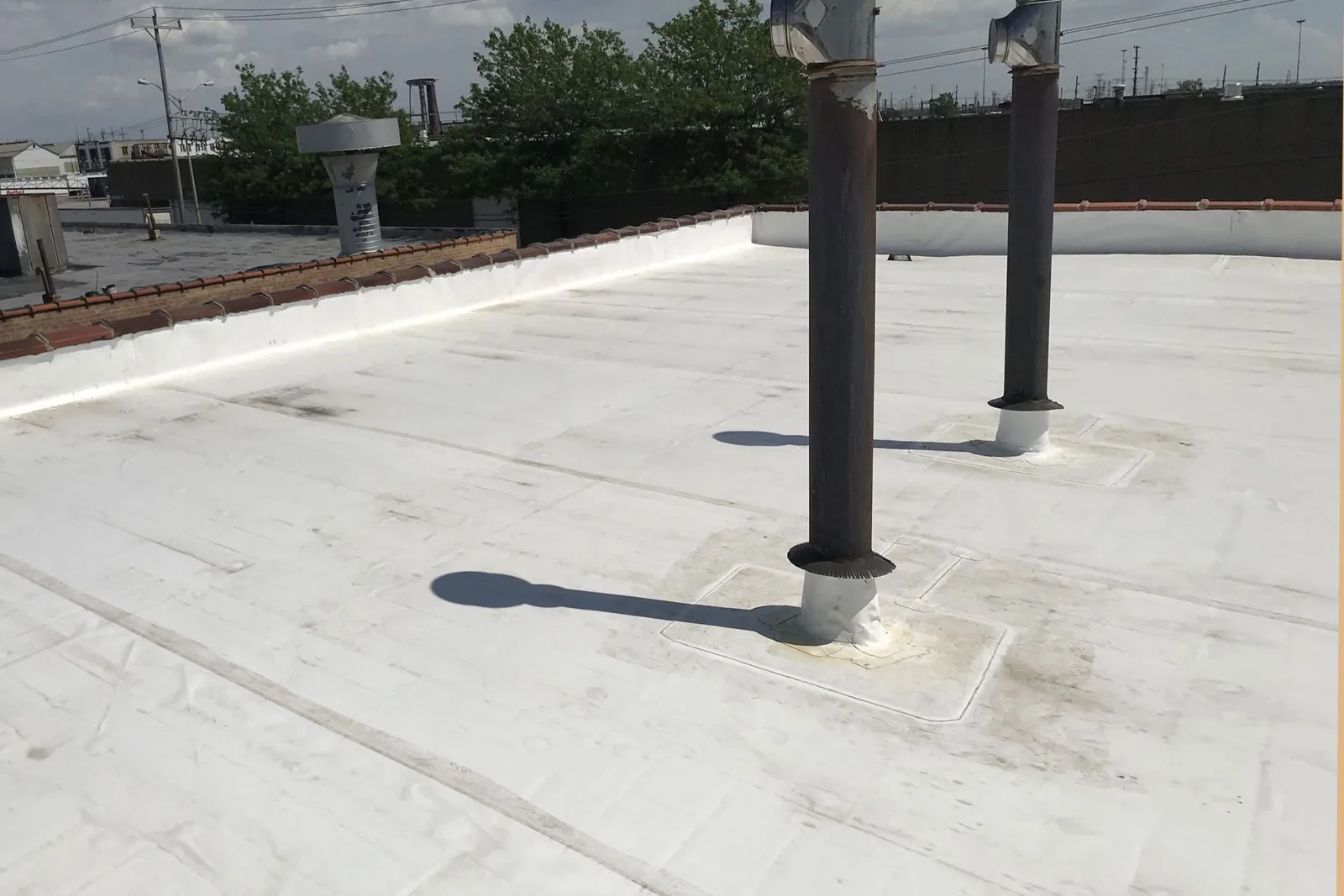
Sika Sarnafil Commercial Roofing in Allen, TX
Sarnafil roof work starts by identifying the membrane series and how it is attached. Sika's U.S. portfolio describes Sarnafil G as fiberglass-reinforced PVC designed for adhered systems and Sarnafil S as polyester-reinforced PVC used in mechanically attached systems. Those are not interchangeable assemblies, even where the visible sheet color is similar. Allen buildings range from offices, retail, lodging, and meeting uses at Watters Creek to office, industrial, and technology space near US 75 and SH 121. We inspect the roof and document its actual details before repair or replacement.
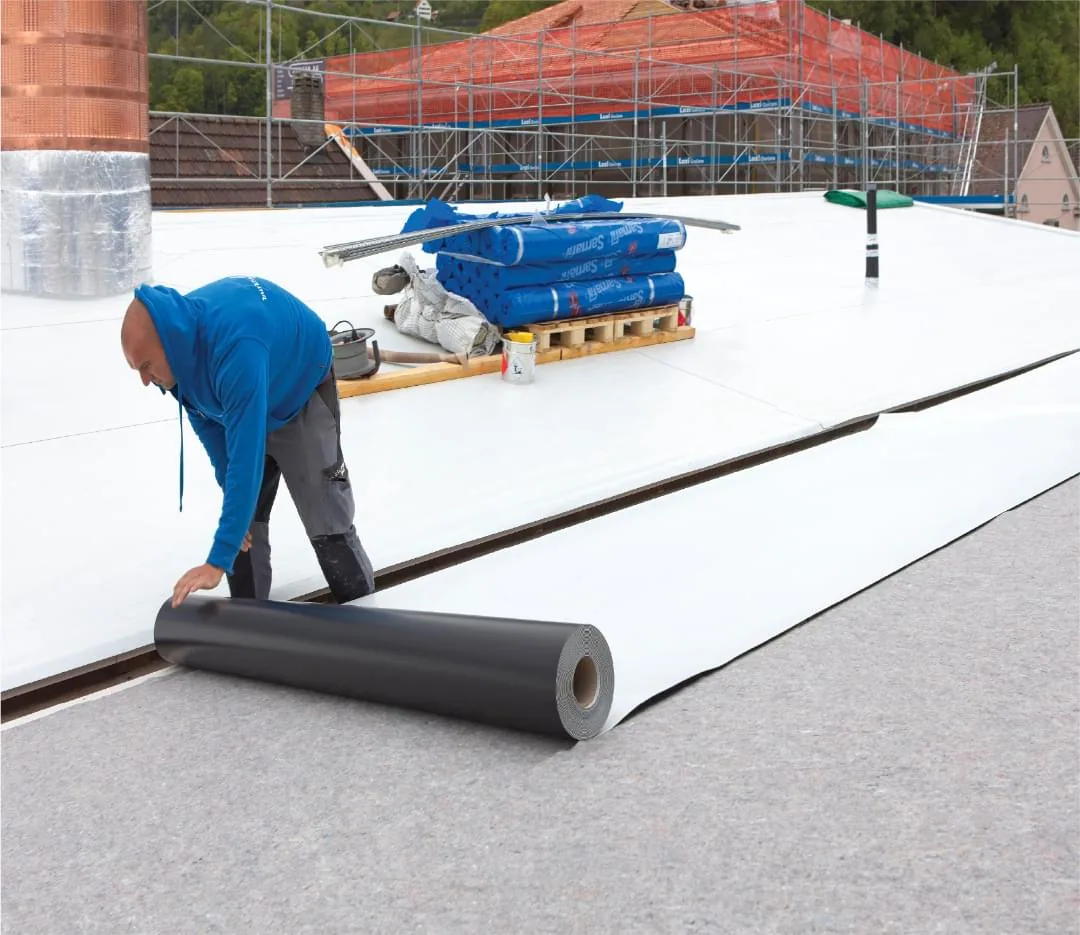
Identify Sarnafil G or S and the attachment
Check product markings, submittals, seam pattern, and fastening or adhesive evidence. Sika states that Sarnafil G is developed for adhered roof systems, while Sarnafil S is used in mechanically attached assemblies. A field survey should confirm the roof file matches the installed surface, including membrane thickness where product labels are available, fleece backing, colors, and accessory details. Do not infer the model from a warranty card or a neighboring roof. If system identity remains uncertain, preserve the question and seek the project closeout record or an appropriate opening. A PVC roof survey needs to identify the Sarnafil assembly before its repair method is set.
A membrane label may identify thickness but not the complete roof assembly. Check how the field membrane meets the cover board, where fasteners or adhesive are exposed, and whether the edge has a different attachment detail. Fleece-backed, textured, or specialty-color material should be recorded as installed only when the available markings support that identification. If repairs have added a different sheet or coating, map the boundary and note how it joins the original material. That context is important before welding because a surface with mixed products may require additional compatibility checks.
Test welded seams and field details
Sarnafil PVC seams are joined with hot air, so an inspection checks the weld, lap edge, corners, and tie-in to flashing. A probe can reveal a missed or open section, while a test weld may show whether the surface can accept a new connection. We inspect curbs, pipe penetrations, drains, parapets, and edge terminations for movement, contamination, or older patch layers. A water trail below a seam may appear inside far from the entry point, so we compare interior reports with the roof slope and detail map. A commercial roof inspection records the observed areas and any test needed to confirm concealed moisture.
Restore the membrane connection, not just the opening
A patch should reach clean, sound PVC and be welded with a controlled lap around the defect. At a curb, the flashing must turn up the vertical surface and transition to the field membrane without trapping water. If the substrate is wet or damaged, a surface patch alone does not restore the assembly. We define what will be cut out, how insulation or cover board will be replaced, and how the new sheet returns to the existing Sarnafil membrane. Where the roof includes a prior repair, document its material and edge before covering it. A membrane puncture repair can be scoped once the damage limit and substrate condition are known.
At a pipe or drain, a field patch can fail if its edge is too close to a corner, an existing seam, or a surface that cannot be cleaned. The repair layout should leave room for the weld and reinforce changes of plane using compatible accessories where the system detail calls for them. We inspect the completed weld and the relationship between the new membrane and the termination. If the patch overlaps an earlier repair, identify the layers before adding another sheet. A repeated patch may be a signal to open the area and inspect below rather than stack additional material at the surface.
Review attachment and movement at transitions
A mechanically attached Sarnafil S section and an adhered Sarnafil G section create different attachment conditions at perimeter and field details. We record visible evidence and compare it with the system submittal before proposing additional fasteners, adhesive, or a recover. Movement at a wall, expansion joint, equipment curb, or metal edge can open a transition even when the membrane field remains intact. A perimeter metal inspection can identify where edge details need coordinated work. If a proposed system crosses into another assembly, the scope must describe how the two materials will transition and where each system remains distinct.
Plan roof work for Allen operations
Watters Creek includes office buildings and mixed-use retail, lodging, and meeting functions. 121 Tech Park is a separate employment district with office, industrial, and technology uses near SH 121. Each property's schedule, access, equipment, and tenant notice may affect how roof work is staged. The local climate adds hot summer work periods and spring thunderstorm exposure, so temporary dry-in and a weather-tight shift ending belong in the plan. A Sarnafil roof review in Allen can record the specific building's roof zones and access needs; district facts do not identify its membrane model.
The facility contact can set the roof-access window, identify alarm or equipment restrictions, and confirm where supplies may be staged. If occupied rooms sit below the repair, agree on protection and notice before a section is opened. The crew should also know who can approve added removal if wet material appears beyond the mapped defect. These site decisions belong in the work sequence alongside membrane details so a repair can finish with a secure dry-in rather than an exposed transition.
Compare repair, recover, and removal
An isolated open weld or flashing defect may be repaired when adjacent PVC remains stable and dry. Widespread seam separation, wet insulation, damaged deck, or poor attachment can shift the scope toward removal. Recovery should be considered only after confirming existing layers, moisture, attachment, roof height, drainage, and code requirements. Sika system information lists multiple PVC attachment approaches, but the system selected for a project still needs a compatible substrate and details. A roof recover assessment defines whether existing materials can remain. We compare its limits with a replacement scope and show testing assumptions, equipment coordination, and tie-in work.
Keep Sika product and work records together
Save membrane data, system details, installation and repair photos, maintenance notes, and the issued warranty document with the property file. The warranty terms govern notice and maintenance, and Sika or its administrator interprets coverage. We report field conditions and work performed, not a coverage promise. If the portfolio includes a Carlisle SynTec membrane or a GAF roof system, keep the material and repair records distinct for each building. A dated condition report preserves the roof-zone evidence after a repair and supports the next inspection.
After each visit, add the date, inspected roof zones, test method, repairs completed, and open questions. A product submittal identifies the assembly intended for the work; field observations show what is present and what changed. Keeping both records together helps staff evaluate a later seam issue or equipment alteration without relying on the product name alone.
Commercial Roofing Questions
What is the difference between Sarnafil G and S?
Sarnafil G is a fiberglass-reinforced PVC membrane for adhered systems. Sika describes Sarnafil S as polyester-reinforced for mechanically attached systems. We confirm the series on the building.
Can a Sarnafil seam be repaired with hot air?
PVC seams are hot-air welded. We check the membrane, surface condition, and repair boundary before making a new weld.
Can you recover an existing Sarnafil roof?
Recovery requires review of moisture, substrate, attachment, height, drainage, and code conditions. We document the existing assembly before comparing options.
Does the membrane color tell us which Sarnafil product is installed?
No. Confirm the series from roof markings, submittals, or other product records; color by itself is not system identification.
Who decides if a repair falls under the Sarnafil warranty?
The issued warranty and Sika's review govern coverage. We can document the roof condition, repair scope, and completed work.