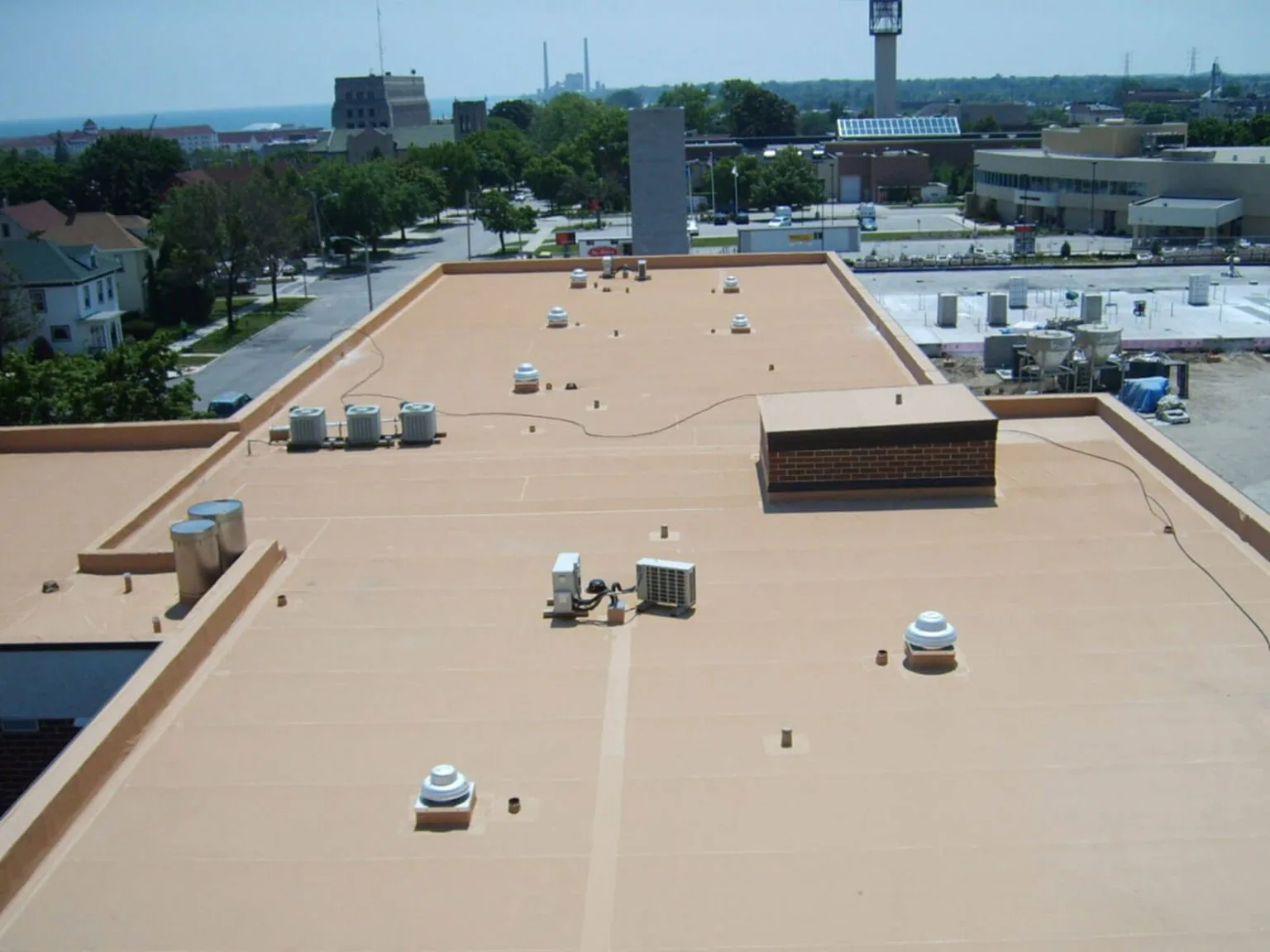
GAF Commercial Roofing in Allen, TX
A GAF label identifies a manufacturer, not the condition or construction of the roof. The field assembly still has to be identified before a repair method or replacement scope is chosen. GAF's commercial portfolio includes single-ply TPO and PVC, PVC KEE, asphaltic systems, coatings, and related components. Allen buildings range from offices and retail at Watters Creek to industrial and technology space near US 75 and SH 121. We inspect the installed roof, match the work to the actual system, and document the details that control a durable repair.
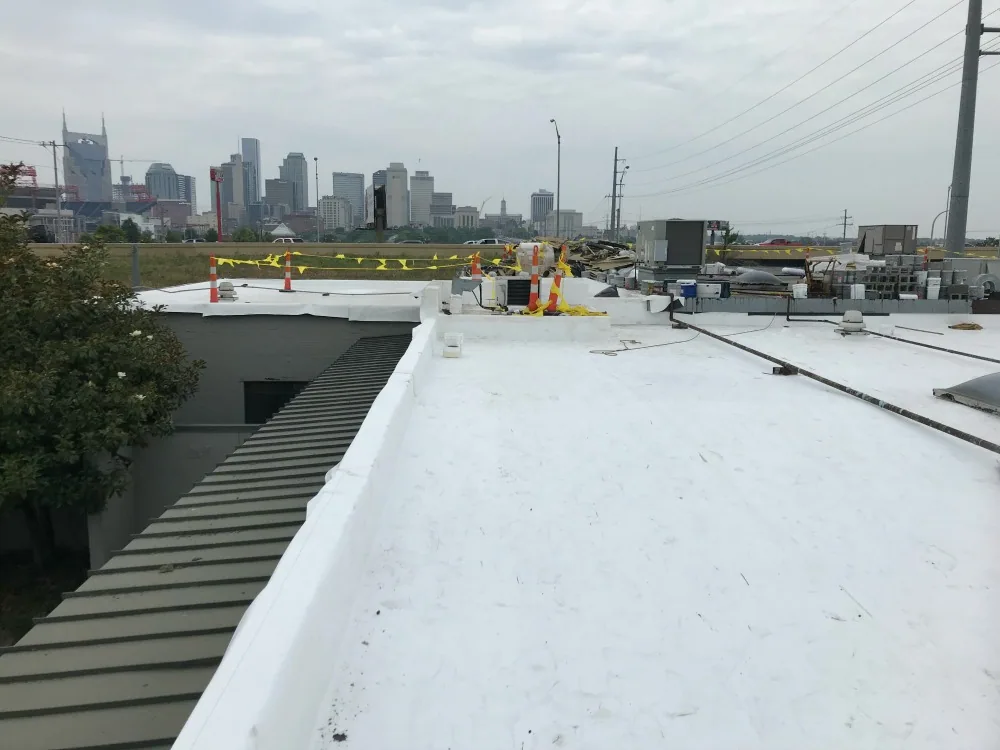
Identify the GAF system on the building
The roof file may name EverGuard TPO, PVC, or PVC KEE, but labels and invoices should be checked against field conditions. TPO and PVC are thermoplastic membranes whose seams can be heat-welded when the materials and surface are compatible. A PVC KEE product has its own product designation and installation requirements. GAF also lists asphaltic systems such as SBS, APP, and built-up assemblies, alongside liquid-applied options. We record membrane markings where visible, seam style, attachment, flashings, insulation, cover board, and repairs. If the system cannot be confirmed from the surface, we state what evidence or opening would resolve it. A TPO system assessment begins with the installed assembly, not the property name.
Check welds, transitions, and drainage
On a thermoplastic roof, a seam needs consistent contact through its length. We examine field laps, corners, pipe boots, curbs, wall transitions, and edge terminations for openings, contamination, movement, or prior patch layers. Probe checks and test welds may help determine whether an existing seam remains serviceable. At drains, confirm whether water can reach the outlet and whether the membrane is secure at the clamping ring or flashing. A leak may travel below the sheet before appearing indoors, so we compare roof details with the reported interior zone. The inspection record marks confirmed defects separately from areas that need moisture testing. A commercial roof inspection can map those findings for a GAF repair scope.
Match repairs to the membrane and substrate
A compatible repair needs the correct material, surface preparation, and seam or flashing method. Dirt, oxidation, coating residue, or wet insulation can prevent a sound bond or weld. We clean and prepare the repair area according to the selected system requirements, then check that the new patch has adequate overlap and reaches a stable boundary. At a penetration, the detail must account for movement and preserve drainage. We do not cover a recurring split with sealant and call it a membrane repair. If moisture extends beyond the opening, define removal and restoration limits through testing or a controlled opening. A failed-seam repair can be scoped separately from damaged insulation or deck work.
Evaluate recovery before adding a roof layer
GAF offers recover and reroof systems, but the existing assembly determines whether a recover is appropriate. Moisture, attachment, roof height, drainage, substrate, and applicable code requirements need review. Wet material or unstable layers should not be hidden under a new membrane. A recover can reduce tear-off in eligible conditions, while removal gives access to concealed components and may reveal deck repairs. We document the basis for each option and state what remains unknown. A roof recover assessment compares the existing layers with the proposed attachment and tie-in details. The decision is building-specific, including where rooftop units, curbs, and perimeter edges interrupt the field.
Plan Allen work around building use
The Watters Creek district mixes offices with shops, lodging, and meeting space. 121 Tech Park spans industrial, technology, and office properties close to US 75 and SH 121. Each site has its own access, staging, and occupant coordination; neither location establishes the GAF system on a specific roof. North Texas summer heat affects work windows, and spring storms make temporary dry-in and drainage planning important. We coordinate roof access with the site contact, set a safe stopping point for each shift, and identify equipment or tenant areas that need notice. A commercial roofing visit in Allen can document the current assembly and work limits before a capital decision.
Compare repair and replacement boundaries
A focused repair may fit an isolated seam, penetration, or flashing defect when surrounding material is sound. Repeated failures, wet insulation, poor attachment, or deck deterioration can support a broader scope. We explain what each option removes, what remains, and which conditions need testing. Product names should be checked against the actual submittal; an owner should not assume that every GAF roof uses the same membrane or attachment. The estimate also identifies access, equipment moves, temporary protection, and closeout documentation. A photo-based condition report can preserve the evidence behind the recommendation and help compare later service calls with the repaired details.
A property can also contain an addition or prior reroof installed with a different product family. A Carlisle SynTec roof or Johns Manville system should be identified separately from the GAF assembly before repair materials are specified. This matters at transitions, shared drains, parapets, and equipment curbs where separate roof areas meet. We compare submittals, visible markings, and repair history rather than choosing a product by brand preference. If documentation and field evidence disagree, identify that mismatch and resolve the system before opening the roof. A replacement proposal should state which materials are GAF components and where an adjacent assembly remains in place. That level of separation supports maintenance and closeout without implying that the manufacturer approved work outside its stated requirements.
Keep product documents with the roof history
Save the system submittal, product data, approved details, repair photos, inspection findings, and closeout notes with the building record. If a manufacturer warranty applies, follow its written terms for notice, maintenance, and repair; a product name alone does not establish coverage. We can document observed conditions and completed roof work while the issuer answers coverage questions. For a portfolio, a warranty file review keeps the document tied to the applicable building and roof area. Allen properties can then carry forward a verified record when staff, tenants, or vendors change, without transferring assumptions from one roof to another.
A property file should preserve the exact membrane designation when it can be confirmed, along with seam method, fastening pattern where visible, and the details used at perimeters and penetrations. If those details are missing, note the gap before a later repair is priced. Closeout images should show both the completed work and its connection to the surrounding roof, with the repair date and crew scope recorded. These observations help a later inspection separate the patch from nearby original material. If a different GAF product is proposed for a new section, compare its approved assembly and tie-in details with the roof that remains, rather than assuming the transition is interchangeable.
Commercial Roofing Questions
Does GAF make more than one type of commercial roof?
Yes. Its commercial portfolio includes TPO, PVC, PVC KEE, asphaltic systems, coatings, and related components. The installed product still needs field identification.
Can a GAF membrane roof be repaired by welding?
Thermoplastic TPO and PVC seams can be heat-welded when the installed membrane and surface are compatible. We confirm the material and repair detail before choosing a method.
Can every existing GAF roof be recovered?
No. Moisture, attachment, roof height, substrate, drainage, and code conditions affect eligibility. We inspect and document those factors before recommending an overlay.
Will a repair affect the roof warranty?
The issued warranty controls repair, notice, and maintenance requirements. We can document the proposed work, while the issuer determines how its terms apply.
What records should we keep after repair?
Retain the system submittal, repair location, materials, photos, inspection notes, and closeout. Keep those records with the specific building and warranty document.