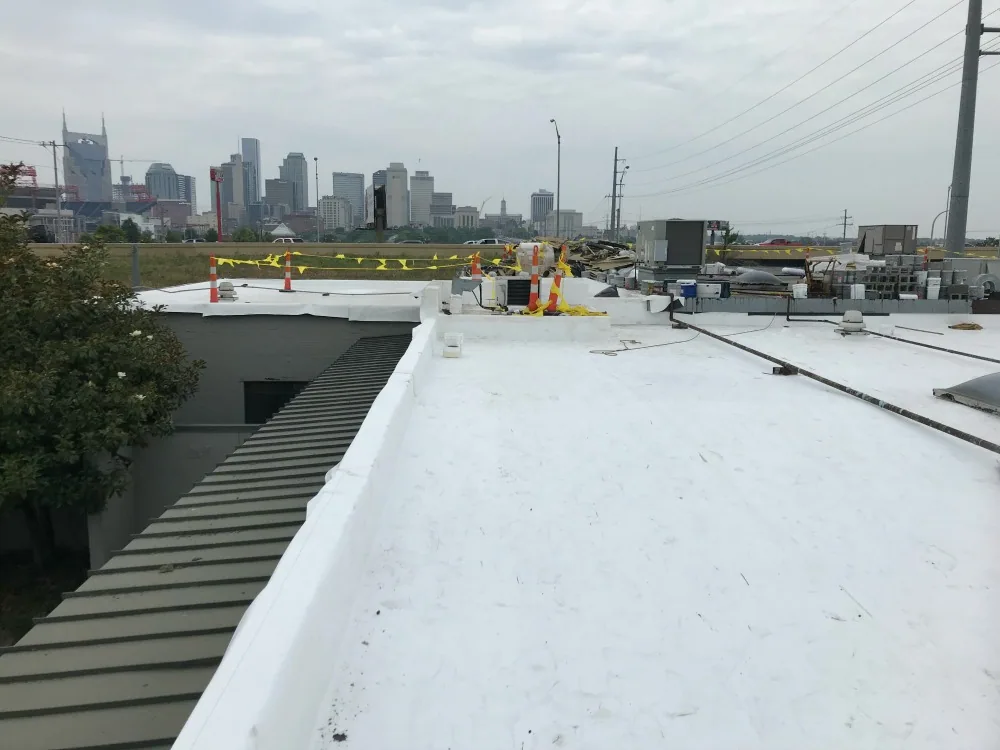
Johns Manville Commercial Roofing in Allen, TX
Johns Manville roofing can refer to several different assemblies. The manufacturer lists TPO, PVC, and EPDM single-ply systems, as well as SBS, APP, built-up, insulation, and cover-board products. Each system has different seams, flashing details, and repair methods. In Allen, a roof serving office and retail uses at Watters Creek presents different access needs from industrial and technology space around 121 Tech Park. We identify the product and assembly on the building before planning repair, recovery, or replacement.
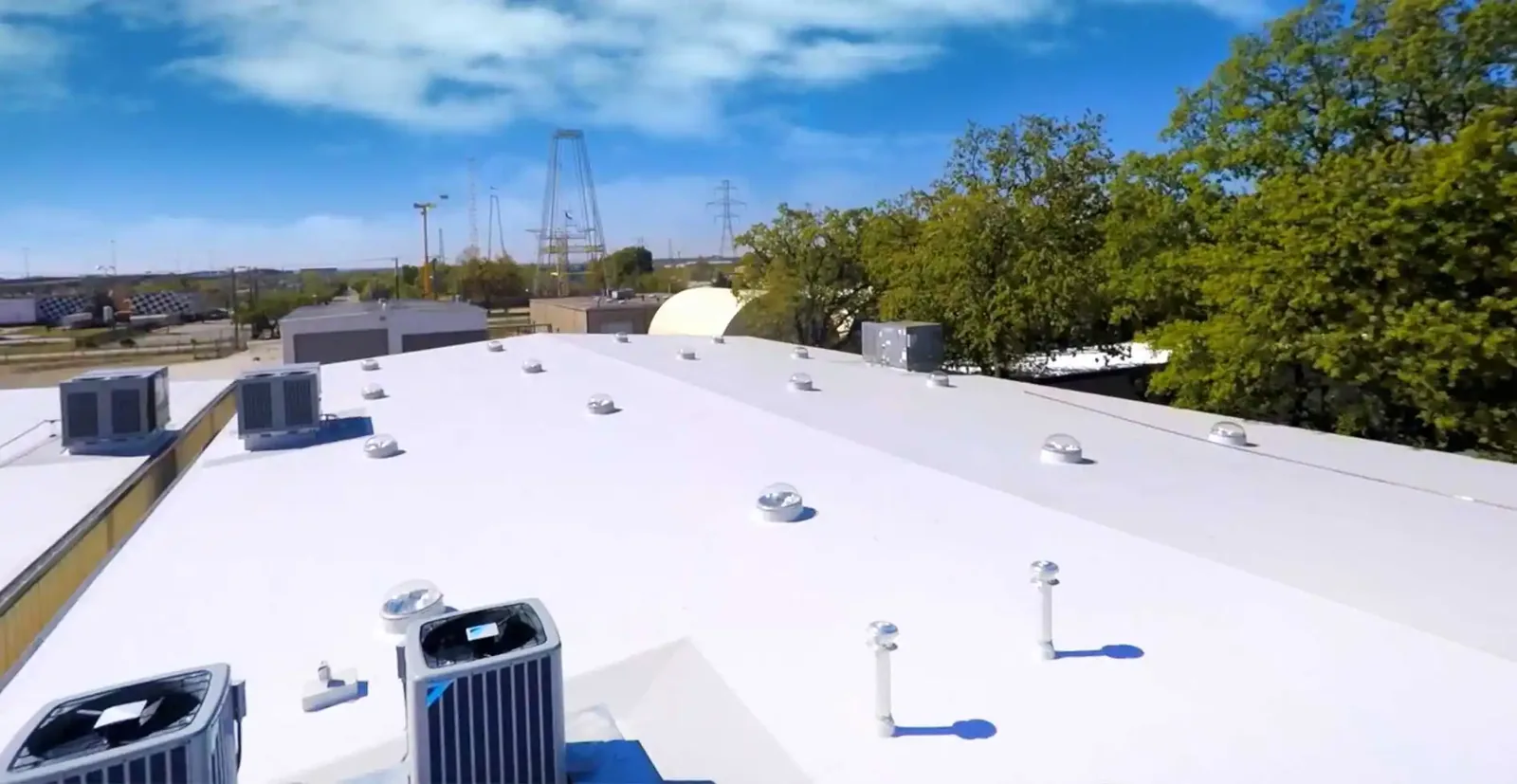
Identify the Johns Manville product family
Review the closeout package, invoices, membrane markings, and roof details to determine whether the assembly is TPO, PVC, EPDM, SBS, APP, or built-up roofing. The membrane type alone does not describe the full system. Attachment, insulation, cover board, vapor control, and edge details can change the repair scope. We record what can be verified and identify where the roof file is incomplete. A modified-bitumen inspection requires a different field review from a single-ply system. If a product or layer cannot be confirmed without a controlled opening, the report states that limit instead of inferring the assembly from the manufacturer name.
Inspect seams, flashings, and bituminous laps
On single-ply sections, inspect seam continuity, flashing at curbs and penetrations, terminations, and repairs. TPO and PVC use heat-welded seams when system requirements and surface condition allow; EPDM uses different seam products and repair details. For a bituminous roof, check laps, surfacing, flashing, and transitions between plies. Drainage and perimeter details deserve their own review because water entry can start away from a visible interior stain. We photograph each finding with its roof zone and note any area not reached. A roof inspection can document conditions before the repair boundary is set.
The inspection should also record roof traffic and nearby mechanical work that could affect a detail. A repaired boot beside a conduit run has a different context from an open field seam, and a bituminous patch should be compared with nearby surfacing and lap direction. We note whether the roof is wet or dirty at the time of inspection, since those conditions can limit testing or adhesion. If an earlier repair uses an unidentified compound, document its location and avoid covering it until compatibility with the existing membrane is established.
Use repair materials matched to the roof type
A patch on a Johns Manville roof must match the installed membrane or bituminous assembly. Thermoplastic welding, EPDM seam products, and modified-bitumen repair methods are not interchangeable. Preparation matters: contamination, loose surfacing, wet insulation, or a failing substrate can undermine the tie-in. We identify the defect, remove unsound material as the system requires, and carry the repair to a stable edge. At penetrations, the detail must handle movement and shed water. If an opening reaches damp cover board or insulation, the scope states whether material will be removed and how the assembly will be restored. A flashing repair may require separate coordination around curbs or wall transitions.
Include insulation and cover board in the assessment
Johns Manville's commercial portfolio includes polyiso insulation and cover boards, but a product family is not evidence that those components are present on this roof. We inspect exposed edges and transitions and compare them with available submittals. A soft surface, delamination, or persistent moisture can indicate that the repair boundary extends below the membrane. Where the layer cannot be observed, moisture testing or a controlled opening can guide the next decision. The report identifies the sample location and does not present it as a full-roof reading. A roof insulation and cover-board scope should record the material, depth, and tie-ins confirmed on site.
Set the Allen work plan around the property
Allen employers span technology, financial services, professional services, telecommunications, and electronics. That mix may involve office, industrial, and technical facilities with different access controls and equipment schedules. Watters Creek adds office, retail, lodging, and meeting activity, while 121 Tech Park includes office and industrial uses near SH 121. The location helps shape staging and communication, not the roof-system selection. Dallas-Fort Worth summer heat and spring thunderstorms also affect work windows and dry-in planning. A Johns Manville roof review in Allen should record the property conditions and access requirements before a crew mobilizes.
Where tenants remain in place, define each work area, any interior protection, and the point when the crew must leave the roof weather-tight. A loading schedule can affect material delivery and lift placement, while rooftop service may need to be coordinated with a separate mechanical vendor. We confirm who can approve access or a test opening and who receives an update if the planned boundary changes. Those steps let a facility team prepare its operations without assuming a fixed duration before the system and repair limit have been verified.
Select the scope the evidence supports
An isolated seam or flashing defect may allow a targeted repair when surrounding material and insulation are sound. Recurrent leaks, widespread moisture, damaged deck, or failing attachment may call for broader work. A recover is considered only after reviewing existing layers, drainage, roof height, attachment, and current code limits. Tear-off can expose concealed conditions but needs a dry-in, debris, and interior-protection plan. We compare the options using the same roof boundary and record unresolved tests. A recover assessment can define whether the existing assembly is suitable, while a replacement estimate should state what is removed and what details are rebuilt.
Before comparing bids, list the assumed layers, demolition depth, perimeter rebuild, and equipment coordination in each scope. A bid may include new cover board or deck repair in one area and exclude it in another. That difference can change the tie-in and temporary protection, not just the material quantity. We identify which details were inspected and which rely on drawings or a test. If an opening is planned during construction, identify the approval contact and how the roof will be protected if concealed conditions require a pause. This lets the owner compare options without treating allowances as field-confirmed quantities.
Preserve product, repair, and warranty records
Keep the roof plan, system submittals, product data, repair photos, service notes, and closeout with the property record. If an issued Johns Manville warranty applies, follow its actual notice, maintenance, and repair terms; the manufacturer determines coverage. We document what we inspect and install, not an unverified approval or warranty result. A roof condition report can carry the evidence forward after work. When another roof area uses a different manufacturer, its assembly stays separate. A Carlisle SynTec roof and a GAF assembly should each keep their own repair history and product records. The next facility manager can then distinguish one assembly from another and track open actions accurately.
A changed condition should be entered with its date and the person who observed it. That makes the next review easier to compare with the previous photograph or service record.
Commercial Roofing Questions
What Johns Manville roof systems do you work on?
The portfolio includes TPO, PVC, EPDM, SBS, APP, built-up systems, insulation, and cover boards. We identify which system is installed before scoping work.
Do all Johns Manville membranes use the same repair materials?
No. EPDM, TPO, PVC, and bituminous systems require different preparation and repair methods. Field identification comes first.
Can an inspection confirm the insulation condition?
Only where the layer is visible or tested. If insulation is concealed, the report identifies what testing or opening would provide evidence.
Will a roof recover work on every JM assembly?
A recover depends on existing layers, attachment, moisture, drainage, height, and code requirements. We document those factors before comparing options.
Does Johns Manville decide warranty coverage?
The issued document controls, and the manufacturer or administrator interprets its terms. We can provide a record of observed conditions and repairs.