Holcim Elevate Commercial Roofing in Allen, TX
Holcim Elevate systems use several membrane families, so the product name alone does not set the repair method. The U.S. portfolio includes UltraPly TPO and RubberGard EPDM, with distinct attachment options, accessories, and details. A thermoplastic seam and an EPDM seam are not repaired the same way. Allen properties range from mixed office, retail, lodging, and meeting uses at Watters Creek to flexible business space near US 75 and SH 121 at 121 Tech Park. We identify the installed Holcim Elevate system and inspect its condition before selecting work.
Distinguish UltraPly TPO from RubberGard EPDM
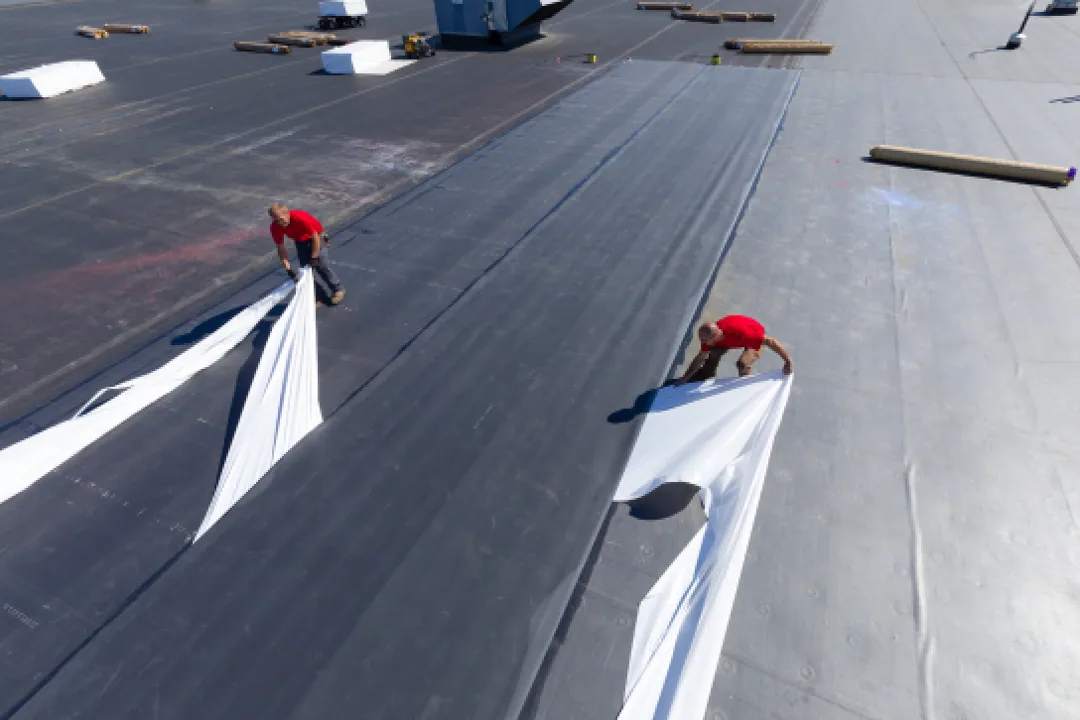
Confirm system markings, submittals, seam construction, attachment, and flashings. Holcim Elevate lists UltraPly as a reinforced TPO membrane offered in mechanically attached, adhered, and induction-welded configurations; its product line also includes self-adhered and fleece-backed options. RubberGard EPDM has separate products and accessories, with configurations that include adhered, ballasted, and mechanically attached systems. The building record should identify which product and attachment are present instead of carrying one detail across a mixed roof. A TPO system review differs from an EPDM roof assessment, especially at seams and penetrations.
Inspect details where the roof changes plane
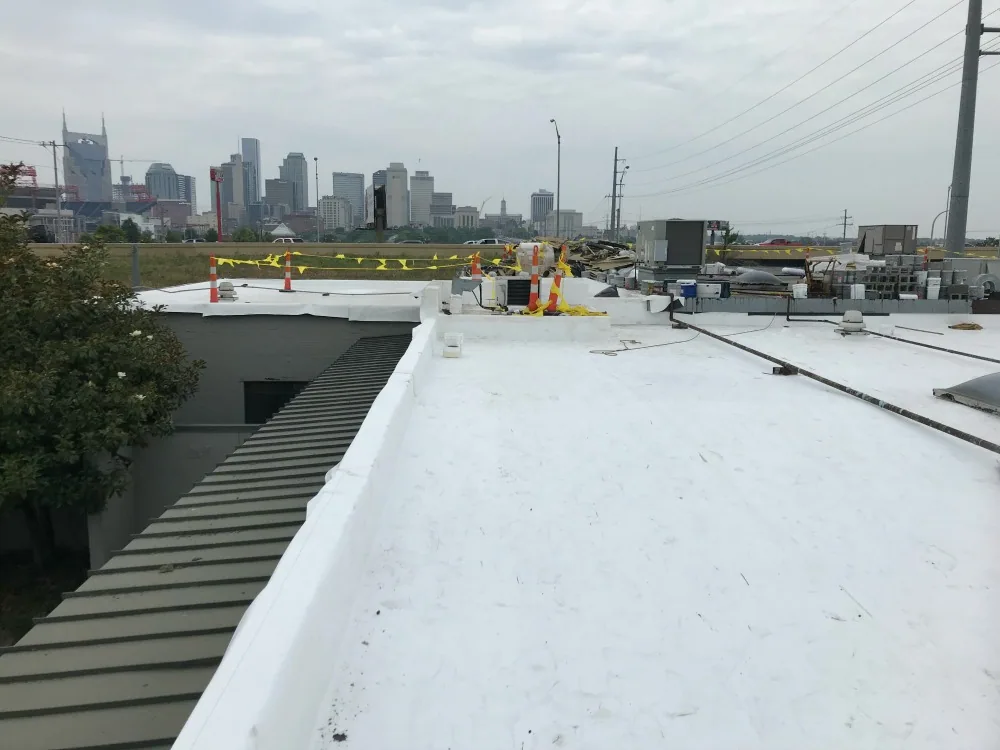
Most repair decisions center on seams, curbs, pipes, drains, parapets, edges, and transitions between roof sections. On TPO, check weld continuity and whether the detail is clean enough for a new weld. On EPDM, review seam tape, flashing, and the surface around existing patches. At equipment curbs, check whether the flashing rises securely and sheds water without bridging a movement joint. Drain connections and scuppers need a clear flow path. We record the roof zone, material, and any condition that prevents a full inspection. A commercial roof inspection can identify repair areas and any concealed condition that needs testing.
At a transition between an addition and the original building, the roof may have different installation dates, substrates, or membrane attachment. We check whether a new flashing detail bridges movement between those areas and whether prior work changed the water path. If an inspection finds an open termination, the repair must return to secure material and provide the required edge closure. Photographs should show enough context to identify the roof section and close enough to read the seam or flashing condition. That detail helps the facility distinguish a defect from a surface mark during later maintenance.
Prepare a compatible repair boundary
Repair material follows the membrane chemistry and manufacturer detail. A TPO weld requires compatible material, sound substrate, and controlled heat; an EPDM repair uses its own adhesives or seam products. Surface contamination, aged coatings, wet board, or a failing patch can change the preparation. We remove unsound material, establish a stable edge, and restore the flashing or seam with attention to the adjoining assembly. If moisture extends beyond the defect, testing can identify whether insulation needs removal. A seam repair scope should name the system and show where the repair ties into sound material rather than simply covering the opening.
Review attachment and substrate before recovery
Attachment affects how a roof handles wind forces and how a new layer can be connected. Holcim Elevate system documents show different methods for TPO and EPDM; we confirm the installed pattern and substrate before designing a repair or recover. Loose fasteners, wet insulation, an unstable deck, or incompatible layers may make an overlay unsuitable. Where a test opening is needed, document its location, observed layers, and dry-in method. A roof recover assessment should state the existing assembly, moisture findings, height, drainage, and code factors that support the option. If those conditions remain unknown, the estimate should identify them as open questions.
For a mechanically attached assembly, note visible fastener rows and any edge movement, but do not infer the full fastening pattern from one exposed area. An adhered roof also needs a sound substrate and compatible adhesive at the proposed tie-in. The scope can identify test pulls or sample openings when attachment or moisture will affect whether a new layer is suitable. If water remains in the assembly, the report should map confirmed wet zones and define how they will be removed. The proposal should also state how new roof sections will meet existing walls, drains, and equipment curbs.
Coordinate Allen access and work windows
At Watters Creek, a roof may serve offices alongside retail, lodging, and meeting activity. Around 121 Tech Park, a building contact may need to coordinate access with an industrial, office, or technology operation. Those area characteristics inform staging and communication, not the installed system. North Texas summers can bring extreme heat, and the region's spring storm period makes weather-tight shift endings important. We identify access routes, roof hatch procedures, active equipment, occupied rooms, and any tenant notice before materials arrive. A local Holcim Elevate roof visit in Allen can establish the actual roof condition and work limits at the property.
We also confirm whether the work area shares a roof route with active HVAC service, deliveries, or tenant entrances. A written sequence can mark the section opened each shift, temporary cover, and the inspection needed before the crew leaves. That helps the site contact prepare access and maintain building operations around the roof work.
Compare repair with larger renewal
A local seam or flashing repair may fit when adjacent membrane and insulation remain serviceable. Repeated failures, wet material, displacement, or deck damage can support a broader project. We define what each option removes and how the new membrane ties into existing curbs, edges, drains, and walls. The estimate identifies testing, temporary cover, equipment access, and any assumption that could change after removal. A replacement scope should be compared against the repair boundary using the same evidence. The product line helps identify compatible components, but it does not by itself establish a need for a full reroof.
Retain the product and repair record
Keep submittals, membrane identification, attachment information, photos, repair details, and closeout notes with the building file. The issued warranty sets its notice, maintenance, and repair provisions. We document the roof work and retain the relevant product and repair records. If another building has a GAF system or a Johns Manville roof, its product and repair record should remain distinct. A dated condition report can connect field findings to later maintenance and capital review.
A repair log should distinguish field work from information supplied by the manufacturer. Keep the submittal, product sheet, installation details, inspection photos, and repair record with the building file, and note which roof zones each item concerns. If a later service call finds a different symptom, the facility can compare the location and materials without assuming the prior detail was the source. When several work orders are closed together, keep the photos matched to the specific unit, edge, or drainage location and record any area that remained outside the scope.
Commercial Roofing Questions
What is the difference between Holcim Elevate TPO and EPDM?
They are different membrane types with different seam and repair methods. We identify the installed system and attachment before preparing a scope.
Can UltraPly TPO be mechanically attached or adhered?
Holcim Elevate lists multiple UltraPly configurations, including mechanical attachment, adhered, and induction-welded options. The roof records and field details show which is installed.
Can RubberGard EPDM be repaired with a TPO patch?
No. Repair products and preparation need to match the membrane. We confirm the material before removing or installing a patch.
Does a product name establish warranty coverage?
No coverage can be inferred from the product name. The issued warranty and the issuer's review control the result.
When should an Holcim Elevate roof be replaced instead of repaired?
Widespread moisture, repeated failures, unstable attachment, or deck concerns can lead to broader renewal. We document the evidence and define what testing is still needed.