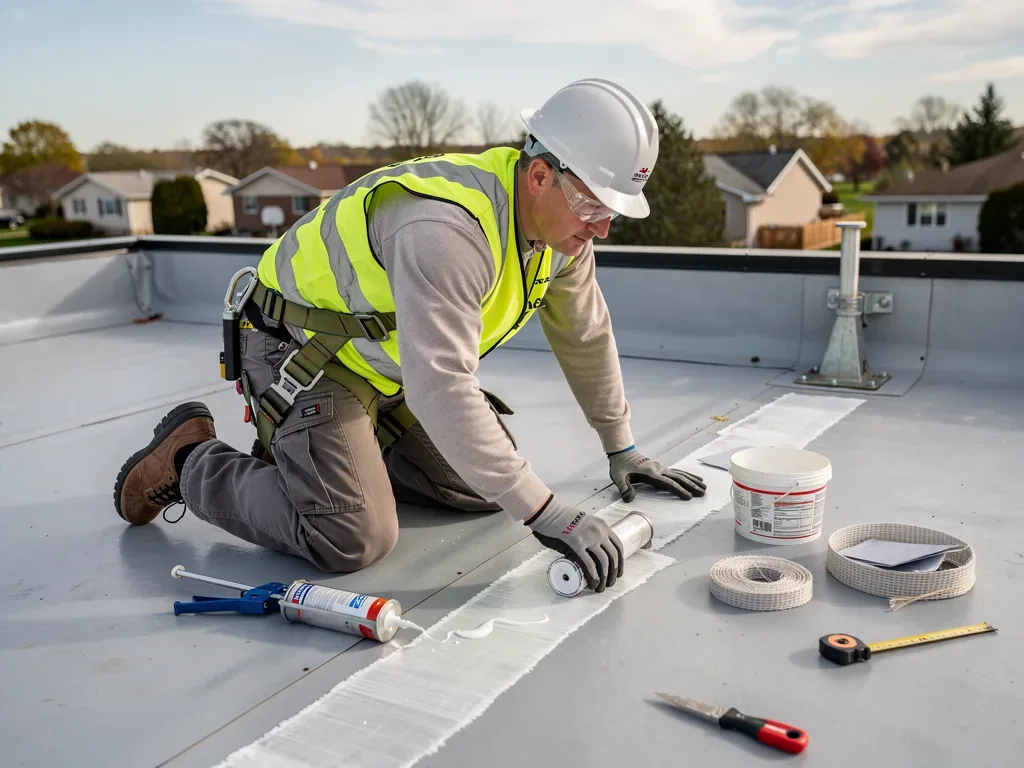
Heat and UV Roof Damage Repair in Allen, TX
A roof can show heat stress before water reaches the interior. Surface chalking, brittle flashing, open seams, or coating loss may indicate exposure, but each sign needs to be checked against the installed system and its service history. Dallas-Fort Worth summer days regularly reach or exceed 100°F in July and August, and Gulf moisture keeps humidity high. In the Allen market, that exposure applies across varied commercial settings, from Watters Creek offices and retail to technology and industrial buildings near SH 121. We inspect the assembly and connect the observed condition to a practical repair decision.
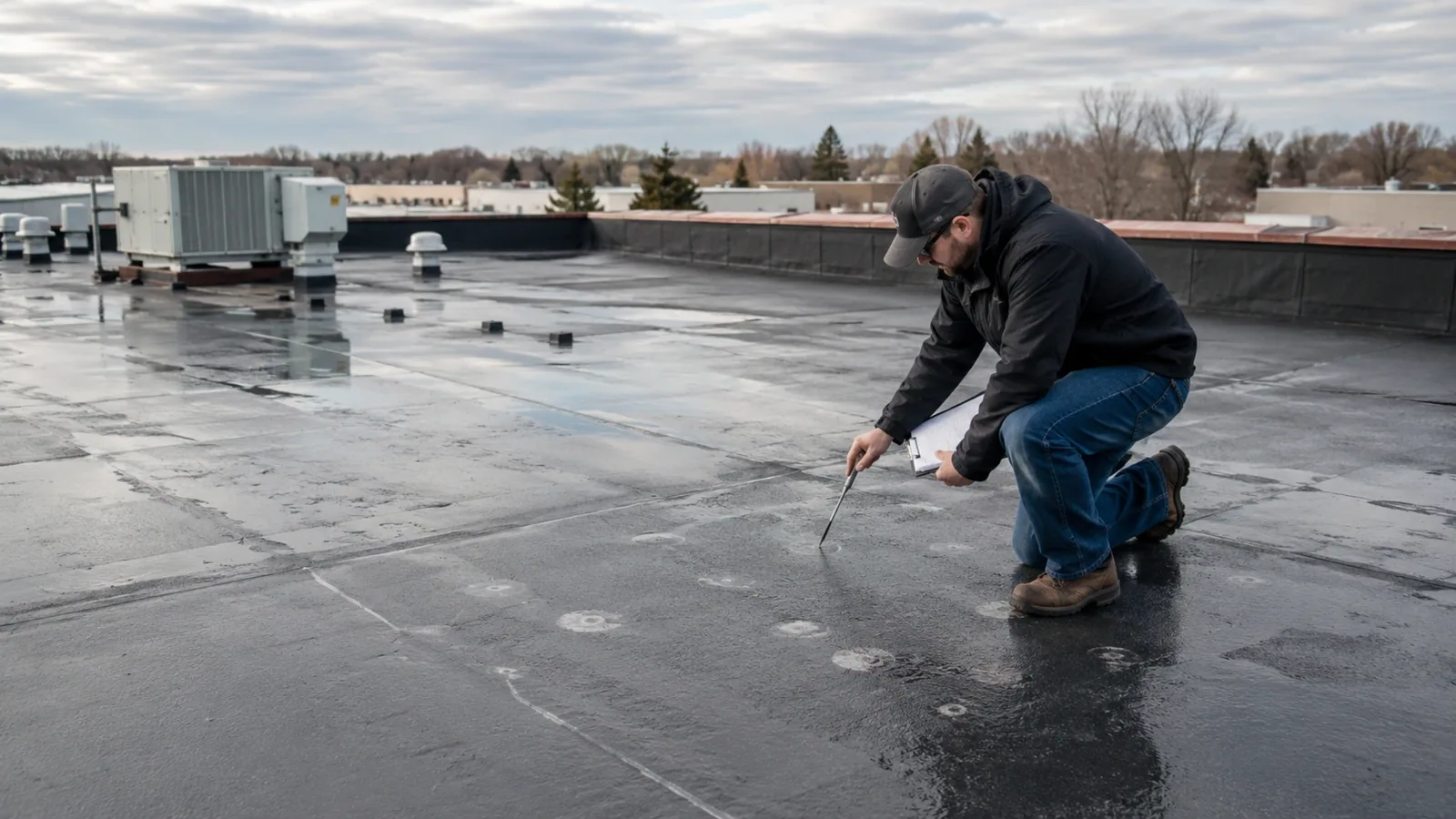
Read surface change in the context of the system
Ultraviolet exposure and heat affect materials differently. A single-ply membrane may show surface aging, while modified bitumen can lose granules or become brittle and a coating can thin or crack. Metal panels expand and contract, placing movement demands on fasteners, seams, and flashing. We identify the roof type first, then check exposed field areas, penetrations, edges, transitions, and previous repairs. A faded surface alone does not establish a leak or a need for replacement. The inspection record notes whether the condition is uniform, concentrated near equipment, or tied to a particular drainage or detail issue. A confirmed opening can be scoped as a membrane puncture repair with material matched to the installed roof.
Surface temperature is not the same as material temperature through the full assembly. Dark surfaces, shade, rooftop equipment, and ventilation patterns can create different conditions across one roof. We describe where aging appears concentrated and avoid treating one sample as representative of every roof zone. At each transition, we check whether sealant or flashing is still bonded and whether movement has opened a path beneath it. A test patch or adhesion check may be appropriate for a coating system before broader application. The findings show what preparation and compatibility checks the proposed work requires.
Look for failure at seams and transitions
Repeated heating and cooling can work on seams, sealant joints, metal edges, and flashing around curbs. A roof may remain dry until movement opens one of those transitions. We check attachment, welded or bonded seams, terminations, and counterflashing, then compare suspect details with the surrounding field. A loose edge can have different implications from coating wear, so findings stay separate. If the roof includes repairs from earlier seasons, photographs help show whether a defect is new, growing, or unchanged. A commercial roof inspection can identify which locations need testing or a closer opening before a repair material is chosen.
Confirm what lies under an aged surface
Heat can accelerate visible wear, but the condition below the surface determines whether a repair will hold. We look for soft insulation, trapped moisture, surface splits, delamination, and changes in the substrate. At a coated roof, we check adhesion and whether the coating remains compatible with the original surface. At a single-ply roof, the patch needs to match the membrane and seam method. Metal roof repairs must account for panel movement and the condition of fasteners and support points. Where a surface treatment would only hide wet material or a failed detail, we define removal and restoration instead.
Use heat-aware work windows
Hot roof surfaces affect material handling, worker exposure, and the sequence for adhesion or welding. We coordinate work windows with the facility schedule and follow the material system's installation requirements. A larger project may be phased so the roof can be closed securely at each shift. The plan also accounts for rooftop equipment, tenant access, and locations where open-flame or heat-producing work needs additional controls. In the Allen market, a summer forecast can change the daily sequence, while a sudden storm can make dry-in the immediate priority. The scope states the conditions that may alter the work window.
Choose between spot repair, coating, and renewal
A focused repair can address an isolated seam or flashing failure if adjacent material remains sound. A silicone coating may extend service when the existing roof is eligible, dry, adhered, and prepared for that system. Coating is not a substitute for replacing wet insulation, correcting drainage, or securing loose metal. Broader brittleness, recurring leaks, widespread adhesion loss, or deck concerns can support replacement. We compare the options by confirmed roof condition, preparation, tie-in details, access, and expected disruption. The written scope makes clear which areas are included and what concealed conditions could change the recommendation.
A coating scope must account for cleaning, dry time, repair of existing defects, and the required application conditions. The surface needs to accept the system across the proposed area, not only where a small sample looks sound. We identify drains, curbs, and wall transitions that need reinforced detailing and state how the coating meets existing flashings. If water is trapped below the membrane, covering the surface can complicate later diagnosis. When those conditions are present, the scope focuses on opening and restoring the assembly rather than applying a surface layer to conceal it.
Connect Allen weather to roof observations
Dallas-Fort Worth summer heat and high humidity make surface condition, drainage, and interior moisture control relevant inspection points. Spring storms bring hail and damaging winds across the Dallas-Fort Worth region, though a regional event does not prove impact at a particular building. At Watters Creek, mixed office, retail, lodging, and meeting uses can make access planning as important as the repair detail. At 121 Tech Park, flexible industrial, office, and technology space calls for building-specific roof records. We use those local settings to plan access and work sequence, not to assume a roof type or condition from a district name.
Keep a baseline for future comparison
A useful closeout identifies the roof material, repairs made, photos of treated areas, remaining defects, and the next review point. A baseline helps the facility distinguish gradual aging from storm damage or a new mechanical change. We note whether a section was inspected directly, tested, or left unverified because access was limited. If a coating or membrane repair requires a later check, the record states where and when to look. Maintenance staff can then report the same seam, curb, or perimeter zone on a future service request. A roof condition report keeps those findings connected to the building rather than a broad label such as heat damage.
The baseline can also note sections exposed to unusual rooftop discharge, exhaust, or reflected heat from nearby equipment. These are inspection observations, not a conclusion that a particular unit caused the aging. If maintenance staff later report a leak or loose edge, the facility can compare its location with the original roof map. Records should identify the material and repair method without implying the same product belongs on every building. A follow-up review can confirm whether a repaired seam remains closed and whether a treated area needs maintenance under the system requirements.
Commercial Roofing Questions
Does a hot summer mean the roof needs replacement?
No. Temperature is exposure context, not a condition assessment. We inspect materials, seams, moisture, attachment, and deck before comparing repair and renewal options.
Can you coat an aged roof?
A coating may fit when the existing roof is dry, compatible, and properly prepared. Wet insulation, failed adhesion, or unresolved drainage requires a different scope.
What signs do you inspect after a hot season?
We check seams, flashing, fasteners, coatings, membrane surface, drainage, and prior repairs. The material and location of each finding guide the next step.
Will the work stop during extreme heat?
The work sequence depends on safe conditions and system installation requirements. We set work windows with the facility contact and adjust when conditions change.
How do you tell heat aging from storm damage?
We compare the pattern and type of observed change with prior records and nearby details. Where cause remains uncertain, the report says so and focuses on the repair need.