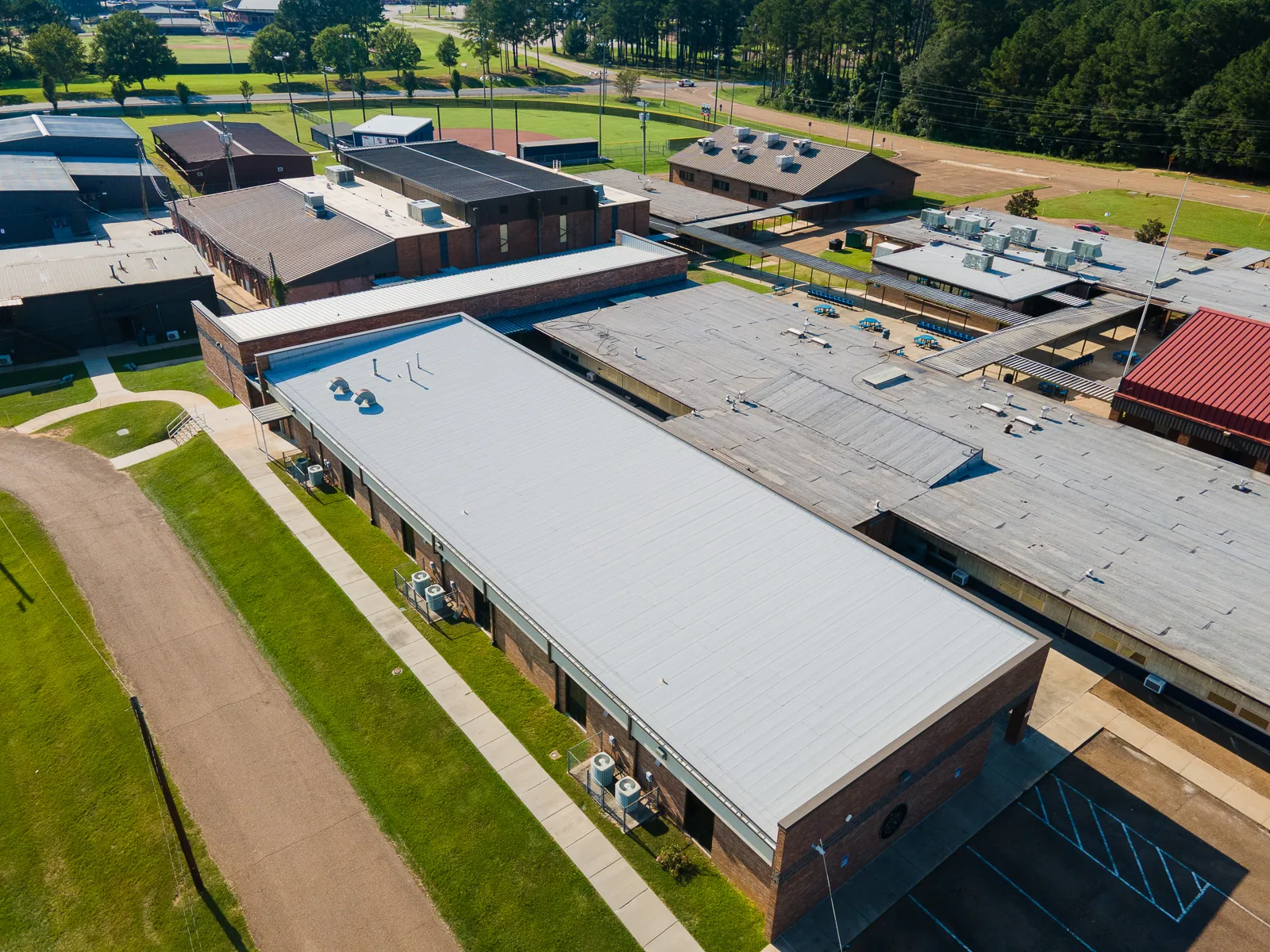
Duro-Last Commercial Roofing in Allen, TX
Duro-Last is a PVC roofing manufacturer whose system includes custom-fabricated membrane and details. Factory-fabricated components can shape the field work, but they do not remove the need to inspect seams, flashings, penetrations, and substrate condition. An Allen roof may serve offices at Watters Creek or industrial and technology space around 121 Tech Park. Those uses affect access and staging; they do not show whether the installed Duro-Last membrane is sound. We inspect the actual roof, identify the system components, and document the repair limit before work begins.
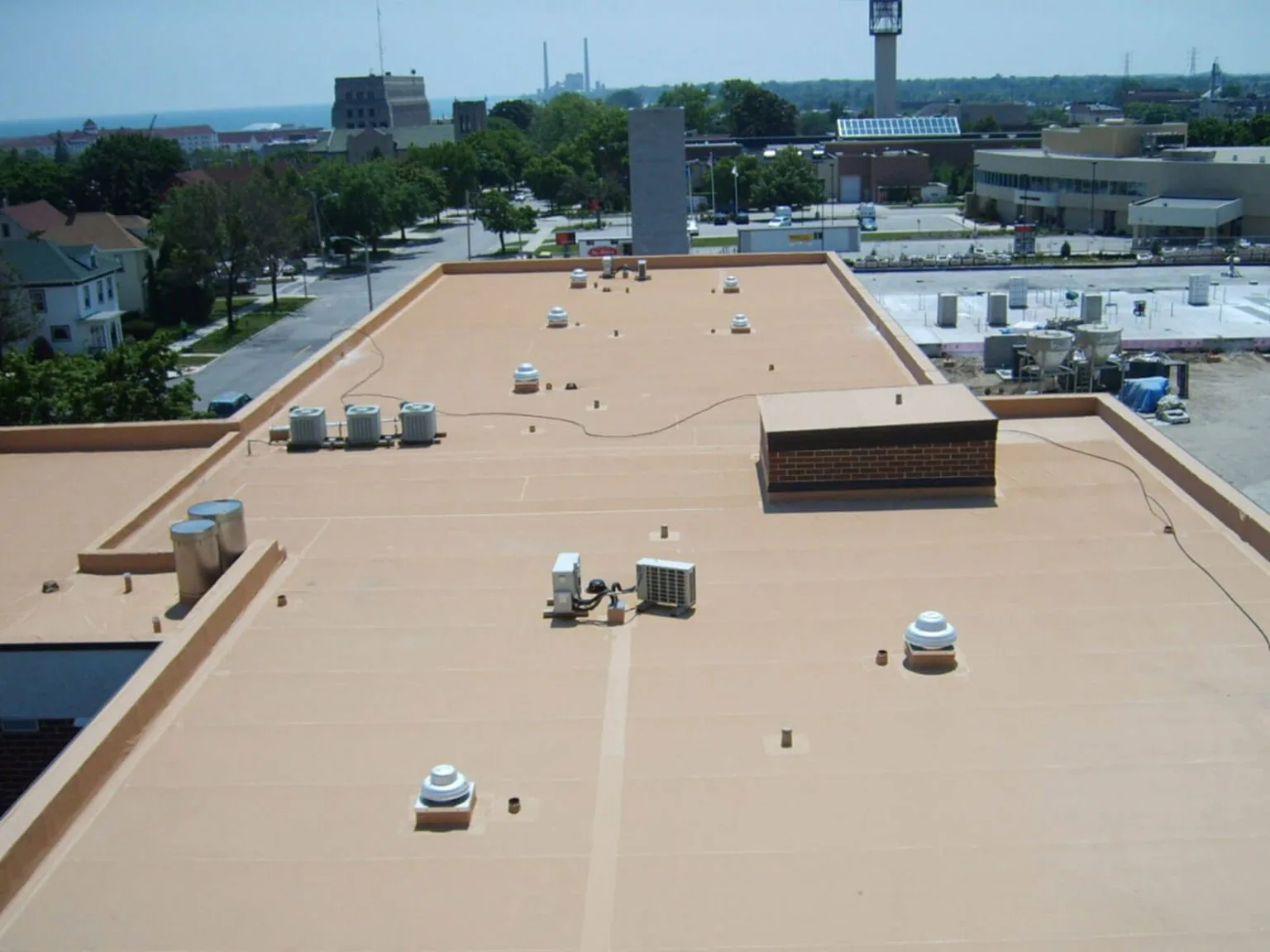
Verify the Duro-Last membrane and prefabricated details
Review the roof plan, project submittal, product markings, and field conditions to identify the Duro-Last PVC membrane and prefabricated accessories. The manufacturer's system includes factory-welded seams and custom-fabricated components, but a particular roof may have later patches, field changes, or other materials at additions. We map the membrane, seams, curbs, drains, edge metal, and any transitions to another system. Where a document and the roof disagree, record the discrepancy before setting a scope. A PVC roof survey begins with product identification and the details actually present on the building.
Inspect factory seams and field connections
A factory-welded seam does not make every later connection immune to damage. Inspect field seams, curb flashings, pipe boots, wall terminations, drains, scuppers, and previous service areas. Look for open edges, incomplete welds, movement, punctures, contamination, or membrane pulling away at a transition. A surface mark needs context: photograph its location and the surrounding details so the next reviewer can find it. We compare roof observations with reported interior water, while recognizing that a stain can be distant from the entry point. A commercial roof inspection records the area checked and any hidden condition that needs moisture testing or an opening.
The scope should distinguish factory-welded material from seams made during field installation or later service. Check corners and transitions where a prefabricated piece meets the roof field, and note if a prior patch obscures the original interface. A damaged vent boot may need a different repair than a loose curb flashing even if both sit on one roof plane. We document the exact roof zone, nearby equipment, and what surface preparation is possible. If water is present below the membrane, testing can show whether the repair boundary needs to extend beyond the visible opening.
Repair PVC with a stable weld boundary
A Duro-Last repair must use a method compatible with the installed PVC and its condition. Prepare a clean repair area, remove unsound material, and confirm the existing membrane can accept a new weld. The patch needs adequate coverage around the defect and must connect to stable material. At an equipment curb, inspect how the factory detail meets the field and whether the curb or adjacent metal has shifted. If insulation is wet or the deck is damaged, surface welding alone will not restore the assembly. A PVC puncture repair should identify both the membrane opening and any underlying material that requires replacement.
Use custom fabrication without skipping field checks
Custom fabrication can reduce some field measurements and seaming when the roof geometry and details are captured accurately. The field still needs verification before prefabricated sections are set: dimensions, curb height, pipe location, deck condition, and the route for moving material onto the roof. Existing penetrations can change after mechanical work, and a fabricated detail cannot correct a loose curb or an unstable substrate. We coordinate dimensions with the site team and flag deviations before the roof is opened. The proposed piece must fit the installed condition and connect to the surrounding PVC membrane using the correct method.
Dimensions should be verified from the actual roof, especially where equipment, pipe clusters, or wall conditions have changed since the original installation. Record curb size, height, shape, spacing, and any obstruction that affects how the fabricated piece will fit. If the unit will be moved, coordinate the final curb and flashing dimensions with the mechanical contractor before material is ordered. A field measurement should also account for the space needed to weld the prefabricated detail to the existing membrane. This reduces the risk of receiving a component that matches an old drawing but not the current roof.
Coordinate Duro-Last work in Allen
Watters Creek combines offices with retail, lodging, and meeting uses, while 121 Tech Park includes industrial, office, and technology operations near US 75 and SH 121. A roof project in either setting needs a site-specific access plan, contact, and work window. Dallas-Fort Worth summer heat and spring storms affect material handling and temporary dry-in, but do not establish damage on a particular property. We coordinate tenant notices, equipment access, delivery routes, and interior protection before setting a repair sequence. A Duro-Last roof assessment in Allen records the building conditions and the roof details observed.
The facility contact should identify which rooms need interior protection and whether roof access shares a route with deliveries or mechanical service. Agree on the shift-end condition and who will approve additional removal if concealed moisture appears. Those choices can change the schedule even when the repair material is already identified.
Decide whether to patch, recover, or replace
A discrete opening or failed curb detail may support a targeted repair when nearby PVC, attachment, and insulation remain serviceable. Recurring failures, widespread moisture, damaged deck, or a roof beyond a reliable repair boundary can support broader renewal. A roof overlay fits only if moisture results, attachment, height, drainage, and current code allow another layer; tear-off exposes concealed materials but requires protection and disposal planning. We explain the basis for each option and list any test needed to confirm wet areas. A recover assessment should state how new material will meet drains, parapets, and equipment curbs. A condition report can preserve photos and repair limits for the owner's decision.
Keep Duro-Last documentation tied to the roof
Retain the product submittal, fabrication details, roof map, repair materials, inspection photos, and completed-work record. If an issued warranty applies, follow its written notice and maintenance terms; Duro-Last or its administrator determines coverage. We document the work performed without promising a warranty result. When another roof uses SOPREMA PVC or bituminous material or a Sika Sarnafil membrane, keep product identification and repair history separate. The next facility manager can then distinguish systems at one property and avoid carrying a Duro-Last detail to a different roof.
For each service visit, add the inspected section, reported symptom, visible defect, material installed, and final photographs. If the membrane markings are missing, retain the evidence used to identify the product and note any remaining uncertainty. Keep roof work records separate from HVAC or electrical closeout, then connect the documents through the affected curb or penetration. That lets a later inspector trace which trade changed the interface and whether the roofing tie-in was reviewed. A clear chronology is more useful than one file that combines separate buildings, systems, and repair dates.
Commercial Roofing Questions
Is Duro-Last a PVC roofing system?
Yes. Duro-Last uses PVC as its core membrane material and offers custom-fabricated roofing components. We confirm what is installed on the building.
Do factory-welded seams mean no field repair is needed?
No. Field connections, flashings, curbs, penetrations, and later repairs still need inspection. Damage or movement can affect a roof detail.
Can you repair a Duro-Last roof with another PVC product?
Compatibility must be verified. We identify the existing membrane and repair requirements before selecting material or a weld method.
Can a custom-fabricated detail fix a shifted curb?
The curb and substrate condition need correction first. We verify dimensions and attachment before ordering or installing a replacement detail.
How do you decide between repair and replacement?
The roof's repair history, moisture, attachment, substrate, and affected area support the comparison. We record confirmed conditions and any testing still needed.